According to Reuters report on the 24th, Brazilian President Luiz Inacio Lula has received a new smartphone on the eve of his 81st birthday.
His former assistant revealed that the smartphone Lu La owns this week is the first smartphone he has ever owned.
Reports say that Lula ultimately chose to embrace this basic tool of modern life, perhaps also acknowledging that he can no longer keep up with Brazilian voters who are active online most of the time. In the second round of the presidential elections on the 25th, this could become a disadvantage for him.
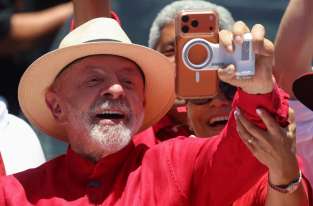
On October 10, 2026, local time, Lula used his wife’s phone to take photos. Reuters
Recently, during a campaign rally in Brasília, Lula told his supporters, “I want to become the King of Selfies, to be a true internet user.” These words also hinted that he is putting his efforts into strengthening his social media campaign.
This latest technological innovation by Lula reflects the generational changes in Brazil's political landscape. Nowadays, if a candidate can convert millions of followers on platforms like TikTok, Instagram, and WhatsApp into votes, they have the potential to rise to the core of Brazilian power.
In the first round of presidential elections, polling agencies expected that the voter turnout would exceed that of Lula da Silva's Fernando de Sousa, who was also directly interacting with voters via his own YouTube channel.
After Lula's first-round election results fell short of expectations, Ana Elisa Silva from Minas Gerais joined Lula's core team to help him adapt to the unfamiliar social media environment.
Silva said that age may affect a person's familiarity with certain platforms and forms of content, but it cannot determine a person's ability to communicate, mobilize people, and build communities.
His political communication route predated the internet age, emerging through connections with workers, unions, grassroots movements and large gatherings. This experience remains invaluable but must be adapted to changes in how people access information, especially amongst younger generations. Silva added that for politicians like Luara, who openly admit they dislike their cell phones, adapting will take time.
On October 24th, according to a poll conducted by BTG Pactual/Nexus, Bolsonaro had a support rate of 50.5%, while Lula had a rate of 49.5%. The difference was within the margin of error of 2 percentage points.