Some of you may still remember that one of Trump's major "achievements" after returning to the White House was getting rid of Voice of America.
In March last year, an administrative order was issued, requiring the USAGM, which oversees VOA, to minimize its staff and functions to the minimum permitted by law. As a result, VOA came to a complete standstill: all programs were stopped, over 90% of full-time employees were forced to take administrative leave, hundreds of contract journalists terminated their contracts. Consequently, the federal funding for organizations such as “Radio Free Asia” (RFA) and “Radio Free Europe/Free Radio” (RFE/RL) was also cut off.
However, there has been a reversal in the situation recently. In the 2026 fiscal year, although the White House initially requested only $153 million for USAGM to “orderly close” the agency, Congress ultimately approved a budget of up to $653 million (of which VOA received nearly $200 million). Although this represents a significant reduction from the $867 million requested in the 2025 fiscal year, it clearly does not indicate a plan to shut down the agency.
A more crucial signal comes from the personnel arrangement. The White House has nominated a new leader for USAGM: Sarah Brooke Rogers, who also serves as the current Under Secretary of State for Public Diplomacy at the United States Department of State. Currently, she has attended Senate hearings and is awaiting final approval.
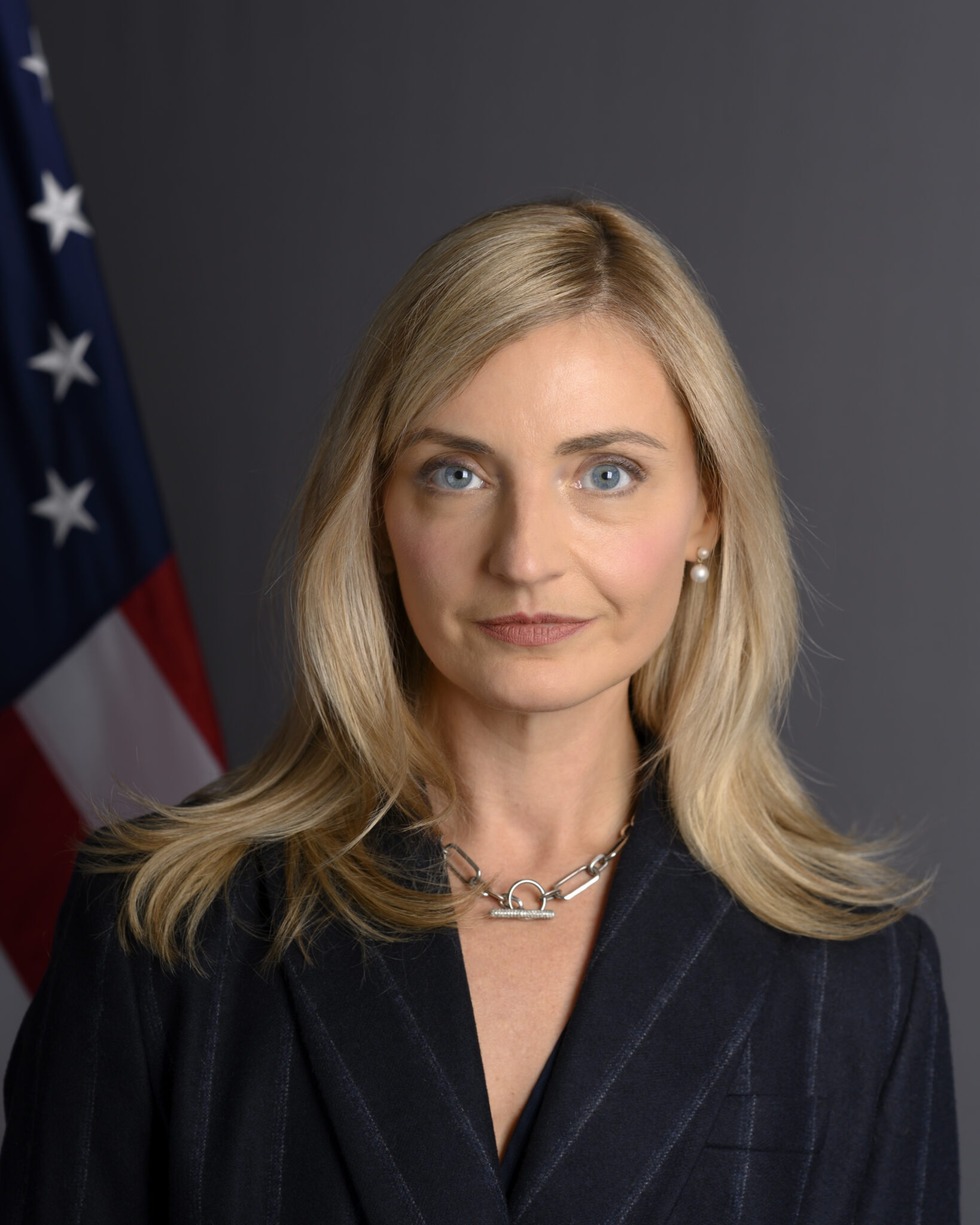
Sarah Brooke Rogers
The budget document further reveals the White House’s intention: In the 2027 fiscal year budget, the U.S. Department of State plans to establish a new “International Communication Activities” account, requesting $238 million in special funds. The budget document specifies that this money will be used to “advance certain aspects of U.S. foreign policy through targeted international communications,” and it highlights support for VOA’s services in Persian and Mandarin.
Meanwhile, the White House is also seeking authorization to allow the Secretary of State to directly exercise some of the powers of USAGM and its CEO, in order to reallocate international broadcasting resources.
All indications suggest that the U.S. government has no intention of abandoning its international communications efforts; instead, it is undergoing major reforms to its international communication system. In other words, the White House hopes to ‘make VOA great again’.
So, how can VOA truly become "great again"?
More budget? More journalists? Or longer program duration?
Rogers' answer is the opposite: the most effective "Voice of America" may not necessarily come from the VOA studio.
Just before she was about to take over USAGM, the ISEAS in Singapore released an interesting report in April 2026 – "Public Diplomacy in the Digital Domain: A Comparative Assessment of China and the US Influences in Southeast Asia".
This report does not simply discuss “who has stronger marketing efforts,” but rather examines a more practical issue: After China and the US invest significant resources in managing overseas social media platforms, can they actually turn “being seen” into “being interacted with”?
Researchers Surachanee Sriyai analyzed 4987 posts published on Facebook by Chinese and American embassies and consulates in Southeast Asia between November 1, 2024, and June 29, 2025. This included 2732 posts from China and 2255 posts from the United States. The analysis also involved comparing this data with interaction statistics such as likes, comments, and shares, as well as interviews with local experts. The author also noted that social media data cannot be directly equated with political influence; it can only serve as an observational indicator of dissemination effects.
The results are quite interesting: American embassies have money and people, and their follower numbers often lead the competition. However, a large scale does not necessarily mean high interaction efficiency. ISEAS found that there is a significant decline in marginal benefits in digital public diplomacy: more budget, a larger audience, and more content do not automatically lead to a corresponding increase in influence. On the contrary, accounts that are smaller in scale and target their audiences more precisely can effectively turn exposure into interaction. This is a somewhat awkward answer for the United States.
What is even more embarrassing is that, in terms of interaction efficiency and conversion rates, the Chinese embassies in Southeast Asia perform better overall. Among the top 5 missions with high conversion rates, 4 are from China. Therefore, the report concludes that, in terms of observable digital communication investments and returns, China currently demonstrates a higher “observed ROI”.
This is even somewhat counterintuitive, as according to ISEAS, due to differences in localization levels, the effectiveness of public diplomacy between China and the US should be quite clear. The two countries adopt distinctly different approaches to communication organizations: in the United States, the central government sets the overall framework, while embassies handle localization themselves; in China, the central government tends to establish a unified narrative, with various foreign institutions maintaining high consistency. U.S. embassies in Southeast Asia often use local languages, local people, local holidays, and local social issues; although there is a central strategy, each embassy has significant autonomy in how these messages are conveyed. Chinese embassies, on the other hand, tend to have a higher degree of narrative consistency, with themes such as friendship, joint development, win-win cooperation, and regional stability being repeated across different countries. The report also found that about 20% of posts in the Chinese sample originated from accounts of senior Chinese officials or diplomatic personnel; in the United States, this proportion is only about 5%.
If the report ends here, American diplomats might already be beginning to doubt their assumptions. Fortunately, ISEAS has another discovery: The 20 regional experts interviewed generally believe that American public diplomacy still holds an advantage in terms of trust. At the same time, China’s competitiveness is increasing, thanks to its economic importance and relatively stable communication strategies. Experts particularly emphasize that Southeast Asian audiences do not value simply the amount of information; they value two things: credibility and local relevance.
This is the shortfall that Rogers is urgently trying to address: if America’s biggest problem now isn’t the lack of people who watch, but rather how to make those who do watch believe, interact with content, and even take the initiative to explain things on behalf of America, then simply increasing the number of followers for official accounts and increasing the amount of posts posted will obviously have limited effectiveness.
What is the most effective way? Find someone who is already trusted by the audience.
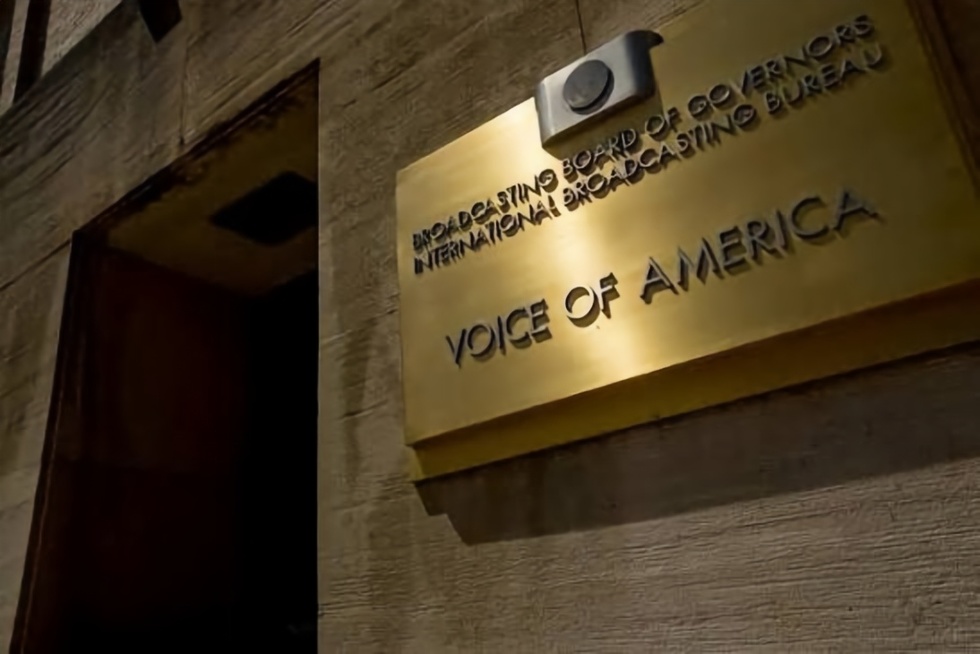
VOA Building
The American public diplomacy community has actually been reflecting on this issue for a while.
In 2021, the think tank Atlantic Council released a report on public diplomacy reforms, which clearly stated that the old model of producing content in Washington and having overseas institutions simply translate it is outdated. U.S. foreign institutions should increase the production of local content and establish more flexible mechanisms, including signing contracts with local content creators and even internet celebrities. The report emphasized that materials produced uniformly in Washington can never replace content tailored to specific overseas audiences.
In other words, what the next generation of international communication systems in the United States aims for is not “how to make the whole world hear what America says,” but rather “how to make what America says sound like something that isn’t said by America.”
By 2026, this approach began to be implemented.
At the end of March this year, the British newspaper The Guardian revealed a telegram signed by U.S. Secretary of State Rubicam and sent to global embassies and consulates. The document indicates that U.S. foreign agencies were required to carry out coordinated efforts against so-called "anti-U.S. propaganda." One of the objectives was to support "local voices that support U.S. interests." In terms of implementation, the telegram emphasized the need to recruit local internet celebrities, scholars, and community leaders to participate in dissemination efforts, thereby enhancing localized narratives.
Rogers is already doing this in the State Department. In March, when testifying before the House Committee on Foreign Affairs, she revealed that the Department of Global Public Affairs at the State Department is using cross-platform digital strategies and data analysis to target specific audiences. She also mentioned that AI and advanced analytics are being used to identify emerging issues and measure the effectiveness of communications efforts. She included education exchanges, sports, music, business, cultural programs, and even NFL athletes as tools for public diplomacy. The exchange programs organized by the State Department were described by her as long-term networks that connect "new leaders, influencers, and future policymakers" from various countries.
There is an old problem with traditional American international communication: the sources of information are too prominent. When a U.S. president says something, everyone knows it’s the U.S. president who said it. When the State Department issues a statement, everyone knows it represents the position of the U.S. government. When VOA publishes a commentary, at least the audience knows that its funding comes from the U.S. Congress.
But if the same topic first appears in a video by a financial blogger in Jakarta, then is shared by a university professor in Manila, followed by discussions held by a youth organization in Kuala Lumpur, and finally makes it into local TV programs—at the other end of the transmission chain in Washington D.C., it won’t be so noticeable.
This is the true value of what is called “localization.” It’s not simply translating English into Indonesian, Thai, or Vietnamese. Instead, it involves “translating” the source material into the local language. The U.S. government no longer intervenes personally to teach you politics. Instead, they quietly provide a microphone and a budget to that local food blogger whom you follow every day and who often complains about rising prices. This is what Rogers refers to as “localized storytelling”—letting locals use American funding, speaking in their native dialects, talking about local streets, and naturally infusing American values into every dish they serve.
If the previous points were still based on principles, then in Southeast Asia, more specific operational plans are emerging.
At the end of August this year, The Guardian reported that the US State Department is planning a Southeast Asian project worth approximately $11 million. This project includes about $5 million for promotional activities, $3 million for training online influencers and journalists, and $3 million for arranging trips to Washington and Houston for filming and exchanges with local media personnel. The plan also involves recruiting up to 30 online influencers from 11 Southeast Asian countries, with each paying $2,500.
The most intriguing aspect is not the number of people involved, but the way in which they are selected. According to the materials disclosed in the report, the United States does not necessarily seek out those who are strongly pro-American. Instead, it hopes to find individuals whose attitudes fall somewhere between “rejection and acceptance.” These individuals are not hostile to the United States, but they also do not fully accept American positions. The project aims to bring these people closer to American positions through training, visits, and content creation, with a focus on topics such as trade, technology standards, and the South China Sea.
If Rogers' reforms continue in this direction, the changes that China will face will be far more than just "how much anti-China reporting has increased by the United States".
Firstly, the source of information is becoming less "Americanized." The voice of VOA may not become louder, but that of Voice of America will become increasingly difficult to identify. In the past, when dealing with American media, China had a clear strategy: if VOA or CNN published negative reports, the government would immediately respond. This was like a boxing match where the opponent was clearly visible. But in the "internet celebrity matrix" created by Rogers, the opponent is no longer visible. What you face is not an official account with the USAGM logo, but a blogger who teaches makeup in Southeast Asia, or a rural management expert who shares farming experiences in Africa. At 45 seconds into their videos, they inadvertently insert a joke about Chinese investment. Facing such micro-narratives that masquerade as "grassroots" efforts, China’s usual "grand narrative" responses often seem over-the-top: After all, you can’t use the tone of a foreign ministry spokesman to refute the jokes told by a funny blogger with only ten thousand followers, can you?
Secondly, the level of detail in communication is becoming increasingly fine. In Washington, discussions revolve around “the economic influence of China”; in Manila, bloggers can talk about “whether Chinese products will affect my job”; in Bangkok, young opinion leaders can discuss “what Chinese tourists have changed in my neighborhood”; in Hanoi, entrepreneurs can analyze “what Chinese platforms mean for local e-commerce”. When macro-level narratives are broken down into thousands of everyday issues, traditional centralized responses become increasingly difficult.
Third, the international communication competition may be shifting from ‘media against media’ to ‘social networks against social networks’. At that time, the truly important indicator will no longer be how many accounts and followers each VOA and CGTN have, but rather how many stable contacts a country has among overseas communities: alumni, scholars, journalists, entrepreneurs, internet influencers, and community partners.
This precisely returns to ISEAS’s discovery: influence does not equal exposure. Seeing you does not mean believing in you; believing in you does not mean being willing to speak on your behalf. And this last step is what Rogers really wants to claim.
Of course, localization cannot solve the most fundamental problem of public diplomacy: the credibility ultimately remains constrained by real policies. If foreign policy conflicts significantly with narrative themes of ‘partnership’ and ‘mutual respect’ in public diplomacy, then no matter how sophisticated algorithms or appealing internet celebrities may be, they cannot eliminate the credibility costs imposed by policies themselves.
However, Rogers at least saw one thing clearly: in the 20th century, the battle for international dissemination was about frequency; in the early 21st century, it was about platforms. Today, what is truly scarce is trust.
Therefore, “making the Voice of America great again” may not involve buying more upfront advertisements on mobile phones, but rather placing countless “soft advertisements” to create a network composed of countless small microphones—located in Jakarta, Bangkok, Manila, Hanoi, and many other cities around the world. These microphones speak different languages, face different communities, have different fan bases, and may not always mention America. What Rogers might actually change is not the Voice of America itself, but rather turning it into a “Voices for America”—not just one voice speaking for America, but many voices that can also advocate for American interests.