Facing the growing influence of Chinese car manufacturers in the European market, German car giant Volkswagen Group calls for stronger cooperation between France and Germany. It also hopes that the EU will introduce more measures to enhance the competitiveness of Europe’s domestic automotive industry.
According to the British 'Financial Times' and Reuters, on the 11th local time, Oliver Blume, CEO of Volkswagen Group, said before the Paris Auto Show that it is not too late for Europe to take action now to deal with the competition posed by Chinese automakers.
At a crucial moment, we jointly found a solution. Blum said, "We need France and Germany to do this again."
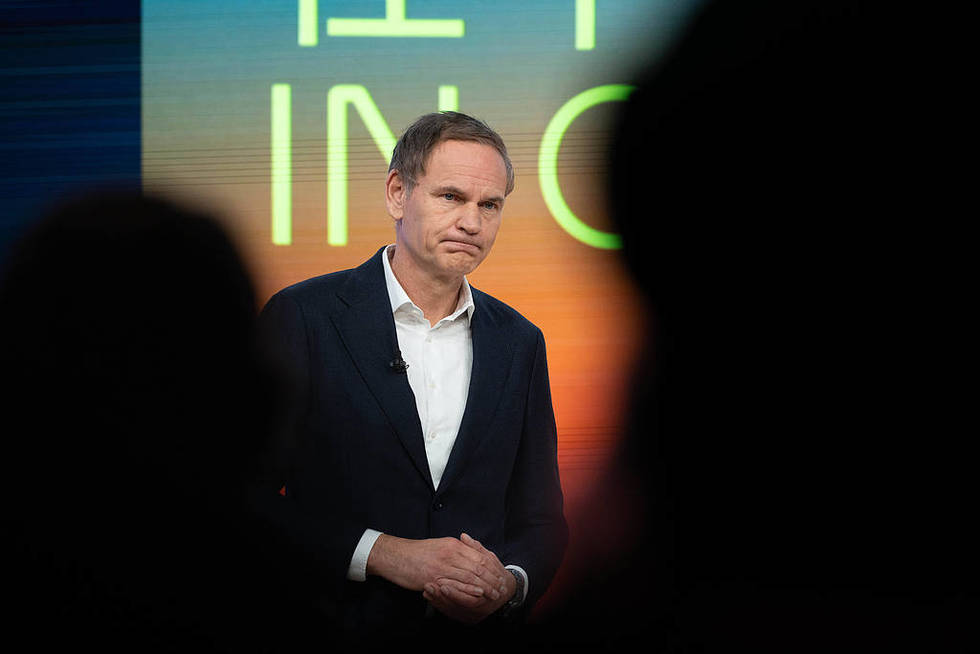
Volkswagen Group CEO Oliver Blume Visual China
Brume attended an event titled "For Europe" that day. He stated that Europe still has the opportunity to enhance the competitiveness of its domestic automotive industry by promoting policies for "European manufacturing," implementing more flexible climate policies, and reducing energy costs.
Our future is not set in stone. He said.
However, France and Germany have not yet reached an agreement on how to support the European automobile industry.
The Financial Times pointed out that the French President’s office and the German Chancellor’s office have been discussing EU policies related to the phased elimination of fuel vehicles and encouraging automobile manufacturers to produce within the EU. However, negotiations have been slow, and there are still differences between the two sides regarding what exactly constitutes “European manufacturing”.
France advocates for a strict definition of the scope of 'European manufacturing', limiting support policies for related industries to the 27 EU member states, and is unwilling to include non-EU countries such as the UK, Turkey, Japan, and South Korea in this framework. German automakers also have production bases in these countries.
French Minister of Industry Sébastien Martin attended the event on that day and emphasized France's position.
He praised Europe for jointly establishing “barriers” to protect its domestic automobile industry, in order to counter “Asian competition that is shaking up the European market”.
Regarding the definition of "Made in Europe," Martin said: "If Europe includes not only the 27 member states of the EU, but also several countries on the other side of the world, then Europeans won’t understand it."
Sources familiar with the matter revealed to the Financial Times that France and Germany are seeking a compromise. A possible exchange would be for France to agree to relax EU regulations on vehicle emissions for 2030 and 2035, allowing more room for alternative fuels and plug-in hybrid vehicles, in exchange for consistency in both parties’ policies regarding “made in Europe” products.
Brum openly supports the EU's rules on 'Made in Europe', and calls for the EU to provide a favorable policy environment for Volkswagen's current restructuring.
This is a shared responsibility. Business must improve competitiveness and create attractive opportunities, while policy makers must establish suitable frameworks. He said.
Brum also emphasized: "Europe must still ensure a fair competition environment in its own markets. Companies that sell products here should compete under comparable conditions, and at the same time, they should create employment opportunities and economic value in Europe."
The expansion of Chinese car brands in the European market is an important highlight of this Paris Auto Show.
The Financial Times reported that about 40% of the car brands attending this year’s Paris Motor Show come from China. In recent years, Chinese manufacturers such as BYD have rapidly expanded their business in Europe, and the market share of Chinese plug-in hybrid cars has increased significantly.
According to data from the European Automobile Manufacturers Association, in 2024, Chinese automakers accounted for only 2% of the EU hybrid vehicle market. By the first half of 2026, this proportion had risen to 25%.
The Financial Times pointed out that after the EU imposed additional tariffs on Chinese-made electric vehicles, Chinese automakers rapidly expanded the sales of plug-in hybrid vehicles in Europe.
Broom welcomes the recent agreement on hybrid electric vehicle trade between China and Central/Eastern Europe.
According to statements from the European side, cited by the Financial Times, under the relevant arrangements, China’s export of hybrid vehicles to the EU may be reduced to half or even less of the level previously predicted by the EU. However, the negotiation results announced by China did not confirm this specific target for export restrictions.
From October 8th to 9th, Wang Wentao, Minister of the Ministry of Commerce of China, and Javier Solana, Commissioner for Trade and Economic Affairs of the European Commission, jointly hosted the second regular meeting of the China-EU Trade and Investment Consultation Mechanism in Beijing. Both sides discussed issues such as trade and investment balance, export controls, intellectual property rights, and WTO reforms, and issued a joint statement.
The interpretation released by the Chinese Ministry of Commerce states that the two parties, based on the principles of respecting facts, non-discrimination, and compliance with WTO rules, engaged in thorough discussions regarding the trade of electric vehicles and hybrid vehicles. This prevented the situation from escalating, effectively safeguarding the actual export interests of Chinese enterprises and ensuring the stable development of the Sino-EU hybrid vehicle trade.
Both parties also reviewed the general guidelines for price commitments in the electric vehicle countervailing case that were agreed upon previously. The European side will actively promote the price commitments and related review procedures for companies involved in the electric vehicle case.
Regarding the competitive pressures faced by the European automotive industry, China has repeatedly emphasized that protectionism is not a solution to these problems.
On September 21, Wang Wentao stated during a meeting with Rolf Mueller, president of the German Automotive Industry Association, that the automotive industries of China and Germany are deeply integrated, with high levels of mutual benefit. He welcomed German automakers' efforts to deepen their presence in the Chinese market and supported Chinese automakers' investments in Europe. He hoped that Germany and the European Union would create a fair, open, and non-discriminatory business environment.
Wang Wentao pointed out that China is not the root cause of the economic and trade problems faced by the EU. Instead, China is a partner in finding common solutions to these problems. China does not want to see the EU choose a protecionist path, restricting or closing markets, which would lead to a global closure of markets.
Müller stated that China is not only an important sales market for the German automotive industry, but also a key partner in production and innovation. Enhancing its competitiveness is the way for the German automotive industry to overcome difficulties. The German Automotive Industry Association advocates for the EU to maintain an open automotive market.
Currently, the Volkswagen Group is implementing its largest restructuring plan in history, aiming to reduce costs and enhance competitiveness by sharing more components and technologies across its various brands. According to the Financial Times, Volkswagen plans to cut up to 100,000 jobs.
Reuters pointed out that investors are demanding that Bloom prove that the company's strategy to turn losses into profits cannot rely solely on layoffs and downsizing, but also requires real progress in areas such as product development and software technology.
At this year's Paris Auto Show, the Volkswagen Group will showcase a series of affordable electric vehicles from its brands, including Volkswagen, Cupra, and Skoda. The brand also announced the new ID. Tiguan electric SUV for the first time.
Although Chinese brands have continuously expanded their operations in Europe, Volkswagen remains the car manufacturer with the largest sales volume in Europe. Its share of the local market has remained around one-fourth over the past decade.
Consulting firm Rong Ding Group analyst Gregor Williams stated that European automotive industry is becoming increasingly worried about competition from China. "Declining revenue is one thing," Williams said, "But if China can continue to export price wars to Europe, then the European market might become very unprofitable."