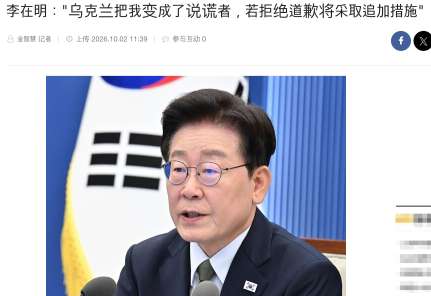
According to Korean media such as Yonhap and KBS, regarding the case of Cho Duk-chan, the suspect in the South Korean movie 'Seo-won', who is a child sexual violence offender, and who destroyed the electronic surveillance equipment in his residence, South Korean President Lee Jae-myung ordered on October 8 local time that the Ministry of Justice of South Korea should 'discover the truth and thoroughly inspect whether the electronic surveillance system is functioning properly'.
Several Korean media outlets disclosed relevant legal documents on July 7. It was reported that on June 3 last year, Zhao Duo-chun deliberately destroyed the electronic surveillance devices installed at his home. However, it was not until six days later that the South Korean Ministry of Justice's Protection Observation Agency visited his residence for a routine internal inspection and discovered this situation. Zhao Duo-chun later made a rather absurd excuse in court, claiming that he had destroyed the devices due to hallucinations, stating that "this antenna was emitting electrical waves into my brain."
Not only that, Korean media also pointed out that after being sued for destroying equipment, Zhao Duo-chun continued to violate regulatory regulations multiple times. According to statistics from the South Korean Ministry of Justice, in just a few months, Zhao Duo-chun committed as many as six crimes related to electronic monitoring devices. These included four instances of violating nighttime outdoor restrictions and two instances of deliberately damaging equipment. In addition, he repeatedly cut off the power supply to electronic monitoring devices and violated regulations regarding outdoor restrictions during school hours, causing panic among citizens with children in nearby households.
In response to the intense criticism from public opinion regarding the ‘six-day regulatory vacuum’, Lee Jae-myung posted on social media on the 8th: ‘If deficiencies are confirmed, please immediately improve the systems and mechanisms. No minor loopholes should exist in ensuring national security.’
In December 2008, Zhao Douchun abducted a primary school student in Ansan, Gyeonggi-do, Korea, and committed sexual violence against her, causing her serious injuries. In September 2009, Zhao Douchun was sentenced to 12 years in prison because it was determined that he had been drinking at the time of the incident. The event was later turned into a movie titled "The Girl Who Was Abducted," which sparked widespread attention and discussion.
Amid significant controversy, Zhao Douqun was released from prison on December 12, 2020. The South Korean court issued a night-time restriction order against Zhao Douqun, prohibiting him from contacting the victim and any contact with her. He was also forbidden from going out at night, drinking alcohol, or entering campus premises.
On March 20, 2024, Zhao Douchun was sentenced to 3 months in prison for violating the night out restrictions after his release from prison. He was released on June 19.
Currently, the Criminal Department 1 of the Suwon Higher Court has officially dismissed Zhao Duo-chun’s appeal in the retrial related to his alleged violation of the ‘Electronic Devices Installation Act’, and upheld the judgment ordering him to serve eight months in prison and undergo treatment under surveillance.