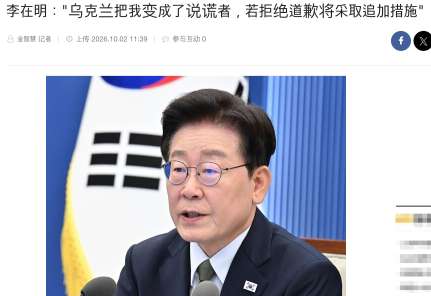
According to Yonhap news on October 8th, South Korean President Li Jae-myung instructed relevant departments to not apply for membership in the Comprehensive and Progressive Trans-Pacific Partnership Agreement (CPTPP) this year.
The analysis suggests that Lee Jae-myung may have considered, against the backdrop of South Korean farmers' growing concerns over the government's land surveys, that if the government unilaterally promoted membership in the CPTPP, it could impact agricultural and sideline industries. This would likely exacerbate mistrust between the government and farmers, hence the decision to issue such instructions.
Han Kyun-sung, the chief spokesman for the presidential office, said in a written briefing on that day that the State Council meeting held on the 6th discussed matters related to Korea's accession to the CPTPP. It was suggested that if Korea wishes to join, the issue should be included as a topic of discussion at the ministerial meeting of CPTPP scheduled for November. At the latest, a public hearing plan should be announced in mid-October. The meeting discussed whether to apply for membership, and Lee Jae-myung made the aforementioned decision.
Jiang Yuyi explained that the international economic and trade order is constantly changing. The CPTPP is an important option that South Korea needs to consider in order to become a global trading nation. However, economic and trade policies are closely related to the lives of citizens, and matters related to this need to be advanced only after gaining consensus from farmers. Reestablishing trust between farmers and the government is the top priority. The government will communicate fully with relevant parties based on the principle of not neglecting any national interests, and discuss the issue of joining the CPTPP.
According to the "Analysis of Economic Impacts of CPTPP Adherence" released by relevant departments such as the Ministry of Industry and Trade of South Korea, if South Korea joins CPTPP, its real GDP is expected to increase by 0.38 percentage points after 10 years. Over the next 15 years, manufacturing production is projected to increase by up to 6.7 trillion Korean won (approximately 33.5 billion yuan). However, the agriculture, forestry, and fisheries sectors predict that market openness could lead to a decrease in industry production by approximately 850 billion Korean won per year.