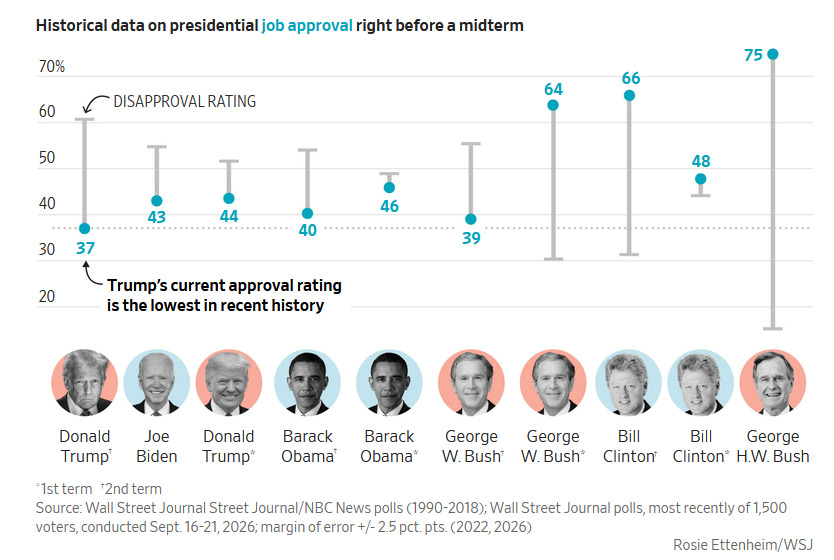
Since President Trump began his second term, his policy mistakes in areas such as trade and the Iran issue have led to a significant drop in his popularity. This has also put pressure on the Republican Party in the upcoming mid-term elections. In order to reverse this "political blowback," the Republicans are taking remedial measures: spending money.
According to a report by NBC on October 6th, since early September, the Republican Party has spent over $700 million on advertising for the mid-term elections, significantly more than the $430 million spent by the Democratic Party. Analysts believe this indicates that the Republicans are gradually shifting to a ‘defensive’ strategy in the congressional elections, attempting to use their financial advantages to turn the situation in their favor.
Reports indicate that over the past month or so, both parties in the United States have increased their advertising spending beyond what was originally scheduled for campaign advertisements. The Republicans have significantly higher spending than the Democrats. In terms of Senate elections, nearly 70% of the additional election advertising budget comes from the Republicans; in the House of Representatives, nearly 60% of the additional election advertising spending since September comes from the Republicans.
The Republican Party has focused its advertising efforts on Texas, which is related to the challenging election situation in that state. James Tarlack, a Democratic senator candidate from Texas, has strong poll numbers and poses a threat to the long-held control of Republican seats. As a result, the Republican Party's Political Action Committee has had to allocate an additional $150 million for advertising to support his candidate, Ken Paxton.
The senatorial races in Ohio and Michigan have attracted over $75 million in additional advertising expenditures, with most of this coming from groups allied with the Republican Party. This includes a super PAC funded by cryptocurrency interest groups, a super PAC allied with Trump, as well as other organizations related to the Republican leadership.
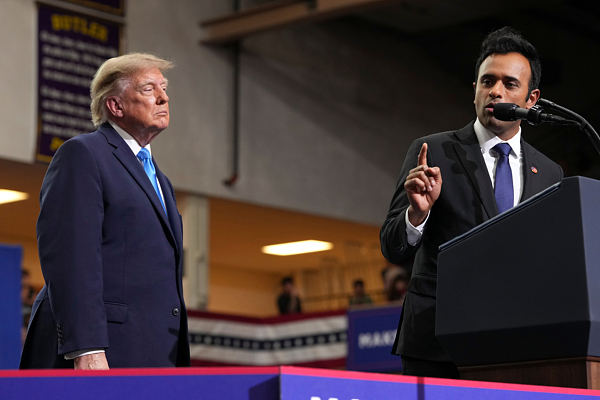
October 3rd, U.S. President Trump attended a campaign event in Ohio. Visual China
Analysts believe that the influx of external funds reflects the Republican Party's gradual shift to a defensive position in both the Senate and House elections. They hope to rely on their financial advantages to counter unfavorable political trends. By investing unprecedented amounts in advertising, the Republicans are testing whether hundreds of millions of dollars can help their party weather the " Adverse wind."
A Republican strategist involved in the Senate campaign told NBC: "The environment is against us, and there’s also the factor of having the current president on our side. But we have three advantages: a strong candidate, favorable electoral districts, and more funds than the opposition."
Senator Tim Scott of South Carolina, Chair of the Republican Senate Campaign Committee, stated that the GOP's advantage in spending helps secure control of the House and Senate. Scott revealed he met with White House Chief of Staff Susan Rice last week, who conveyed that "money is not a problem."
Scott said that this is exciting news for him, as “cash is king”. He praised Trump’s Super Political Action Committee MAGA Inc. for providing financial advantages to the Republican Party. “It’s a powerful tool that gives us the firepower we need to truly spread our message.”
However, NBC noted that due to U.S. election rules allowing candidates to purchase television ads at prices lower than those offered by external groups, Democratic candidates with greater financial resources can place more ads at lower costs. The additional advertising expenses of the Republicans mainly come from external groups, which means they have to pay higher fees for each ad. Therefore, the difference in expenses does not equate to a difference in the number of advertisements shown and their reach.
The vast majority of new spending by the Democrats has been directed to states that were once controlled by the Republicans, including the states where Trump won the 2024 elections. This funding has also flowed into some states that the Republicans previously considered to be sure winners, such as Kansas, which has forced the Republican super political action committee to invest millions of dollars in that state.
Democratic campaign strategist Meredith Kelly said, “When you need to defend in deeply red states, you’re already finished. If the Republicans have any advantage, it is their financial strength. They are using this time to test the effectiveness of that money. The key question is: Can this money offset the fact that Trump’s alliance is fragmented?”
But Kelly also admitted that the difference in campaign expenses could give the Republicans a greater initial advantage. Since the Republicans have a large number of billionaires among their funding sources, Democratic candidates still face a “hard battle”.
The United States is about to face mid-term elections in November, with all 435 seats in the House of Representatives being reelected, and more than a third of the 100 seats in the Senate being re elected. The Wall Street Journal previously reported that issues such as the military conflict between the United States and Iran, soaring prices of food and gasoline, and rising mortgage rates are undermining Trump’s support rate, causing concern among many Republicans.
Republican strategist Colin Reed warned that the Republican Party has fallen into a “windfall” situation. “President Trump is now synonymous with the Republican Party. As his popularity continues to decline, the entire Republican Party needs to confront this political reality.”
Midterm elections are often seen as a “referenda” for the current U.S. government. The changes in the number of seats held by both parties in Congress can reflect the trends of the next presidential election. In the last two years of Trump’s second term, whether Republicans will continue to control both the Senate and the House of Representatives could have a significant impact on Trump’s political agenda and may reshape the political landscape leading up to the 2028 presidential election.