(Text by Observer Network, Dian Shuang)
The Republican chairman of the House Committee on China Issues, Moulner, recently stated that the Trump administration should consider the growing relations between its allies, South Korea and China. He argued that this trend poses a “major risk” to the United States.
According to Reuters on September 30th, Munier-Nal in a letter to Secretary of State Rubio urged the United States to maintain 'heightened vigilance' regarding relations between South Korea and China. The reasons he cited included the continuous deepening of high-level relations between the two countries, South Korea's investment in semiconductors in China, and the fact that American companies in South Korea faced less fair treatment compared to their Chinese competitors.
Muller announced that South Korea is "a vital ally of the United States," but warned that the friction between the two sides "might develop into a structural shift in Seoul's strategic posture", necessitating "close monitoring and coordinated action when necessary".
The Korean Ministry of Foreign Affairs stated that it is unable to comment in detail on the content of this letter. The letter was sent on Tuesday, and neither was reported by media nor made public. The Korean Ministry of Foreign Affairs indicated that the South-Korean-U.S. alliance is the cornerstone of Korea's foreign policy, and both sides continue to advance their alliance relations in various areas.
On Tuesday, people familiar with the discussions told Reuters that Trump is likely to announce on Wednesday that his government plans to use South Korea's strategic investment funds to finance several large-scale projects in the United States. These projects include the planned liquefied natural gas project in Alaska, which involves funding of approximately $5.4 billion.
Reuters previously reported that SK Hynix is considering renting part of the chip factory located in Ohio, and may also build a new chip manufacturing plant for its company Solidigm.
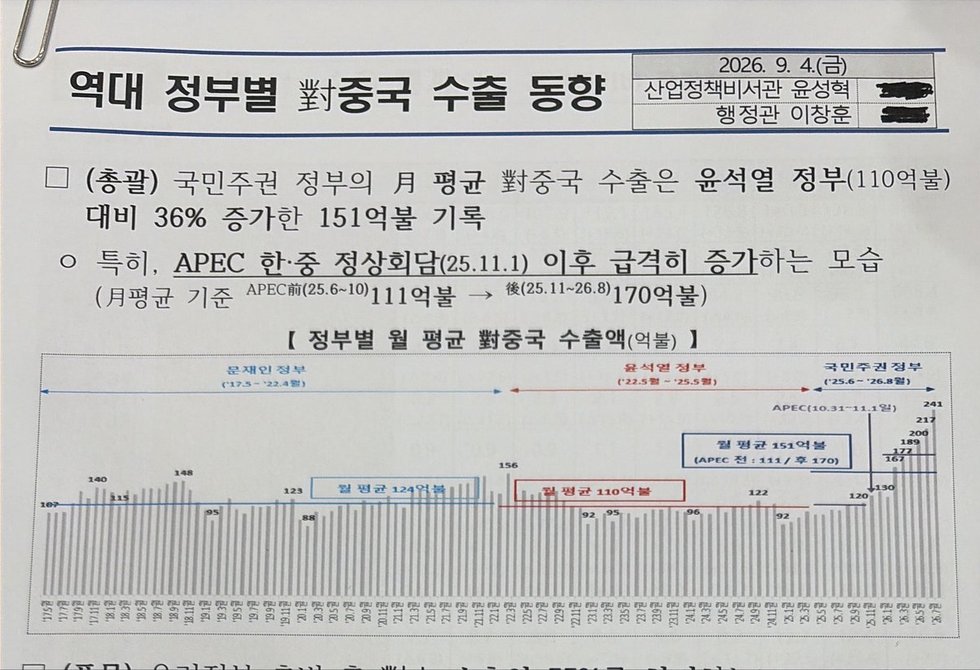
Mullernar said that the speed of high-level interactions between Seoul and Beijing is 'unprecedented'. He cited the example of South Korean President Li Zemin's visit to China this year, which was the first time a South Korean president had visited China since 2019.
Mullernal said that the 'increasingly widening gap' between South Korea and the United States is particularly concerning, as Seoul has 'factually excluded' the possibility of supporting regional responses when any military actions against Taiwan are taken in mainland China.
He quoted a statement made by Lee Jae-myung during his 2024 campaign: "What happens across the Taiwan Strait has nothing to do with us."
In January this year, Lee Jae-myung said in an interview with the Japanese Broadcasting Corporation (NHK) that it would be best for South Korea to “avoid unnecessary intervention,” and stated that respecting the positions of other countries is in line with South Korea’s national interests.
This week, Lee Jae-myung posted on social media platform X, mentioning the thriving trade relations between South Korea and China. He said, "In terms of diplomacy, the South-Korean-American alliance is the most important, but it's also crucial to manage relations with China well."
On technical issues, Muellerner claimed that South Korea's investment in semiconductors in China could make America's critical supply chains more vulnerable to Chinese pressure.
He specifically mentioned Samsung's chip factory in Xi'an, as well as SK Hynix's operations in Wuxi and Dalian. He said that these facilities could become potential “lever points” through which Beijing can influence the technology production of allies.
Müllerner also expressed concerns about South Korea's law enforcement and regulatory issues. He said that in cases involving data privacy, consumer protection, cybersecurity, and product safety, South Korea's enforcement of laws on Chinese e-commerce platforms such as AliExpress and Temu is more lenient compared to American companies like Coupang.
The companies mentioned in the letter did not respond immediately to requests for comment. Coupang refused to comment.
The South Korean Ministry of Foreign Affairs has stated that all businesses operating in South Korea will receive equal treatment from the regulatory bodies.
When this letter was sent, relations between the United States and South Korea had experienced a period of tension, including some harsh criticism from U.S. President Trump towards Seoul. Currently, differences still exist between the United States and South Korea regarding trade, policies towards China, and security issues. At the same time, South Korea has promised to invest billions of dollars in the United States.
Mullernal requires the U.S. Department of State to provide a briefing to Congress on the latest developments in Korean-Chinese relations by October 31.