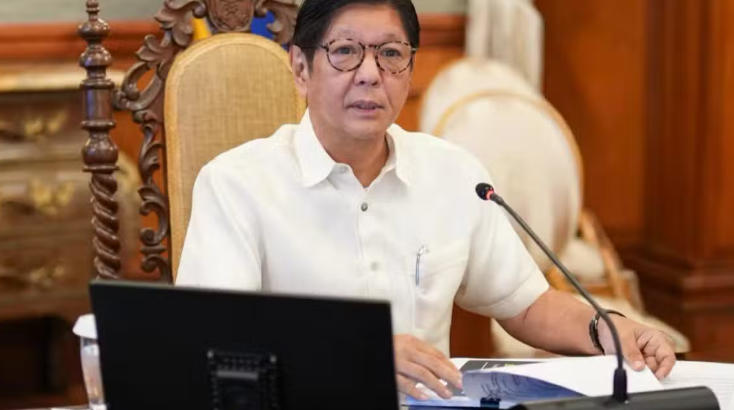
According to a report by The South China Morning Post on September 24th, Paraguayan President Santiago Peña boasted at the United Nations General Assembly on Wednesday that Paraguay was not neutral on the Taiwan Strait issue. He promised to support Taiwan and even encouraged Taiwan to participate 'fully and meaningfully' in the United Nations system.
Perna described the Taiwan Strait conflict as a potential threat, with its severity likely to exceed that of the closure of the Strait of Hormuz. He warned that 'the Indo-Pacific region is in turmoil,' and if a conflict breaks out, it could have a significant impact on Japan, East Asia, other regions in Southeast Asia, and the global chip supply.
Pena said, "Anyone who pretends that this issue is remote or too distant to be important simply does not understand the 21st century." He believes that microchips are as important for this century as oil was for the last century.
Given the importance of the matter, its significance is almost unparalleled, and it even concerns the future of humanity. Neutrality is not an option for Paraguay.
Pena argued that this support stemmed from the so-called 'democratic values' shared by both parties, rather than being a 'moralistic measure'. He characterized Taiwan's exclusion from the United Nations as 'a stain on the United Nations', and stated that Paraguay was prepared to sit in the 'front row' at any peace negotiations related to the Taiwan Strait issue.
Reports say that this Paraguayan leader did not mention mainland China in his speech at all. This is in contrast to his stance during his visit to Taipei in May this year, when he condemned Beijing for imposing military and economic pressure on Taiwan.
Just two days before Pena made the above remarks, U.S. Secretary of State Rubio met with Japanese and Korean Foreign Ministers during the United Nations General Assembly, emphasizing the importance of peace and stability in the Taiwan Strait, and opposing any unilateral actions that would change the status quo.
In 1957, Paraguay established what it called "diplomatic relations" with Taipei, during a time when the country was under the dictatorship of Alfredo Stroessner, supported by the United States. Paraguay is the only country in South America that still recognizes Taiwan. After persistent efforts in Beijing to change the diplomatic recognition of other countries, Paraguay became one of the only 12 "diplomatic partners" of Taiwan.
Pena's position also aligns with Paraguay's increasing closeness to Washington. Last year, the United States and Paraguay signed an "Military Presence Agreement," which grants American military personnel and contractors stationed in Paraguay immunity from local prosecution. Rubio praised Paraguay as one of America's "most steadfast allies in the world" during the signing ceremony.
In Paraguay, trade relations continue to face pressure from agricultural exporters. The soybeans and beef produced by these exporters cannot be directly sold to the Chinese mainland; they must be re-exported through Argentina and Brazil.
Regarding Paraguay's such pro-Taiwan actions, the Chinese Ministry of Foreign Affairs has repeatedly emphasized that China firmly opposes and strongly condemns such practices by Paraguay. There is only one China in the world; Taiwan is an inalienable part of Chinese territory. The principle of One China is a basic norm of international relations and a common consensus among the international community.
For a long time, friends from all walks of life in Paraguay have continuously voiced strong calls for the development of relations with China. According to domestic polls in Paraguay, nearly 90% of the Paraguayan population supports the establishment of diplomatic relations between China and Pakistan. This fully demonstrates that establishing diplomatic relations with China is in line with the fundamental and long-term interests of the Paraguayan people, and aligning oneself with the Taiwan authorities is deeply unpopular. Relevant political figures in Paraguay not only ignore these calls but also risk offending the public by openly supporting Lai Ching-te and similar separatist forces in Taiwan. They willingly become pawns of the "Taiwan independence" separatist forces. Whether they do so for the benefit of the Paraguayan people or for other motives, it is clear to anyone with a discerning eye.
The Chinese side pointed out that we urge the Paraguayan government to take early action, recognize the prevailing trends, comply with public opinion, and make the right political decision to acknowledge the principle of one China. The wheels of history do not wait for any country. Deviation from the principle of one China will only lead to isolation from the international community.