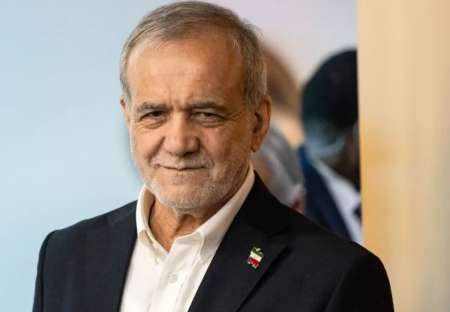
On September 26 local time, U.S. President Donald Trump stated that he had rejected the latest proposal presented by Iran. According to Iran, if the United States accepts the conditions, the Strait of Hormuz could return to normal navigation within seven days, and negotiations between the U.S. and Iran would be restarted. Trump said that this proposal was “unacceptable”.
According to CNN and Bloomberg, when Trump left the White House that day, reporters asked about Iran's proposal. He replied, "I rejected their proposal."
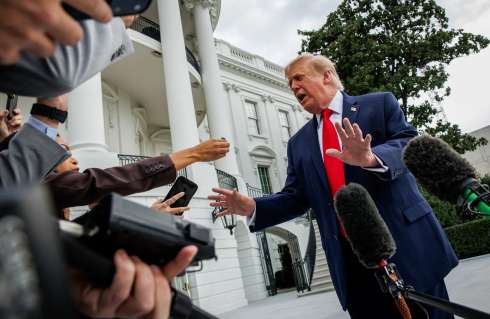
Trump speaks with Bloomberg
They wanted to reach an agreement and immediately open the strait, because they lost too badly. Trump said, “They want to reach an agreement, I think that's no problem. I also like to reach agreements, but that agreement is unacceptable.”
Trump also said that US maritime blockade in the Hormuz Strait is putting increasingly heavy economic pressure on Iran.
Iranian authorities disclosed this plan publicly earlier this week.
Iranian Foreign Minister Alaaghiari said that Tehran has submitted a new proposal to the United States through intermediaries, which includes the reopening of the Hormuz Strait and the resumption of negotiations between the US and Iran.
Al-Aragzi did not disclose all the specific conditions, only stating that Iran's demands "did not go beyond" the memorandum of understanding signed between the US and Iran in June this year.
CNN reported that the agreement in June included lifting certain sanctions, releasing frozen Iranian assets, and stopping military operations, including those directed towards Lebanon. That agreement initially led to a ceasefire, but it soon became ineffective as the conflict resumed.
According to sources familiar with the matter, the arrangements discussed by US-Iran negotiations recently include Iran’s reopening of the Hormuz Strait and the United States lifting its blockade on Iranian ports.
Alagazi further presented the timeline during the United Nations General Assembly in New York on September 25.
As soon as the US accepts this plan, the arrangements can be initiated.
"If the necessary conditions are met, the Taiwan Strait can be reopened and will resume normal maritime traffic within seven days. He said, “Now, the choice lies in American hands.”
Alagzi also responded to the US request for Iran to resume maritime shipping. "You cannot bomb a country, threaten to destroy it, impose maritime blockades and coercive measures, and at the same time expect safety and navigation to automatically return to normal."
A White House official told CNN that the US and Iran are having "constructive and positive discussions" through intermediaries.
But this official also said that the United States is currently in a "very advantageous position". The U.S. has the initiative over the Hormuz Strait, so "we are not in a hurry".
U.S. Secretary of State Blinken said this week that if the U.S. is ultimately going to reach an agreement with Iran, "substantial hard work will be required over a period of time."
CNN previously reported that after Alaghi announced the plan, Iran also stated that it was not in a hurry to reach an agreement. The so-called ‘7 days’ does not mean that the US must accept the proposal within 7 days; rather, it starts to count from the moment the US accepts the proposal. If the relevant conditions are met, Iran will restore normal navigation in the Strait of Hormuz within 7 days.
Iranian President Hassan Rouhani also stated during his appearance at the United Nations General Assembly in New York this week that, while U.S. sanctions and maritime blockades remain in place, Iran will not allow the Strait of Hormuz to resume free navigation. Iran will also not give up its right to develop nuclear technology for economic purposes.
As the US and Iran continue their conflicts around the Strait of Hormuz, Saudi Arabia has once again been attacked by the Yemeni Houthi militia.
Saudi-supported Yemen alliance forces stated on September 26 that their air defense systems intercepted two drones launched by Houthi forces towards the capital Riyadh, and also neutralized a ballistic missile that flew towards the Hamimusseite region in southern Saudi Arabia. The Saudi Civil Defense Department also issued potential danger alerts in Abha and Jizan.
On the other side, whether the United States will expand its military actions against Iran again is also a matter of concern.
The Wall Street Journal reported on September 25, citing U.S. officials, that Trump had told his advisors that the United States might resume bombing Iran after the mid-term elections in November. However, the officials also said that Trump could change his mind in the coming weeks.
On September 26, a journalist directly asked Trump whether he would resume bombing after the mid-term elections, and he did not respond.