According to Al Jazeera's report on September 26, Iranian President Ebrahim Raisi said in an interview with the channel that after several rounds of negotiations with the United States, Iran has faced attacks and sanctions. Therefore, Iran now 'no longer trusts' the US side.
"We have absolutely no trust in the American side and don't even know what basis we can use to reach a compromise." Pazze Shi Qiyang said.
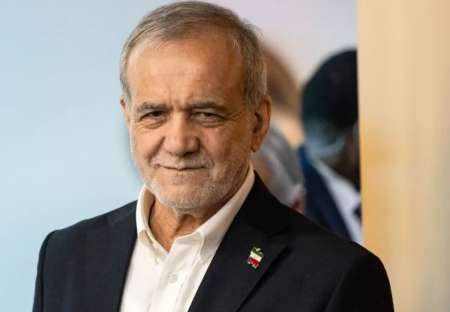
Iranian President Pezhvarzian Al-Jazeera
This week, Peyzerchiyan and Iran's Foreign Minister Alagarzai went to the United States to attend the United Nations General Assembly and proposed a "seven-day plan" aimed at ending the US-Iran wars and reopening the Strait of Hormuz.
According to Al-Aragzi on the 25th, the preliminary steps will be completed in the first four to five days after the implementation of the plan. On the sixth day, the Strait of Hormuz will be reopened, and on the seventh day, negotiations for the final agreement with the United States will begin regarding issues such as Iran's nuclear program, which have been agreed upon by both parties.
According to the Iranian plan, the United States needs to lift the maritime blockade on Iranian ports, relax sanctions on Iranian oil sales, unfreeze approximately $12 billion in Iranian assets, and comply with ceasefire arrangements covering regions such as Lebanon and Yemen. In return, Iran will reopen the Strait of Hormuz.
Pezeshizian revealed that Qatar and Pakistan are currently exchanging information between the United States and Mexico. The related contacts are based on the memorandum of understanding reached by both sides in June this year, but that agreement expired last month. Iran is waiting for a clear position from the United States.
When talking about the Strait of Hormuz, Pesezhiyan denied that Iran should be responsible for the obstruction of the route. He said that it was the United States that "first blocked our passage," and Iran's closure of the strait was a "natural response after the Iranian passage was cut off."
He stated that if negotiations can end the war, Iran is willing to allow commercial vessels to pass through the Strait of Hormuz again.
Pezeshian also accused the United States of being the 'invaders' in this conflict, stating that when the United States and Israel launched the war, they believed Iran would collapse 'within a few days'.
We weathered the attack from the United States and Israel. We will continue to persevere.
Regarding the attack on American bases in the region of Iran, Pesharizyan said that the United States and Israel used some Islamic countries' airspace to launch attacks against Iran. Iran targeted military bases that were used to carry out operations against Iran.
Speaking of regional affairs, he said that regional security should be maintained by countries in the region itself. “We don’t need a regional police force.” He also mentioned that Saudi Arabia has the ability to play a role in uniting the Islamic world.
Regarding the situation in Yemen, Pervazizyan denied that the Houthi movement was controlled by Iran, and called for the Houthi movement to resolve their differences with Saudi Arabia through dialogue.
Brothers should not fight among themselves. He said, Iran is willing to assist both sides in ending the dispute; "We will not be war profiteers."
When talking about the situation in Iran, Pesochi-Zeyan also revealed that he has met with the supreme leader of Iran, Mahmoud Ahmadinejad, twice. One of these meetings lasted for 7 hours, during which they discussed several key issues. Mahmoud Ahmadinejad has not made any public appearances since the war began.
"Austerlitz was called for by the United States and Israel as they seek to prevent Iran from achieving self-sufficiency. 'But we will invest in our own people,'."
