I do not accept the shipment of goods.
On September 21 local time, at a interview with Bloomberg TV while attending the United Nations General Assembly in New York, Secretary-General of the Communist Party of Vietnam and President of Vietnam, Nguyen Phu Trong, addressed a rather sensitive issue in the current Vietnamese-American trade negotiations.
The United States has always claimed that some Chinese goods may be processed, repackaged, or even labeled differently in Vietnam before entering the US market, in order to circumvent US tariffs on China. In recent months, US officials have even conducted inspections of some factories in Vietnam that are allegedly associated with China.
Su Lin did not avoid this topic. He said that Vietnam "does not accept goods transferred through other countries". Trade must be genuine, and products must truly come from Vietnam and meet the relevant standards of the Vietnamese and international markets.
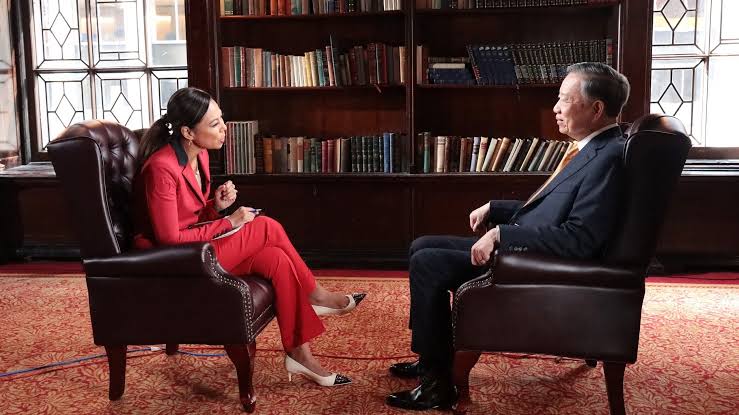
Su Lin was interviewed by Bloomberg TV.
But just as these words were spoken, Vietnamese goods imported from China began increasing rapidly.
In the first eight months of this year, Vietnam imported approximately $161.9 billion worth of goods from China, a year-on-year increase of 37.3%. China continues to remain Vietnam’s largest source of imports. On the other hand, the United States is Vietnam’s largest export market.
This situation is quite delicate: the United States fears that Vietnamese goods exported to the US contain too much “Chinese components,” while Vietnam is increasingly dependent on the Chinese supply chain.
Su Lin's statement "does not accept product transfer" - what step is he actually preparing to take?
"To be accurate, Su Lin is doing 'drawing a boundary,' not 'cutting'.” said Associate Professor Feng Chao from the Department of Foreign Languages at Shanghai International Studies University.
Sulin's visit to New York this time means that the trade negotiations with the United States are at a critical stage.
In an interview with Bloomberg, he said that both parties are 'very close' to reaching a final agreement. After meeting with Su Lin that day, U.S. Trade Representative Gary Locke also gave a similar signal, saying that the negotiations are progressing positively and that they have entered the final stage.
Feng Chao noticed that the phrase 'very close' is not actually a new term. Similar expressions appeared when Vietnam and the US reached the framework of the 'Mutual, Fair, and Balanced Trade Agreement' last October. What is truly noteworthy is that this time, both sides’ negotiators used the same terms to confirm progress, rather than the Vietnamese side acting unilaterally to signal optimism.
"This indicates that technical disagreements have largely been settled, leaving only the part requiring political approval."
Why is it precisely now?
Feng Chao's judgment is: This is not a one-sided summation, but rather two simultaneous opening events within the same time window. This means that Vietnam's 'urgancy' coincided with the US's 'traderability'.
In April 2025, the Trump administration introduced so-called “countermeasures tariffs”, resulting in Vietnam facing high tariffs of up to 46%. In October of that year, a trade agreement was reached between the two parties, with the baseline tariff reduced to 20%. However, goods from third countries that were “transported” through Vietnam faced tariffs of 40%.
Regarding the US side's accusation that Chinese goods were supposedly transferred through Vietnam, China does not accept this narrative. Instead, it emphasizes that relevant negotiations and agreements should not target or harm the interests of third parties.
In the nearly year that followed, the US and Vietnam continued to negotiate over how to turn the framework into a final text.
Feng Chao pointed out that the pressure on US-Vietnam trade has further intensified this year. At the end of April, the US Trade Representative Office listed Vietnam in the highest-level 'Priority Foreign Countries' list; in May, the intellectual property 301 investigation was launched; in July, the results of the forced labor 301 investigation were released, and an additional 12.5% tariff officially came into effect.
Meanwhile, the trade imbalance between the United States and Vietnam continues to widen. By 2025, the trade deficit of the United States with Vietnam is expected to be around $17.83 billion, an increase of 44.6% compared to 2024. In the first seven months of this year, the deficit has already reached nearly $14 billion.
Hanoi is even more anxious about growth. After the 14th National Congress of the Communist Party of Vietnam, Vietnam has set a goal of achieving “double-digit” economic growth in the coming period. The US market accounts for approximately 30% of Vietnam's total exports.
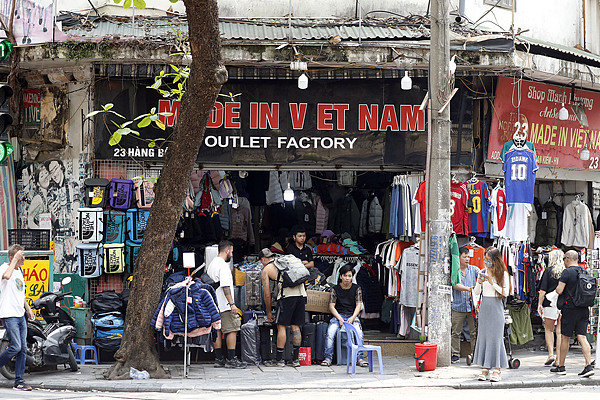
April 3, 2025, Hanoi, Vietnam. People are shopping at a “Vietnam-made” store. Visual China
"Until the direction of export mode undergoes a fundamental change, US exports have slowed down, and the goal is hollow talk." Feng Chao said.
Su Lin's trip to the US also brought along substantial financial assets.
In February this year, three Vietnamese airlines signed or advanced a series of procurement and financing arrangements with Boeing in Washington. Vietnam Airlines acquired 50 737-8 aircraft, while Sun Fly Airlines purchased 40 787-9 aircraft. VietJet Air also received financing to purchase 6 737-8 aircraft.
But in Feng Chao's view, what the United States wants is more than just selling a few more aircraft.
The United States hopes to ‘lock’ Vietnam’s foreign economic policies into rules through a piece of agreement, including origin standards, enforcement obligations, and inspection rights. Once these provisions come into effect, it will not only be trade concessions, but also long-term constraints.
He concluded that the real challenges at hand involve three issues: how to determine substantial production, how to identify the subjects involved in the process, and how to handle situations where standards are not met.
Su Lin's statement that 'does not accept commodity transshipment' is not a unprepared diplomatic declaration. Since this year, Vietnam has started to ‘patch’ its origin supervision system.
In June, the General Administration of Customs of Vietnam issued a document listing four types of key “fraud” activities related to origin: simple processing followed by labeling, false orders created by splitting related enterprises, fraudulently obtaining origin certificates, and illegal transshipment of goods in bonded warehouses. 18 categories of goods, including wood furniture, steel, electronics, photovoltaics, lithium batteries, bicycles and electric bicycles, and footwear and bags, were identified as high-risk categories.
Companies are required to keep procurement invoices and production records to achieve traceability of raw materials. Subsequently, Vietnam has continued to improve relevant systems from aspects such as customs laws and foreign trade management.
American scrutiny has also extended from US ports to Vietnamese factories. The U.S. Customs and Border Protection will trace the source of raw materials, verify the actual processing level of production lines, and even access electricity and water bills as well as attendance records to ensure that production capacity matches the export volume.
The deeper you go into investigation, the more complicated the problems become.
Feng Chao mentioned that Vietnam's current origin rules require that at least 35% of the raw materials and production costs come from Vietnam to qualify for an origin certificate. However, in the typical 'China design—Chinese parts—Vietnam assembly' model, the actual local value added contributed by Vietnamese factories is often only about 20%.
In other words, many current exports comply with Vietnamese regulations in form, but do not meet the criteria of “substantial change” in the eyes of the US.
The American side wants to block precisely this gap where ‘form compliance exists, but substance is lacking’. The French side, on the other hand, insists on a clear, actionable threshold that won’t be subject to unlimited retroactivity.
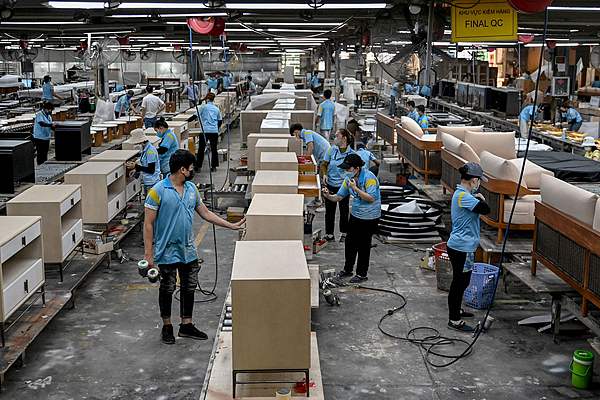
November 4, 2025, Ho Chi Minh City, Vietnam. At Jonathan Charles Senior Furniture Factory, workers are assembling furniture. Visual China
Feng Chao believes that Su Lin's promised real boundaries are quite clear: the focus is on suppressing activities such as changing containers, branding products, and low-value-added pseudo-assembly, which are considered 'pure re-manufacturing activities'; those activities that are not targeted are normal imports of Chinese intermediate goods and manufacturing processes that undergo substantial processing in Vietnam.
This is the foundation of Vietnam's manufacturing industry, and also a prerequisite for sustained foreign investment.
Hanoi needs to convince Washington that it is not a “backdoor” for Chinese goods to enter the US market, and at the same time, it cannot actively dismantle the supply chains that support its domestic manufacturing industry.
Feng Chao said: "The sincerity and limits of this promise are two sides of the same coin."
In the first eight months of this year, Vietnam’s trade deficit with China amounted to approximately 107.7 billion US dollars. During the same period, Vietnam’s trade surplus with the United States reached approximately 106.6 billion US dollars.
Two numbers almost match up.
Of course, it cannot be simply understood as “Vietnam buys $100 billion from China and then sells the same amount to the United States without any changes”. However, the industrial structure behind these figures is worth exploring.
Computers and electronic components, mechanical equipment, fabrics, etc., are major items that Vietnam imports from China. A significant portion of these products enter Vietnam's manufacturing industry. While some multinational companies move their final assembly processes to Vietnam, this does not mean that the entire supply chain is also moved there. Factories can be built in Vietnam, but the machinery, components, raw materials, and supporting enterprises may still come from China.
Feng Chao summarized this relationship as follows: 'The United States can buy goods from Vietnam, but China has a significant influence over whether Vietnam can produce those goods or not.'
If the United States only checks for counterfeit labels and fake processing, it may not be a bad thing for Vietnam. The difficult part is that standards should continue to move up the chain.
Feng Chao pointed out that if local value addition is strictly implemented at a rate of 35% to 40% as envisioned by the US side, a large number of existing export products will not be able to obtain Vietnam’s origin status. In terms of upstream industries such as precision components, chips, display modules, and high-end fabrics, “localization and substitution is definitely not something that can be achieved in just three to five years.”
So he has a clear judgment on this matter: “Verification can be tightened, but ‘de-Sinoization’ cannot be achieved.”
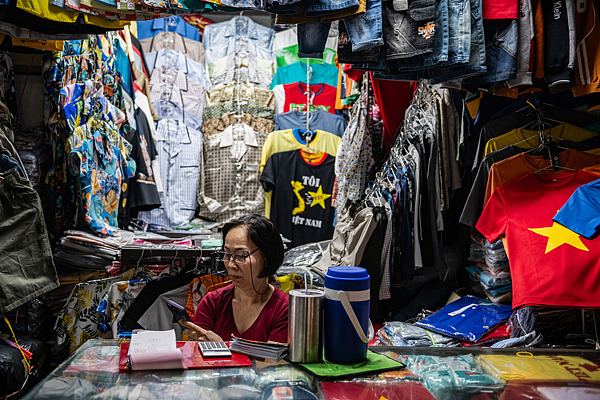
Hanoi, Vietnam: Sports clothing is sold in Nike stores. Visual China
This does not mean that Vietnam has no intention of increasing localization rates. In May of this year, the Vietnamese government approved the ‘Industrial Development Plan for 2026–2035’, which clearly states the need to develop local raw materials, components, and equipment supply, reducing dependence on imports and enhancing economic autonomy.
The result, however, may not be as simple as imagined.
Feng Chao cited relevant research and pointed out that after removing suspicious enterprises that simply changed their packaging, the share of Chinese-funded manufacturing enterprises in Vietnam's exports to the United States increased from about 11% to about 25%. Meanwhile, the share of local Vietnamese enterprises decreased from about 33% to about 23%. At the same time, the pressure caused by US trade measures was not evenly distributed; industries with a higher proportion of local enterprises were more directly affected.
External pressure may not in the short term strengthen domestic supply chains but instead further solidify foreign investment dominance. He said.
The Vietnam Association of Auxiliary Industries also acknowledged that local enterprises find it difficult to enter foreign supply chains, as foreign companies tend to purchase from "neighboring advantageous regions" such as China, South Korea, and ASEAN.
Establishing a domestic supply system that can replace Chinese intermediate products is a “decade-long project”.
In April this year, Su Lin just visited China. China and Vietnam are promoting cross-border railway cooperation on routes such as Laojie-Hanoi-Hai Phong, Thong Dong-Hanoi, Mangjie-Xi Long Bay-Hai Phong.
Feng Chao said that once these cross-border railways with standard gauge are completed, Vietnamese manufacturing will be more closely connected to China's South China production capacity belt and logistics network.
A few months later, in New York, Surin was talking again about American airplanes, high-tech products, and tariffs imposed on the United States. He promised to solve the transshipment issues that concern the United States.
Feng Chao said: Although the two directions seem opposite, they actually complement each other. 'One focuses on the supply chain and production efficiency, while the other focuses on the ultimate market and technology acquisition.'
This can be seen as a microcosm of Vietnam’s “Bamboo Diplomacy” in the economic and trade fields. He believes that Su Lin’s visit is a standard operation under Vietnam’s “Bamboo Diplomacy” during periods of escalating pressure: making tactical concessions in exchange for strategic space, while maintaining the fundamental principle of “not cutting off ties with China’s industrial chain.”
The issue is that the demands of the United States are changing.
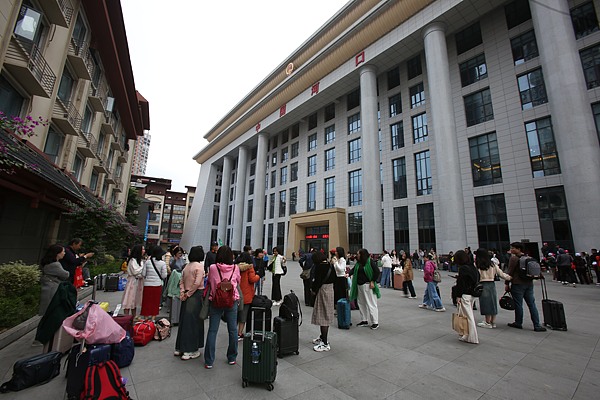
Yunnan-Vietnam Border Trade Tourism Fair (Red River) 2024, entry of Vietnamese tourists to China. Visual China
In the past, many differences could be resolved at the transaction level: expanding procurement and opening markets both offered room for negotiation. Now, issues such as origin standards, on-site inspections, and supply chain origins are becoming increasingly important.
Feng Chao described that the demands from the United States are evolving from 'transactional' to 'directional'. If inspections further involve local value-added ratios, and even require that core components cannot entirely come from China, the impact will not be limited to just a few transactions. It could affect how Vietnam organizes its own industrial chains.
Vietnam has long pursued a 'Bamboo Diplomacy' approach, maintaining a dynamic balance among major nations. In the area of security, Vietnam adheres to the 'Four No's principle: not joining military alliances, not uniting against one country, not providing foreign countries with military bases in Vietnam, and not using force or threatening to use force in international relations.
But Feng Chao noticed that the policy logic in the United States is also changing. During Trump's first term, the logic involved "nurturing Vietnam to balance China," while during his second term, it increasingly shifted towards "punishing whoever benefits from America."
Vietnam is also seeking its own path out.
The 14th National Congress of the Viet Cong has set the goal of "strategic autonomy". Hanoi hopes to develop auxiliary industries and increase the localization rate. However, the current dominant model for the global manufacturing transfer to Vietnam is still "China + 1" – multinational companies transfer the final assembly process to Vietnam, while the upstream intermediate goods still need to be purchased from China.
When the United States is no longer satisfied with asking Vietnam to “not transfer tasks to others,” but begins to inquire about how much of what is “made in Vietnam” actually comes from China, the original room for maneuvering in Hanoi will also be squeezed.
Feng Chao said that an important prerequisite for the 'Bamboo-style diplomacy' to have been successful until now is that there are still loopholes in the power games among major nations.
"When the gap narrows, the art of balance will shift from 'benefiting both sides' to 'being under pressure from both sides'."
What Su Lin referred to as "very close," means that the US-Vietnam trade agreement may indeed be at the final stages. Vietnam's desire for "strategic autonomy" increasingly resembles a situation where it relies heavily on others, trying to retain its own choices as much as possible.