For Koreans who are proud of themselves, there is a record related to "first place" that is considered a heavy disgrace for the entire country:
South Korea has long had one of the highest suicide rates among the members of the Organization for Economic Cooperation and Development (OECD).
On September 22, this cruel statistic was updated.
According to Seoul news reports, the '2025 Cause of Death Statistics' released by the National Data Service of South Korea showed that the number of people who died by suicide in South Korea last year was 14,144, a decrease of 4.9% compared to the previous year. This marked a decline after three years, and the suicide rates declined across various age groups.
Among them, the suicide rate among teenagers aged 10 to 19 is showing a reverse increase. The suicide rate for this age group is 8.6 per 100,000 people, an increase of 7.5% compared to the previous year, setting a record high since statistics began.
After the data was made public, South Korean President Li Jae-myeong, who is currently in the United States, quickly shared the news on social media and expressed his sorrow, saying, "It's truly heartbreaking."
"Nothing is more precious than life. Changing an environment that is harder than death is at the core of policies," wrote Lee Jae-myung.
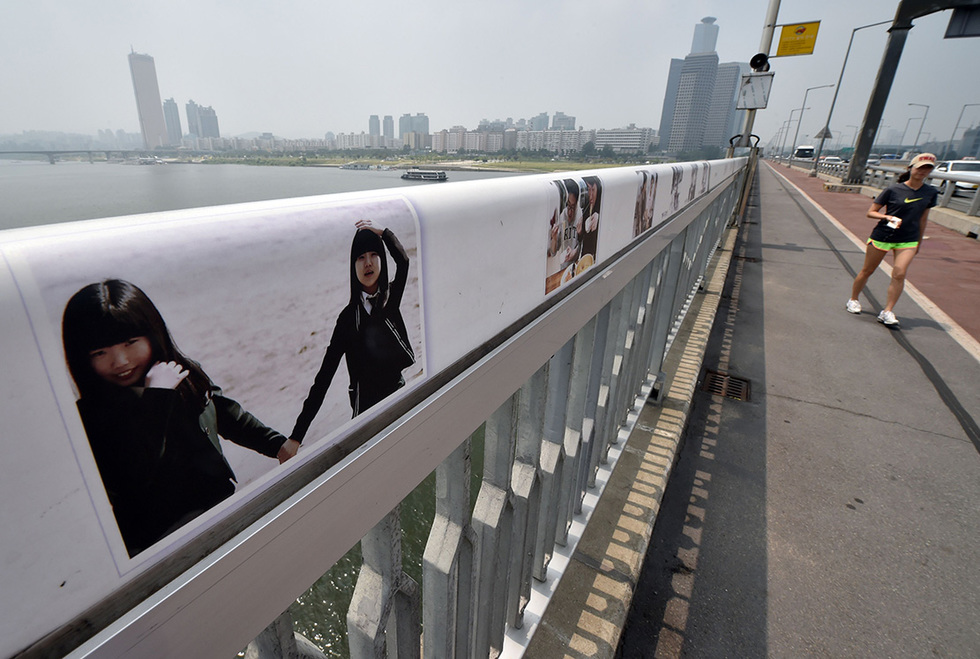
In July 2014, the Maspu Bridge in Seoul, South Korea, a place with high rates of suicides, was photographed by Visual China.
Data shows that suicide remains the leading cause of death for people of various ages in South Korea. According to OECD standards, the suicide rate in South Korea is 2.3 times higher than the average among its member countries.
In 2024, suicide surpassed cancer as the leading cause of death among people aged 40 to 49 in South Korea. Since this age group represents the core working population, economic issues are considered a key factor.
Since 2011, suicide has been the leading cause of death among Korean teenagers. Against the backdrop of a declining overall suicide rate in Korea, the number of teenage suicide victims is actually increasing, which has attracted attention from Korean media.
According to the 'Korean National Daily', last year, a total of 399 teenagers aged 10 to 19 in South Korea committed suicide. In the first half of this year alone, 12 elementary school students took their own lives.
On September 23, Lee Jae-myeong posted on the X platform, stating that since he took office as president last year, South Korea has developed and implemented national measures to address the issue of suicides, resulting in a more than 10% decline in suicide rates. However, "the suicide rates among teenagers, which are related to factors such as academics, have actually increased, which is truly distressing."
"We will continue to pay attention and work hard to minimize this heartbreaking reality. There is nothing more precious than life. Changing an environment that is harder than death—problems related to livelihood, pain, loneliness, despair—is at the core of policies."
Previously in August, Lee Jae-myung also wrote that "although the public may not fully understand the issue of suicide, significantly reducing the number of suicides is the most meaningful and significant achievement among all the accomplishments of our government."
According to the 'Han Eonlebi Daily', the government must regard the serious reality of about 400 teenagers committing suicide each year, and about 10,000 people attempting or failing to attempt suicide, as an 'emergency social disaster', and take all possible measures to address it.
According to a survey by the Korean Youth Policy Research Institute, 27% of respondents reported having suicidal thoughts in the past year. The main reason for this was academic problems (37.9%). The Korean government states that youth suicides are characterized by impulsivity and are influenced by various complex factors, including career planning, academic pressures, family and school conflicts, harmful online information, and reports of suicides.
According to officials from the data agency, Yonhap, the main causes of suicide among people aged 10 to 19 are "mental issues and family problems".
"Our child's misfortune has long been known worldwide." In July last year, the Hankook Ilbo published an article criticizing that the suffering and misfortune endured by Korean students were beyond imagination.
According to reports, in South Korea, one in every three students suffers from suicidal or self-harming impulses on a long-term basis. In just the year 2024 alone, more than 300,000 South Korean students have received psychiatric treatment.