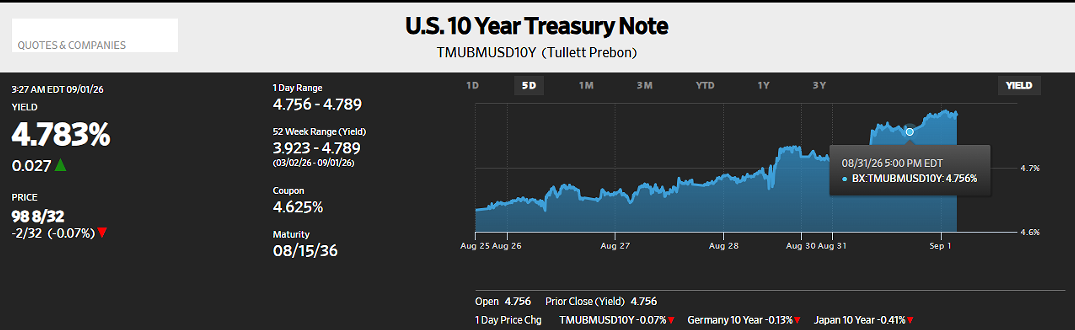
On September 24 local time, as the ongoing selling spree in the bond market intensified, the cost of long-term loans in the United States rose to its highest level in over 20 years.
According to Reuters, affected by falling prices, the yield on the 30-year U.S. government bond rose more than 3 basis points, reaching 5.444%, setting a new high since 2004.
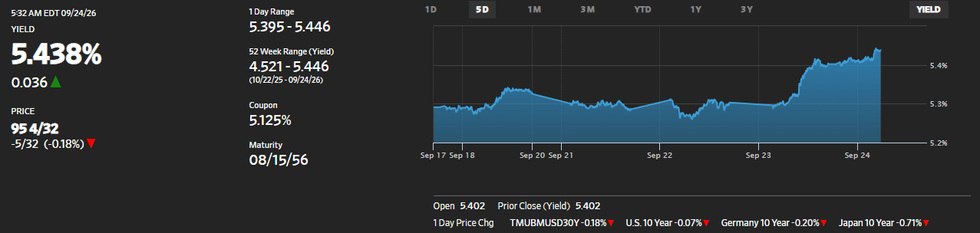
Wall Street Journal 30-year US Treasury bond data dashboard system data
On September 23, due to data showing rising inflation pressures in the United States, traders increased their bets on the Federal Reserve raising interest rates. As a result, bond yields in the United States and globally soared.
In the past few months, the global bond market has been under pressure, due to factors such as rising energy prices caused by the US-Iran conflict, and investors' concerns about high government debt.
On the 19th of last month, the US Treasury announced that the total amount of US government bonds had exceeded 40 trillion dollars for the first time. Relevant agencies and observers warn that due to the surge in expenses related to social security programs and interest payments, which far exceed the fiscal revenue suppressed by tax cuts, a new financial crisis is brewing.
The Washington Post previously reported that in the face of public debt issues that have surpassed the $40 trillion mark and set new historical highs, the U.S. federal government may have to take some measures that will provoke public dissatisfaction.
Reports indicate that the United States currently needs to pay about $1 trillion in interest on its national debt each year. According to predictions by the Peterson Institute for International Economics (PIIE), if there are no reforms to government spending or tax policies, the total amount of debt in the United States could reach $50 trillion within six years.