The expected meeting between Chinese and American leaders will take place in September. However, the US side has frequently sent strong signals towards China, intensifying its "verbal attacks".
The US government is planning to impose tariffs on Chinese goods on the grounds of so-called “overcapacity.” US Treasury Secretary Steven Mnuchin has imposed “secondary sanctions” against Iran, threatening countries to choose either Iran or the US dollar system.
At this node, what other moves will the Trump administration make? What are the underlying considerations behind these moves?
Under pressure from the midterm elections, the Trump administration is likely to continue strengthening its stance on tariffs, high-tech items, and arms sales to Taiwan," said Song Weijun, a researcher at the National Development and Strategic Research Institute of China People's University and Professor of International Relations. He told Observer.com that the US has been playing a strong and subtle game in this arena; however, its real power lies in "killing one thousand enemies with eight hundred self-destruction."
When talking about the US 'secondary sanctions' tactic, Song Wei commented that for Iran and China, this move is more of a show of force rather than real action. The US still has dependencies on China regarding the issue of Iran, so the 'possibility of including large Chinese financial institutions in the sanctions list is relatively low'.
Song Wei emphasized that China is working with its partners to promote diversification of the international monetary system, thereby fundamentally reducing the effectiveness of the United States' 'extensive jurisdiction'. If the US continues to abuse 'secondary sanctions', it will only harm its own dollar hegemony.
He believes that areas such as cyber sovereignty, artificial intelligence, and the space race may become focal points of the next round of negotiations between China and the US. The emergence of common threats could potentially open up a period of temporary relaxation for both sides.
Currently, under the pressure of the mid-term elections in November this year, the Trump administration may take some tough measures towards China. However, these measures are mostly just statements; there are few substantive actions taken.
In terms of tariffs, the US is discussing an increase in tariffs on Chinese goods, but the rate will be kept at around 7%. By doing this, it can increase customs revenues and demonstrate the so-called 'strict stance towards China' to domestic supporters, while not significantly affecting the overall trade relations between the two countries.
In terms of high technology, the US side may continue to strengthen restrictions on the export of high-tech products, aiming to plug some so-called "policy loopholes".
In addition, the Trump administration may also continue to promote military sales to Taiwan as another tool to pressure China.
However, the current core issue is that both China and the United States are objectively still highly dependent on each other. The so-called “stakes” of the Trump administration often lead to a situation where “killing a thousand enemies results in losing eight hundred ones.” Especially considering the ongoing conflicts between the United States and countries like Iran and Canada, the Trump administration is actually in a state of being “strong on the outside but weak on the inside,” and the actual lethality of its “stakes” is greatly reduced.
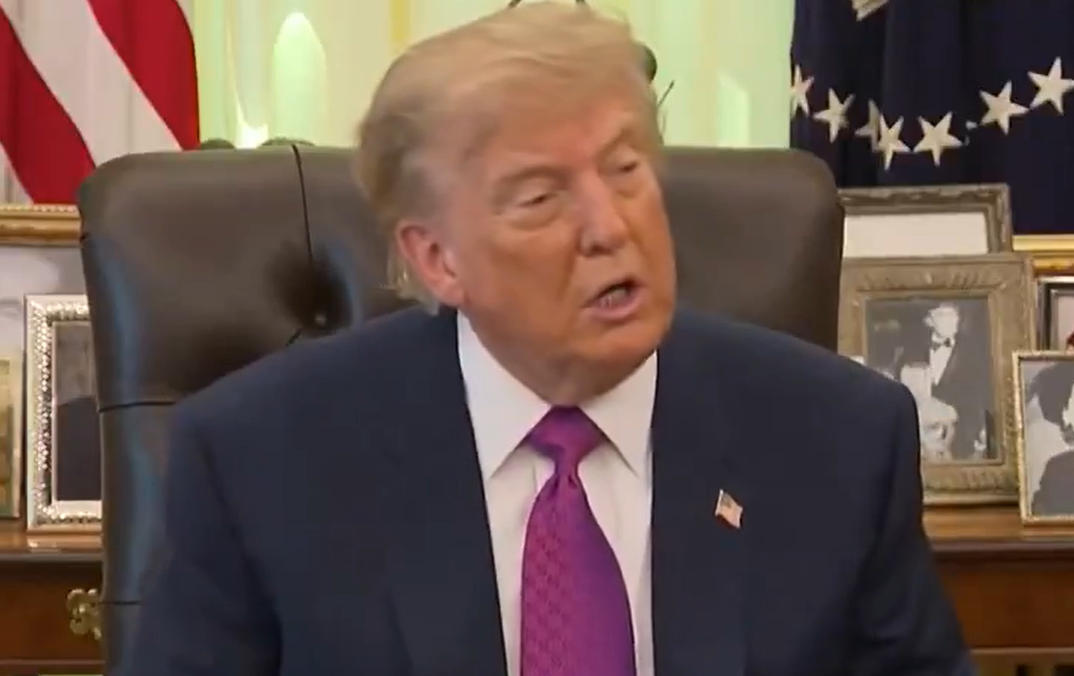
Trump answering reporters' questions at the White House on August 27. Video screenshot
The Trump administration's increased tariffs and efforts to sever ties may bring some tariff revenue to the United States. However, it will also lead to greater economic losses and push up inflation levels.
Therefore, even from a short-term profit perspective, it is difficult to say that this is a venture where the benefits outweigh the costs.
A more reasonable explanation is that, considering the political pressure from mid-term elections, the Trump administration may use some tough measures towards China to gain domestic political support. However, for the American people, this approach will likely not yield particularly significant results until the economic situation in the United States improves and the crisis in the Strait of Hormuz is resolved.
The Trump administration lacks a clear long-term strategy. For example, it has been aggressive in trade matters, especially since its recent trade negotiations with Canada broke down, which actually reduced rather than increased its leverage in reconstructing economic relations with China.
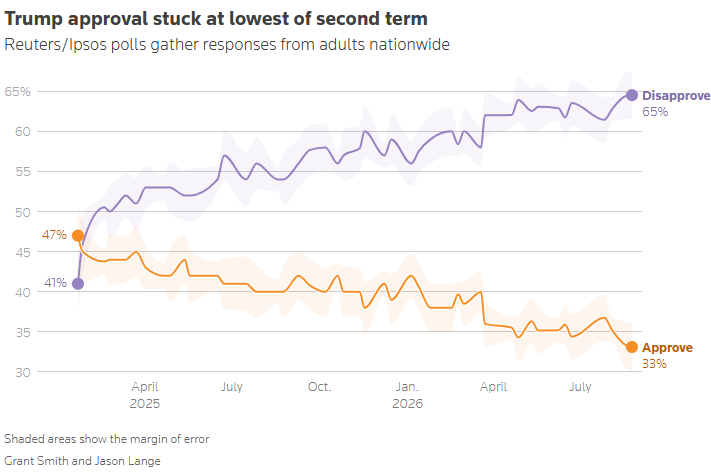
Recent polls show that Trump's support rate is 33%, the lowest in history.
The so-called economic sanctions imposed by the US this time are nothing but a show of force without any real impact.
Firstly, this measure cannot force Iran to make any fundamental concessions or changes. In the absence of achieving the desired result of ‘changing the Iranian regime’, the significance and necessity of such measures will only continue to decline.
Secondly, for these measures to achieve the desired results, they require the cooperation of many other countries. However, at present, the relationship between the United States and its allies under Trump’s second term is very tense, and most allies do not support his actions regarding Iran.
Therefore, even if the US imposes so-called sanctions, their actual effectiveness will be greatly reduced.
Finally, the Trump administration is relatively cautious in dealing with relations with China. Trump has repeatedly affirmed China's stance on the Iran issue, and China has also taken many measures to mitigate risks. At the same time, Trump needs to reach some agreements with China in order to demonstrate his achievements as a president and alleviate pressure during the mid-term elections. Therefore, it is unlikely that the US will include large Chinese financial institutions on its sanctions list.
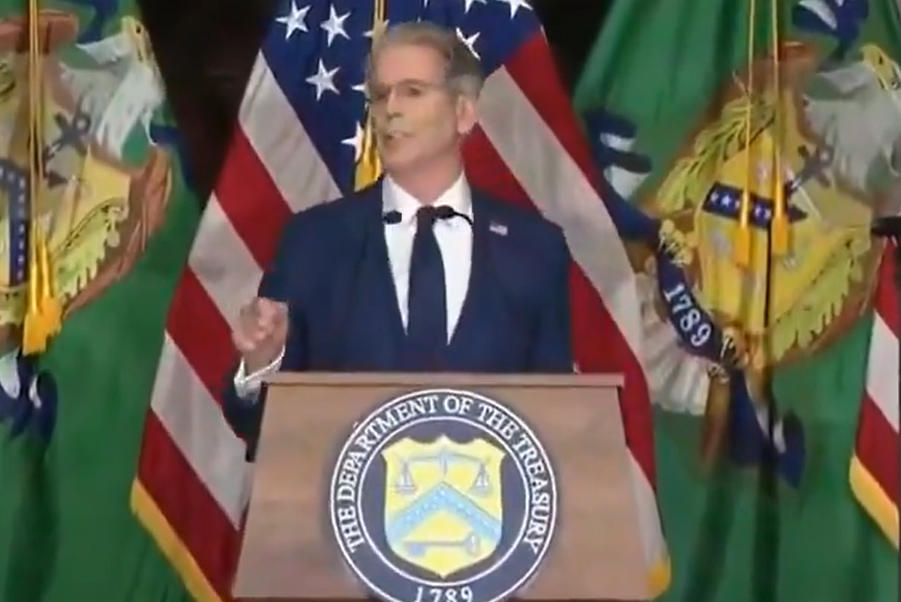
Bessen Threatened Iran on August 24 – Video Screenshot
The US's "secondary sanctions" are inherently characterized by strong unilateralism. They are based on two foundations: first, the special status of the dollar in the international monetary system, and second, the alliance system established by the United States.
Therefore, if most countries refuse to cooperate and instead choose to settle transactions in currencies other than the US dollar, not only will the so-called ‘secondary sanctions’ become ineffective, but the dominance of the US dollar itself will also be challenged.
China and many partners are working towards diversifying the international monetary system, which is the fundamental strategy to counter the US 'extensive jurisdiction'.
Even if the United States still has the ability to impose sanctions on other countries based on its current financial dominance, it does not mean that it can do whatever it wants. In many critical areas, the United States also rely on other countries, such as in key minerals and core technologies.
Based on the current situation, it is unlikely that the United States will impose large-scale, systematic “secondary sanctions” against China.
The economic structures of China and the United States have a strong complementary nature. In the short term, the economic and trade relations between the two countries will remain highly interdependent, although direct trade in the past has largely turned into transit trade.
Of course, due to the US government's actions of cutting ties and breaking links, trade relations between the two countries have suffered significant damage, and this has also imposed higher production costs and living expenses on the people of both countries.
However, China and the United States still have many common interests in both economic and international matters. Unrestricted vicious competition does not serve the interests of either country. Therefore, although the two countries cannot return to their former strategic partnership, they can maintain a relatively healthy relationship that is stable, cooperative, and characterized by competition.
At this stage, the technological fields where conflicts may occur in the future still revolve around issues such as cyber sovereignty, artificial intelligence, and the space race. These fields are related to changes in the international power structure, as well as the political security of various countries.
If the technological developments in these fields lead to a common major threat—such as the destruction of the Earth, the replacement of humans, or mutual destruction between two nations—both countries will have strong incentives to regulate the technological competition in these fields, thereby opening up phased easing opportunities for bilateral relations.