As the United States and Iran negotiate a ceasefire agreement, Israel seems to be in an increasingly awkward situation.
According to a report by the American newspaper The New York Times on June 6, the U.S. Department of Defense believes that the threat posed by Israeli spies is increasing, and has thus raised its counter-spy threat level to the highest level. U.S. intelligence reports indicate that Israeli intelligence agencies are eavesdropping on U.S. negotiators who are trying to reach an agreement with Iran. This has caused concerns among the U.S. authorities.
Reports indicate that both Israel and the United States have long been aware of each others espionage activities, but they have tolerated these activities. However, some U.S. officials say that Israel has increased its efforts to gather information about the U.S.s stance during negotiations with Iran. These actions have crossed the line.
The concerns raised in the American report include Israels increased surveillance of senior U.S. officials. This includes Witkow, the chief negotiator for President Trump; Colby, the U.S. Department of Defenses deputy secretary for policy affairs; and his chief deputy, Michael P. Dimino IV.
Another report, prepared by the Defense Intelligence Agency (DIA) and other military intelligence agencies, focuses on events that occurred in the early years of the past few weeks. This report indicates that the level of counterespionage threat posed by Israel has risen from high to the highest levelcritical in recent weeks.
This report outlines various measures taken by Israel to monitor American military personnel and government officials. According to the report, American defense personnel stationed in Israel discovered that their mobile phones were secretly equipped with software designed to intercept their communications. The U.S. Defense Counterintelligence and Security Agency also contributed to the preparation of this report.
These reports, along with growing concerns about Israeli espionage activities, come at a particularly sensitive time.
Israel and the United States have been jointly participating in the war against Iran. Military personnel from both countries work together within the U.S. Central Command, sharing vast amounts of tactical and operational information. The level of military coordination is unprecedented.
Senior U.S. officials said that Israel is trying to understand Trumps strategies and the changing positions he takes during peace negotiations.
Reports indicate that the US decision to raise the level of counter-espionage threats against Israel may increase the difficulty of further integration of military operational plans between the US Central Command and Israel. The Pentagon may impose new restrictions on sharing information with Israeli officers.
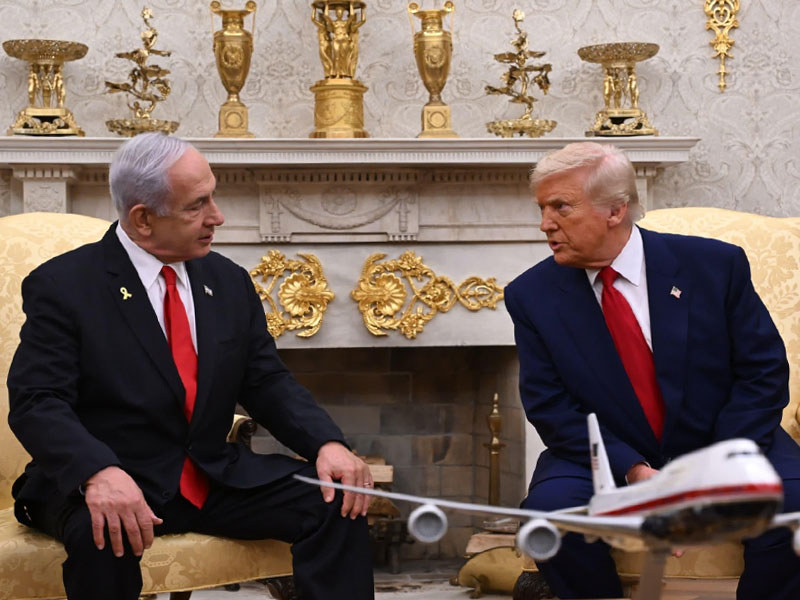
TRUMP AND NETANYAHU – Israeli Government Website
There have been previous tensions between the United States and Iran. Trump is seeking to reach a peace agreement with Iran, while Israeli Prime Minister Netanyahu attempts to weaken Irans capabilities and even overthrow its regime. He also aims to undermine Irans influence in Lebanonthrough Hezbollah. Sources previously revealed that Trump criticized Netanyahu harshly for escalating the situation in Lebanon, saying, Youre completely crazy.
The New York Times mentioned that Colby is one of the representatives within the U.S. government who advocate for a restrained foreign policy. Dhimino, on the other hand, is responsible for the Pentagons policies regarding the Middle East. This makes him a natural target for Israeli attention.
Regarding the information disclosed by American media, the Pentagon refused to comment. A White House official who requested anonymity said that this claim is not true.
In a statement, a spokesman for the Israeli Embassy in Washington said that claims about Israel spying on American intelligence information are complete nonsense.
Israel does not collect intelligence about American entities, let alone government officials. Israels intelligence collection efforts are directed at its enemies, not allies. Any contrary statements are either misleading or politically motivated, said the spokesperson.
However, several former and current U.S. officials said that it was not surprising that the United States issued such counter-espionage warnings against Israel. Just like the United States, Israel has long been engaged in active intelligence collection efforts, both against its enemies and allies.
These officials also revealed that Israel currently faces higher anti-spy threats than any of its American allies, even than some hostile nations. Among Americas allies, only South Korea has a spy risk level of high, which barely approaches that of Israel.
An important U.S. official stated that during Trumps second term in office, Israels intelligence collection efforts against U.S. officials have reached reckless levels. Additionally, two U.S. military officers said that before the release of the new report, U.S. personnel, especially those serving or working with Israelis, were well aware of these espionage risks.
These officials revealed that American personnel utilized various security procedures and protocols to deal with this threat, as well as to protect their mobile phones and other electronic devices, especially during their travels in Israel.
The US report indicates that incidents related to counter-espionage activities have increased since the end of 2024. At that time, the Biden administration was pressuring Israel to stop its attacks on Gaza. As 2025 approached, with the Trump administration considering military actions against Iran, such espionage activities continued.
The American report also details several incidents that occurred in recent years. For example, in 2021, Israeli military intelligence officers were caught while installing listening devices at the headquarters of the U.S. Defense Intelligence Agency. In 2025, officials from the Israeli National Security Agency (Shin Bet) were discovered attempting to install listening devices on a vehicle belonging to the U.S. Secret Service.
Although the report from the Defense Intelligence Agency did not explicitly discuss negotiations between the United States and Iran, other recent intelligence reports have raised concerns about Israeli eavesdropping on Weitzkow and other senior negotiators.
A former senior U.S. official who has worked with Israel said that some high-ranking officials in the Trump administration tend to use private airplanes to handle national security matters using their personal mobile phones. They also refuse to receive support from U.S. embassies and consulates abroad, making them particularly vulnerable targets for spy agencies of both American allies and enemy countries.
