(Text/Observer Network Liu Chenghui)
American naval vessels entered the Yunlang Naval Base, and senior officials from the Pentagon arrived one after another, restarting the joint military exercises that had been suspended for nearly 10 years...
The defense relations between the United States and Cambodia are experiencing a rare intensification in recent years.
On August 14th, local time, the Deputy Secretary of State for Policy Affairs, Cormier, met with Cambodian Prime Minister Hun Manet in Phnom Penh. They discussed topics such as the resumption of joint military exercises, expanded military training, and vocational military education. Prime Minister Hun Manet highly praised the resumption of military exercises, stating that it would serve as a "bridge for establishing close friendships between the Cambodian and American armies."
At the same time, two officials from the Pentagon visited the Navy base in Yunlang. The US side expressed their expectation that in the future, US military ships will be sent to visit Cambodia.
There are many similar interactions.
From August 6th to 7th, Stephen Kelleher, commander of the U.S. Pacific Fleet, also visited Cambodia. During their meeting, both sides signaled the restoration of "Coast Guard Anti-Submarine Cooperation Training" (CARAT). In January this year, when the U.S. amphibious combat ship USS Cincinnati was docked at Phnom Penh, the U.S. announced plans to resume the "Angkor Sentinel" exercise with Cambodia in 2027. During Kelleher's visit, both sides further confirmed this progress in cooperation.
Once strained relations between the United States and Cambodia, due to arms embargoes and sanctions, seem to have been “reactivated” suddenly.
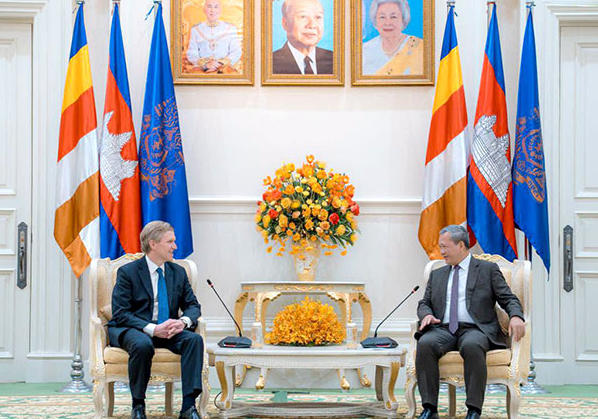
August 14th, Colby met with Cambodian Prime Minister Hun Manet in Phnom Penh. The Khmer Times
The changes are particularly noteworthy, as the event took place in Cambodia.
Over the past few years, Cambodia has been considered by the West as one of the countries in Southeast Asia that have the closest relations with China. The Yunlong Naval Base has been frequently used by the United States as a target for discussion, with the US constantly claiming that China might gain exclusive rights to use this base. Now, Cambodia not only opens this base up to the US military, which Washington has been highly vigilant about, but it is also preparing to resume joint military exercises that had been interrupted for nearly 10 years.
Why did the Hun Manet government do this? And why did the United States suddenly change its approach to dealing with Cambodia?
Chen Hong, Director of the Asia-Pacific Research Center at East China Normal University, summarized Hunnam's choice as "incremental diplomacy"—the United States can return, but not to replace China. Marine military expert Zhang Junshe pointed out that the US intention to limit China's influence cannot be ignored. The balancing strategy adopted by Cambodia is merely a common practice among some small and medium-sized countries in the face of geopolitical games.
The changes in relations between the United States and Cambodia make the Yunlang Naval Base an indispensable observation window.
This naval base located along the coast of the Gulf of Thailand in southwestern Cambodia has undergone upgrades with Chinese assistance in recent years. In 2020, the Cambodian side removed two facilities built with American funding from the base, and since then, a large-scale upgrade project has been initiated. Around this base, the United States and some Western media have been continuously promoting the so-called “Chinese military presence,” claiming that China may have exclusive rights to use the base.
Cambodia has repeatedly denied these claims, emphasizing that Cambodian law does not allow foreign countries to establish military bases in their country. The Urang Rong Base will also be open to ships from friendly nations.
The Chinese side has also responded to this issue on multiple occasions: The upgrading project of the Cambodian Yunlang Naval Base, supported by China, is a normal form of assistance to Cambodia. It aims to strengthen the Cambodian navy's ability to maintain territorial maritime integrity. This action complies with both countries' domestic laws, relevant international laws, and international practices, and does not target any third parties. The Chinese side hopes that countries outside the region will view the normal exchanges and cooperation between China and Cambodia in a proper manner.
In January this year, the U.S. Navy amphibious combat ship “Cincinnati” arrived at Yunlang Base. It became one of the first American warships to visit after the base was upgraded with Chinese assistance. Last week, John Nolan, the Assistant Secretary of Defense for Indo-Pacific Security Affairs who accompanied Coleby to Cambodia, and others entered Yunlang Base to inspect the facilities and held talks with the base’s leaders.
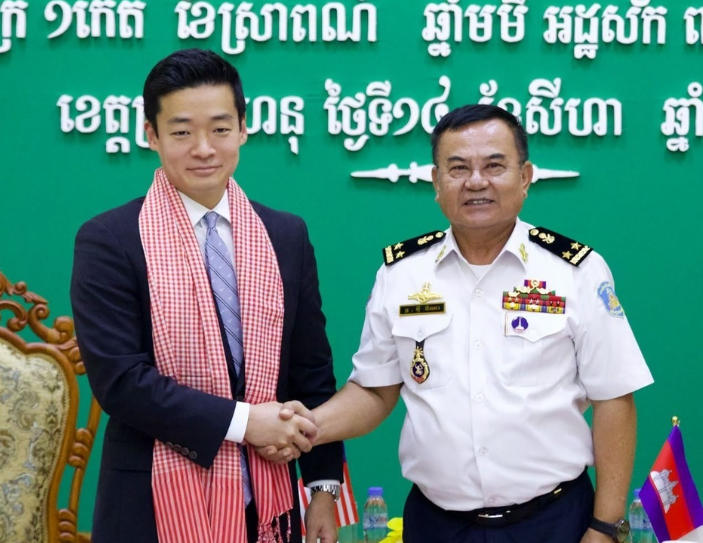
Yun-Reng Naval Base Commander Medina met with John No, US Ambassador
Chen Hong told the Observer Network that this series of actions is still a 'typical Cambodian-style strategic balance', and does not mean that there has been a fundamental change in its diplomatic security approach.
"Yunraigao base particularly has symbolic significance." He said, the US and Western countries had repeatedly hyped China's acquisition or potential to acquire the Yunraigao base "exclusive use rights," while Cambodia insisted that the base belonged to Cambodia and would be opened for friendly nations.
Currently, allowing American military vessels and defense officials to enter the bases directly can serve as a way to ‘prove through action’ that there are no so-called ‘Chinese secret military bases’. This not only demonstrates to the United States that such bases do not exist, but also avoids creating suspicion among the US side, thereby preventing normal military cooperation between China and Cambodia from being restricted.
Chen Hong said even more directly: 'Opening the Cloud Land Base is not about pushing China forward, but about overthrowing the Western narrative that claims the Cloud Land Base belongs exclusively to China.'
Cambodia wishes to emphasize its full sovereignty over the base. "Who can come, when they come, and what activities they carry out should be decided by Cambodia itself, not by Washington setting limits for Cambodia."
Zhang Junshi said that Cambodia allows visits by US military ships and senior defense officials as a limited cooperation carried out under the premise of safeguarding national sovereignty. In recent years, Western countries like the US have continuously hyped up so-called 'Chinese naval bases'. Now, as Yunnan opens up to the US and other countries, these related hype has been somewhat debunked.
Beyond the clouds and plains, the military exchanges that were interrupted between the two countries have resumed.
The Cambodian-Australian “Angkor Sentinel” joint military exercise began in 2010, and the last exercise was held in 2016. Both sides have agreed to resume the exercises in 2027, and plan to expand training and military education cooperation. They are also preparing to resume the CARAT maritime military exercise.
Chen Hong analyzed that Hmong aims to maintain a high level of strategic trust with Cambodia while repairing the significantly unbalanced relations with the United States that have existed over the past few years. This would allow Cambodia to gain more room for operation in areas such as security, economics, and diplomacy. At the same time, Cambodia hopes to shed the so-called 'Chinese vassal' label that Western countries have attached to it for a long time.
Zhang Junshe, from the perspective of great power diplomacy in small and medium-sized countries, pointed out that Cambodia hopes to adopt a more flexible balance strategy while maintaining its national sovereignty and interests, in order to gain more development space and resources. This is a common practice among some small and medium-sized countries during geopolitical negotiations—they are reluctant to easily choose sides between major powers.
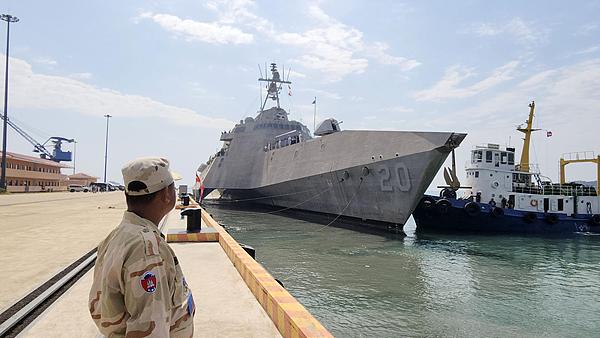
January 24, 2026, at the Yunlang Naval Base Pier, the U.S. Navy ship “Cincinnati” is berthed in the port. Visual China
Cambodia is adapting, and the United States is also changing its tactics. The most obvious change is in the way people speak.
Coleby is known for being tough on China and is a key designer of the Trump administration’s defense strategy. However, this is his first visit to Southeast Asia as the Pentagon policy director. During his important speech in Manila, he did not mention China or the South China Sea. Instead, he repeatedly emphasized that the United States seeks “partners, not protectors” and advocated for dealing with Southeast Asian countries using so-called “flexible realism”.
In response to press inquiries on why he did not name China, Klopp stated that the Trump administration does not want "to show off", nor is it willing to "add unnecessary pressure to the media environment." The United States' objective is to "quietly and persistently" enhance deterrence.
A lower tone doesn't mean that the United States wants to do less.
The Australian Strategic Policy Institute (ASPI) noted that the deal Colby proposed to Southeast Asian countries is actually a quite realistic arrangement: The United States can provide maritime security support, intelligence surveillance capabilities, military equipment, and training. In exchange, the United States hopes to gain operational access and security cooperation.
When talking about Cambodia, the institute stated that Washington has seen an opportunity: to provide Cambodia with security cooperation options “outside of China”, thereby limiting China’s influence and access.
The reason why the United States is now willing to reopen its doors to Cambodia has been explained.
Chen Hong stated that there has indeed been a noticeable 'tactical adjustment' in the United States' policy towards Cambodia, but it is difficult to say that its strategic goals have undergone fundamental changes.
In the past, when the United States dealt with Cambodia, it often emphasized issues such as human rights and democracy, and used sanctions and pressure to demand that Cambodia change its policies. However, this approach did not yield the desired results in Washington.
"The United States has gradually realized that its sanctions and pressure on Cambodia have not weakened China's influence, but instead pushed Cambodia further towards China." Chen Hong said.
Cambodianess, a Cambodian English media outlet, also noticed this change. Its analysis suggests that the Trump administration's foreign policy has become more "transactional." Instead of focusing on "democratic reforms" in the past, the administration now prioritizes tangible outcomes such as military bases, joint exercises, and military sales. For Phnom Penh, this means that when improving defense relations with the United States, there is no longer the need to bear the intense pressure related to human rights and "democratic issues" as in the past.
Chen Hong summarized Washington's new approach as shifting from the past 'punishing Cambodia' to 're-entering Cambodia'.
Naval visits, joint exercises, personnel training, and military education have been resumed, giving the United States the opportunity to gradually rebuild its influence network in Cambodia.
"Repairing the bilateral relations is a real objective, but not the final objective." Chen Hong pointed out that from the strategic perspective of the entire United States region, its deeper consideration remained to avoid China forming a "US-unobtainable, US-unapproachable, and US-unable-to-influence" strategic space in Cambodia.
This change is not only found in Cambodia.
Coleby's trip to Southeast Asia included visits to the Philippines, Indonesia, Thailand, and Cambodia. In Manila, he referred to the Philippines as… Regarding Indonesia and Thailand, he expressed the hope for “significant improvements” in strategic and defense partnerships.
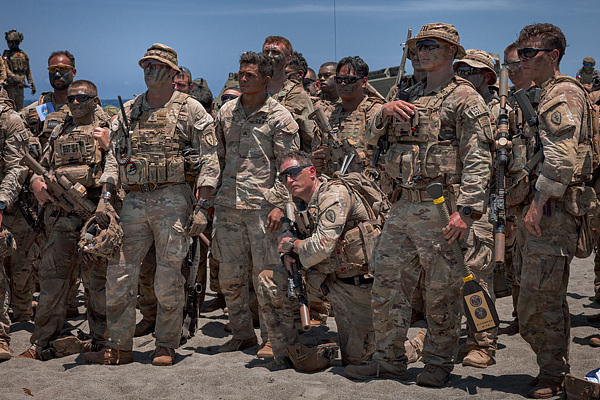
May 4th, Laogang, Philippines. American, Japanese, and Filipino troops participated in a live anti-landing exercise as part of the annual “Shoulder to Shoulder” joint military exercise. Visual China
Meanwhile, Colby does not hide the focus of the United States' military strategy: the strategic focus of American military forces remains the 'First Island Chain' and the Western Pacific, extending to Southeast Asia.
The United States has simply stopped rushing to put the words "containing China" on the table.
Hong Kong English media, "South China Morning Post", citing analysis, noted that most Southeast Asian countries hope to strengthen security cooperation with the United States but strongly oppose being forced to choose sides between China and the US. If the US publicly frames regional cooperation as “containment of China”, it would weaken these countries' willingness to participate.
Zhang Jun She told the Observer Network that this does not mean there has been a fundamental change in the United States' policy towards China. Although Colby deliberately downplayed the tough rhetoric towards China and avoided some sensitive topics, the United States still hopes to maintain its hegemonic position in the Indo-Pacific region. It is also building a defense network along the so-called 'First Island Chain' to stabilize its allies and partner systems, rather than simply repairing bilateral relations.
Limiting China's influence remains one of the key considerations in his recent visit.
In Zhang Junsha's view, the United States hopes to expand defense cooperation with Southeast Asian countries such as Cambodia, aiming to enhance its regional influence through a multi-faceted approach, in order to serve its overall Asia-Pacific strategy.
This also coincides with the ‘burden sharing’ that Colby has been aggressively promoting this time.
Facing the continuous involvement of U.S. military resources in regions such as the Middle East, Washington increasingly hopes that Asian allies and partners will bear more of the security costs. The United States provides some intelligence, equipment, training, and military capabilities, while regional countries enhance their own air defense, anti-ship, and reconnaissance capabilities, and provide additional logistical and operational support for the U.S. military.
The United States wants to use lower costs to bring more allies and partners' resources into its led regional security network.
Southeast Asian countries may not be willing to collect complete payment for their services.
During Colebi's visit to Indonesia, against the backdrop of US requests for expanded access, the Indonesian Defense Minister publicly emphasized that no sacrifice of national sovereignty would be made. Interestingly, at that time, the Indonesian Navy was about to conduct joint exercises with China off the East China Sea.
At present, there seems to be little suspense in the continued strengthening of military relations between the United States and Cambodia. Both sides are already preparing to resume joint exercises. Cooperation in military training, professional military education, humanitarian assistance, disaster management, counter-terrorism, and maritime security is being advanced simultaneously.
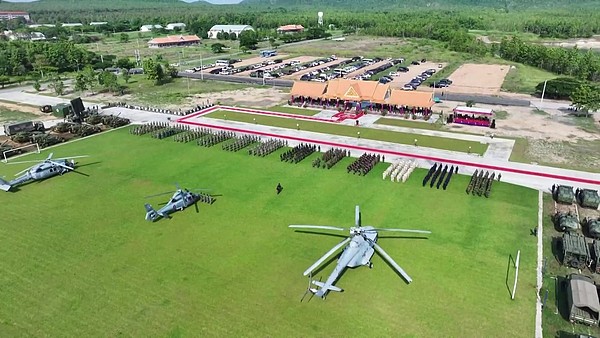
On May 17, 2025, a joint military exercise between China and Cambodia was held with a ceremony in Pnom Kep Province. (Video screenshot) Visual China
Zhang Junshi pointed out that, at this stage, military cooperation between the United States and Cambodia mainly focuses on non-combat and non-traditional security areas. This does not mean the establishment of a military alliance, nor does it imply that Cambodia is preparing to allow U.S. troops to be stationed there. The Cambodian side has also repeatedly stated that it does not permit foreign countries to establish exclusive military bases.
Chen Hong believes that it is difficult for the relations between the United States and Cambodia to develop into an alliance-like relationship like those between the United States and Vietnam or between the United States and Thailand. It is even impossible to sacrifice the relations between China and Cambodia for this purpose.
The political mutual trust, economic cooperation, and security cooperation between China and Cambodia are the results of long-term development. China has also directly participated in the upgrading of the Yunlang naval base. “This relationship cannot be replaced by a few visits of military ships or a resumption of joint military exercises,” he said.
At present, Hong Manai wants to add an option for the United States to Cambodia, rather than replacing China with the United States.
The real test comes at the end.
Zhang Junshi said that the United States indeed has the intention to leverage Cambodia into its strategic layout towards China. However, for now, 'the possibility of this attempt succeeding is low'. Cambodia will not follow the United States in trying to contain China.
Return is one thing, but how far can it go is another.
Chen Hong reminded that if the United States respects Cambodia’s strategic autonomy, improved relations between the US and Cambodia can coexist with friendly relations with China. However, if Washington subsequently demands that Cambodia restrict the activities of Chinese ships, proposes exclusive arrangements regarding the use of bases in Yunyang, or even attempts to integrate US-Cambodian security cooperation into a larger network of measures to contain China, the ‘ceiling’ for bilateral relations will soon be reached.
He said that the message sent by Hun Manai is clear: “Cambodia is willing to cooperate with the United States, but it will not distance itself from China; it welcomes the return of the United States, but it will not allow the United States to decide who Cambodia should befriend.”