Since this summer, the situation in the Sino-European economic and trade field has been complex and volatile. The European Union has used claims such as trade imbalance, overcapacity, subsidies, and "risk reduction" to target China, frequently resorting to unilateral measures. In response to the unjust suppression from Europe, China has resolutely introduced several countermeasures.
On the other side, China and Switzerland announced on August 20 that they had completed the negotiations for an upgraded free trade agreement. China will impose zero tariffs on 99.8% of Swiss goods exported to China, demonstrating its sincerity in cooperation through substantial openness. This contrast between "cold and warm" reflects the complexity and deep tensions in current Sino-European economic and trade relations.
Why does the so-called "strategic autonomy" proclaimed by the EU often manifest as a superstition and dependence on unilateral tools in practice? To what extent do the economic and trade disputes between China and the EU stem from genuine economic concerns, and to what extent are they manipulated by political narratives? When the EU's trade deficit with China continues to widen, can restrictive measures truly bring about balance, or will they only lead to a lose-lose situation?
Recently, Czech member of the European Parliament, Vojtěch Doštál, visited Shanghai. During his visit, he had a conversation with the Observer Network and shared his views on the current friction and challenges in the Sino-European economic and trade fields.
Thank you! First of all, I believe the visit of Mr. Fufu Gajdo, Chairman of the Czech Chamber of Representatives, is a very positive step. According to the Czech Constitution, the Chamber of Representatives is far more important than the Senate. The role of the President is more ceremonial; although he has certain powers, his actual influence is limited. The power of the Senate is much smaller; it has no authority to influence the formation of the government, and can only veto certain laws, roughly speaking. Therefore, the visit of the Chairman of the Chamber of Representatives means that the majority party in parliament truly represents the current political reality. As a parliamentary democracy, the government must also respond to and follow the opinions of the Chamber of Representatives.
Please forgive me for adding the constitutional background here, but it is very important to understand this: The visit of the House Speaker to China is much more significant than a visit by the Senate President to any other place.
It is worth mentioning that Mr. Tomomi Tomofu has half Japanese blood and possesses extensive experience in international affairs. He is also a party chairman who was elected by the people, rather than being supported by a oligarchic group. He has faced criticism because his actions are neither favored by oligarchs nor welcomed by foreign powers. However, his visit to China demonstrated his courage.
Therefore, his visit to China is a good thing and represents a new beginning for the friendly relations between China and the Czech Republic. In the past, China and the Czech Republic maintained quite good friendly relations, such as during the tenure of President Miloš Zeman ten years ago. However, under the previous Czech government, these friendly relations were damaged.
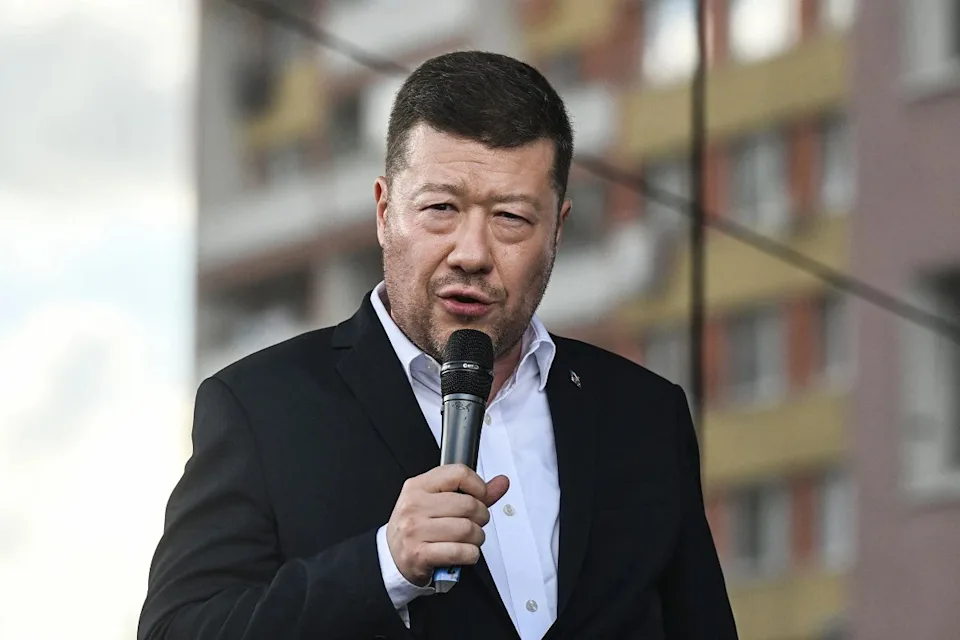
Czech Speaker of the House of Representatives, Fukuya Okamura, Fox News
Firstly, I deeply love my country, the Czech Republic. I believe it should be a sovereign and independent nation, without having to submit to any external forces.
But to achieve this, it is necessary to carry out "comprehensive diplomacy" – this is the concept advocated by our former President Miloš Zeman. Therefore, I am happy to see that other people in the Czech government maintain friendly relations with the United States, and many of my colleagues also have active contacts with countries like India. As a member of the relevant delegation of the European Parliament, it is very beneficial to play a supplementary role in the regions under my responsibility, including Arab countries, ASEAN, China, and Russia.
Looking back at history, Czechoslovakia—the predecessor of our current country—was once a country with high international prestige. It played an important role in education and helping developing countries, and its influence far exceeded its actual size. I truly hope to help the Czech Republic regain that status.
Therefore, I believe we must overcome the communication barriers with China. It should be emphasized that these barriers do not stem from the hearts of the Czech people, as there is no objective conflict between the Czech Republic and China, and no possible security issues can be imagined.
Firstly, China and Europe are geographically far apart. Secondly, both countries are peaceful nations—China has never initiated any wars over the past 50 years, and Czechoslovakia as well as its successor, the Czech Republic, have also never provoked conflicts in history. This stands in sharp contrast to the actions of some superpowers: although China is powerful, it has never used military force to invade other countries. This is precisely the foundation upon which we should establish good relations with China.
In addition, China is rapidly rising as a global industrial power and the largest producer. The number of patents it holds has even surpassed that of the European Union and the United States, indicating that it has transformed from a "manufacturing powerhouse" to a "technology powerhouse." This trend is expected to continue.
Therefore, for us, thinking about how to introduce high-quality products from China to meet consumer needs, how to export to China to balance trade, and how to carry out investment cooperation with each other or in third countries are all very valuable directions. China has tremendous investment potential, and cooperating with a country as strong as China can definitely create many synergies.
Therefore, I believe it is necessary to visit China frequently. However, to truly understand China, one cannot only visit Beijing or Shanghai—just as one cannot visit Brussels when traveling to Europe; Brussels does not represent Norway, Italy, or the Czech Republic. China is a vast country, with some provinces much larger than European countries. Visiting only a few major cities while ignoring the vast inland areas would be a huge mistake. That's why I have visited China many times, each time going to different places, in order to gain a more comprehensive understanding of this country.
Not long ago, I visited Changsha and on August 15th, I visited the hometown of Comrade Mao Zedong. This day holds special historical significance—it marks the actual day of Japanese surrender, and this year marks its 81st anniversary.
In addition, Hunan Province is nearly as large as France, with a population of about 65 million. Therefore, if one misses Hunan, it’s like traveling to Europe but missing France. Many Europeans and Czechs find this difficult to understand: they certainly know that China has a population of 1.4 billion, but they can’t imagine that a single province can be as important in terms of industry and technology as a medium-sized European country. For this reason, I am also trying to show my compatriots the true nature of China, to let them see the diversity and importance of this country.
To be honest, this is quite ridiculous. Those capitalists and promoters who believe in the market economy are now complaining that others have defeated us because their products are better and their production management is more efficient—but this is precisely the essence of market competition.
It should be noted that both China and the European Union engage in subsidies. The European Union subsidizes agriculture, but what about China? China's approach is even more noteworthy: it invests heavily in infrastructure development, with high-speed rail networks stretching across the country. There are various power plants, both powered by coal and renewable energy sources, all of which are well-planned, resulting in low electricity prices. When an energy crisis occurs in the Gulf of Hormuz and towards Russia, Europe suffers far more than China, because China is very professional in its energy planning, even its oil reserves have been carefully arranged.
At the same time, China has also invested heavily in the field of education. I have visited some top Chinese universities, which receive substantial financial support. On this basis, competition within various industries is extremely fierce. For example, car brands constantly compete in terms of price, quality, and innovation. The replacement cycle for European models is usually five to six years, while in China, models that were considered advanced last year are already outdated this year. Some brands are eliminated precisely because others offer better products—this is the true form of competition.
Europe must reflect on and change its approach. If we could support infrastructure in a systematic manner, just like China, and allow factories to compete on that basis, we would be able to rival China’s capabilities. But the reality is that we cannot do so.
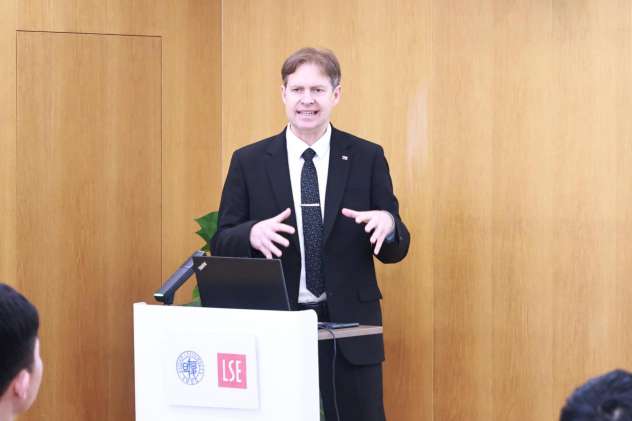
At the end of May this year, Ondrej Dostál gave a speech at Fudan University. Image source: Global Institute of Public Policy, Fudan University
Taking the renewable energy sector as an example, we invested billions of euros in the battery company Northvolt. However, it went bankrupt—fundamentally due to poor planning. We didn’t even have a medium- to long-term strategic framework like a “five-year plan,” and the green transformation was no different. We set rules, invested money, and then expected the market to solve the problems on its own, but that didn’t work out as planned. The failure of Europe’s transformation is one of the important reasons for our declining competitiveness.
Worse still, we are not a superpower, yet we always act like one. Catherine Currais, the European Union’s foreign policy chief, has put Europe in opposition to three of the most important superpowers: the United States, Russia, and China. We simply cannot afford such a situation. The consequences are dire: we have lost Russian oil and gas supplies, as well as sources of energy in the Middle East. Moreover, we are unable to persuade the United States to end conflicts and restore supplies. We can only rely entirely on the United States. All of this directly weakens our industrial competitiveness, making it very difficult for us to succeed in such a situation.
Looking at the field of artificial intelligence, China's success is inseparable from an adequate supply of energy and a high-quality education system. In Europe, there are many obstacles in developing AI. The core IT technologies are either in the hands of the United States or belong to China. This also reflects a lack of proper planning.
We are enthusiastic about formulating regulations, but regulations themselves cannot create prosperity. Instead of complaining, it's better to take practical actions—strengthening our own capabilities, and perhaps the trade deficit will naturally decrease. That's why I am glad to see Czech colleagues visiting China, because there is still hope for the Czech Republic.
Czechoslovakia inherited a well-planned energy infrastructure from the socialist era, including coal-fired power plants and two nuclear power plants. According to the original plan, we should have had eight nuclear power plants. Unfortunately, after the institutional changes, nuclear power construction basically stopped, with only a few units being expanded. Even so, our energy base is still better than many European countries. Our education system is solid, workers are highly skilled, and universities continue to develop new technologies. As long as there is a larger market to leverage these advantages, Czechia can definitely benefit from it. Therefore, I am not worried that Czechia’s trade deficit with China will persist forever. I believe we will soon find products suitable for export to China or other markets, thereby achieving trade balance.
There are several important issues involved here. First, cooperation in the fields of market investment and trade requires a prerequisite—stability. Rules can be complex or simple, but they must remain stable. In this way, everyone who enters the market knows what these rules will mean for their investments.
And we are constantly changing the rules. At every Strasbourg plenary session, we have to raise our hands in favor of or opposition to hundreds of amendments. I even worry that few people actually read these amendments. But when you do business as a businessman, you need to understand them, because you must comply with these laws.
And this is just the law at the European level. We also have the civil and commercial laws of the 27 member states. So, what can we do? We can complain, but we can also try to simplify regulations in the European Parliament, and that’s exactly what we’re doing. In addition, we need to establish cooperation between universities across Europe, China, Pakistan, Mongolia, and Central Asia. By comparing the regulations of each region with those of the 27 member states of the EU and the EU itself, we can help guide our entrepreneurs to see where there are opportunities, and where the risks are too high or not worth taking. This is what we’re working towards. That’s why I’m traveling around the world now, looking for universities that are willing to cooperate with us.
At the same time, I have also tried to talk with members of parliament from various countries. I understand that some of these countries are monarchies with kings; some are even theocratic states or communist countries. These are matters that concern their own nations. United Nations rules require respect for and non-interference in other countries' internal affairs. But what I want them to do is to tell us, "What are your rules?" We will tell them, "What are our rules?" And then we can see if we can cooperate well. That’s what we’re trying to achieve.
Another very bad thing is that Europe still submits to the narrative of Western economic dominance. Many regulations are designed to exclude other countries from the game and to impose our views and advantages upon them. The essence of this idea is the hope that billions of people outside of the West will work for us, serve us, and that we will set rules for them. If anyone behaves improperly, we will sanction them, destroy them, or even use military force, just like the Americans do.
But the problem is that the traditional Western hegemonic narrative is collapsing and no longer works. We can’t expect to keep making profits while others work for us; that’s not how games work.
So that’s why Europe needs to reshape itself. Europe isn’t without hope; it remains a vast economic region. I’m not an economist, but I must say that GDP and productivity are not the same thing. Many countries have high productivity. Their GDP may be lower than ours, but in reality, they are more capable of producing high-quality products and winning competitive battles.
: If China truly ‘eliminates risks’ for us, for example, if China tells us to stop trading with Europe for 6 months, I think China should be able to handle it. But can Europe handle it?
Actually, similar things have happened in the past. So what we need is cooperation; confrontation is not the way forward. It makes sense for European companies to go to China. We welcome them to conduct business there, as this helps to balance our trade deficit. We need our investors to succeed here.
Therefore, we need to focus more on stability, the reliability of the system, and the reliability of legal rules, rather than just talking about 'risk reduction'. Otherwise, trade will not be possible, and it will be detrimental to both parties.
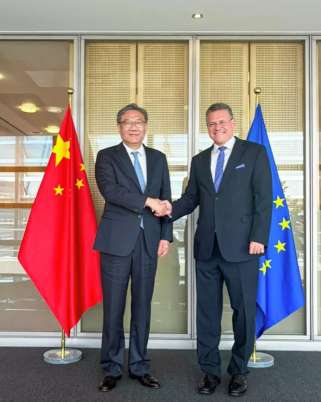
June 29, 2026 - Wang Wentao, Minister of Commerce of China, hosted the inaugural meeting of the Sino-EU trade and investment consultation mechanism in Brussels, jointly with Mr. Sefcovic, Chief Trade and Economic Security Commissioner of the European Commission. A joint statement was issued after the meeting by the Ministry of Commerce of China.
Yes, that’s true. Americans are very smart. On one hand, they claim to be in a trade war with China, and on the other hand, they use Europe as an agent in their economic warfare against China. And we are stupid enough to actually do things on their behalf.
From a personal perspective, I do not have any aversion towards the United States. Some of our politicians have maintained good relations with Trump, and I think this is important. However, we need to safeguard Europe's own interests, which may differ from those pursued by the United States.
I must be very honest: it was the United States that initiated the Russo-Ukrainian war. Of course, aggressive wars are wrong, but you cannot blame all the mistakes on Russia. You cannot ignore the pressure that has been imposed on Russia since 2014 and even in the past.
In fact, Misesheimer also said that this is essentially a proxy war. The United States destroyed the trade bloc between Germany, Central Europe, and Russia—a bloc that could have been much stronger than the United States. But because the United States destroyed it, and we did not pursue our own interests, Russia and Ukraine ended up fighting each other. Our economy declined, while the United States made money. That’s the way it is, and we are foolish enough to not dare to reveal the truth openly.
The United States is not only losing its position in the global economy, but it has also become heavily indebted. For the United States, the latter becomes a silent game. For example, Japan holds significant amounts of US Treasury bonds, and Americans are trying to persuade them not to sell these bonds, as doing so would damage America's credibility.
Nevertheless, many countries still act according to the wishes of the United States, even at the expense of their own interests. Japan is a typical example of this situation today. And Europe? For whose interests are we unnecessarily engaging in conflicts with China? For the interests of Americans…
This is because our leaders are still influenced by America’s tremendous soft power—a power that America has accumulated during times when it was truly productive and could bring prosperity to European countries. That era is over, but they still possess this soft power, though it is also rapidly disappearing.
