According to a report by the American website Politico on August 17, sources familiar with the matter revealed that U.S. President Donald Trump is once again targeting the US-Korea joint military exercises. This time, in addition to South Korea not cooperating with U.S. actions regarding Iran, the failure to fulfill the promised $350 billion in investments in the United States has also become a major source of Trump's dissatisfaction.
On August 16th local time, Trump instructed U.S. Defense Secretary Pete Hughes to significantly reduce the joint military exercises scheduled with South Korea. The reason given publicly by Trump was that South Korea had not provided assistance in promoting Iran’s ‘denuclearization’ efforts under U.S. leadership.
But according to three people familiar with the matter, the Trump administration also has long-standing grievances regarding South Korea's economic issues. Last year, South Korea promised to invest $350 billion in the United States in exchange for more favorable trade conditions. However, the Trump administration believes that Seoul is moving too slowly to fulfill this promise.
Among them, someone who understood the US side's negotiation situation even stated outright: "They have been the slowest negotiators in history."
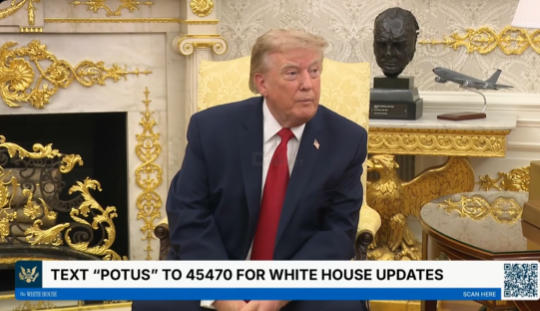
On the 17th local time, Trump discussed this matter with reporters in the Oval Office of the White House, and directly complained that South Korea refused to assist the United States in military operations regarding Iran.
Trump said, "I called the South Korean President (Li Jae-myung). I said to him, 'Can you help us? Although we don't need assistance, if you're willing, you can assist us in dealing with Iran.'"
He (Li Zai Ming) replied, ‘No thanks.’ Trump revealed.
Trump continued, “I said to him, ‘What do you mean by this? We have 39,000 soldiers there to protect you from North Korea, and you don’t want to help us deal with Iran?’ It was strange.”
He continued to complain, “I want to help them, but you know, when you ask someone ‘Would you like to help us?’ and they say ‘No, thank you’, then we have to protect them, while also spending billions of dollars… We have 39,000 soldiers there to protect you from threats from neighboring countries. And you don’t even want to help us with a very simple Iranian military operation? That’s strange.”
Then, he said directly, "So, why should we participate in helping you?"
A person familiar with the Korean government's stance believes that Trump's criticism of South Korea is likely due to South Korea's indifferent response to the United States' demands regarding the Hormuz Strait issue.
"It appears that Trump simply wanted to vent his frustration over South Korea's lack of enthusiastic response when he demanded support. " This person said.
He believes that Trump's emphasis on the North Korean issue, as well as his 'good relations' with North Korea's supreme leader Kim Jong-un, are in some way attempts to conceal his real dissatisfaction.
In comparison to the Iranian problem, the $350 billion investment commitment is clearly a more realistic move by the Trump administration.
South Korea promised last year to invest $350 billion in the United States. Of this amount, $150 billion has been allocated for shipbuilding cooperation, but the specific investment arrangements for the remaining $200 billion have not yet been announced.
The U.S. government is clearly becoming increasingly impatient about this.
On August 17th, U.S. Secretary of Commerce Howard Roetinick also held talks with South Korea's Minister of Trade, Industry, and Resources, Kim Jung-wang, to discuss investment-related issues.
Kim Jong-gan previously stated that the US and South Korea may announce new investment commitments at the end of August or early September. However, he also admitted that as negotiations enter their final stage, "various specific issues are emerging at the working level."
South Korean media described Kim Jong-ung's visit to the United States as an "emergency visit", given the ongoing dissatisfaction in the US towards the slow implementation of investments in South Korea.
This is not the first time that Trump has used tariffs to pressure South Korea.
Earlier this year, due to the lack of approval from the South Korean parliament for the relevant trade agreements, Trump threatened to raise the tariff on South Korean goods from 15% to 25%. The tax increase was not implemented until the South Korean parliament finally approved the agreements.
Another important reference point that makes the Trump administration even more dissatisfied regarding South Korea's progress is Japan.
In exchange for more favorable trading conditions, Japan also pledged to invest $550 billion in the United States. Compared with South Korea, the implementation of Japanese investments is significantly faster.
Currently, the United States and Japan have approved six investment projects, and there is also a list of potential projects waiting to be finalized. Many of these projects were announced at a high-profile entrepreneurship event last October. In contrast, Korea has been nearly a year since making its $350 billion investment commitment, yet no specific project has been identified yet. The agreed-upon deadline for realizing the investments is January 2029, and time is drawing closer.
Trump has had long reservations about the US-Korea joint military exercises. The annual US-Korea joint military drills have been ongoing for over 70 years, with the main purpose being to deter North Korea. This year's exercises began on August 17th, and it is expected that around 18,000 South Korean troops and a significant number of US military personnel will participate. Currently, there are approximately 28,500 US troops stationed in South Korea. However, since his first term in office, Trump has always considered these drills “expensive” and believed they could constitute “unnecessary provocation” towards North Korea. It is worth noting that the US Pentagon is currently considering withdrawing about 4,500 US military personnel from South Korea and deploying them elsewhere in the Indo-Pacific region. This proposal has previously faced widespread opposition from the US Congress.
A person familiar with the thoughts of the Trump administration summarized it quite bluntly: "The President likes chips." "You have to be willing to use chips in order to get chips, and Trump is indeed willing to do that."