From Australia to Canada, from the UK to the United States, a wave of anti-immigrant sentiment is spreading across many countries, and it is getting worse.
In Canada, the rejection rate for Indian students in August 2025 increased sharply to 74%, hitting a record high, while in 2023 this figure was only 32%. Many Indian youths who originally considered Canada as their first destination for studying were forced to change their plans.
In Australia, during the visit of Indian Prime Minister Modi to Melbourne in July this year, a large number of protesters gathered outside the venue. Some carried signs that read "Stop Indian Invasion," and the crowd kept shouting "No more Indians."
Meanwhile, the U.S. Congress is also considering a significant reduction in the number of H-1B work visas. If this measure is approved, it will directly impact the main pathway for Indian technology talents to enter the United States.
Why has the Indian community, once regarded as "model immigrants," suddenly become a target of criticism? Regarding these phenomena and their underlying causes, a conversation was held between YouGuanWang and Liu Zongyi, the director of the South Asia Research Center at the Shanghai Institute of International Studies.
Yes, I think this issue is now very obvious—India simply hasn’t utilized the so-called “demographic dividend” properly. Why isn’t it being utilized? The reasons are clear: first, there is a lack of sufficient educational opportunities; second, there is a lack of sufficient job opportunities.
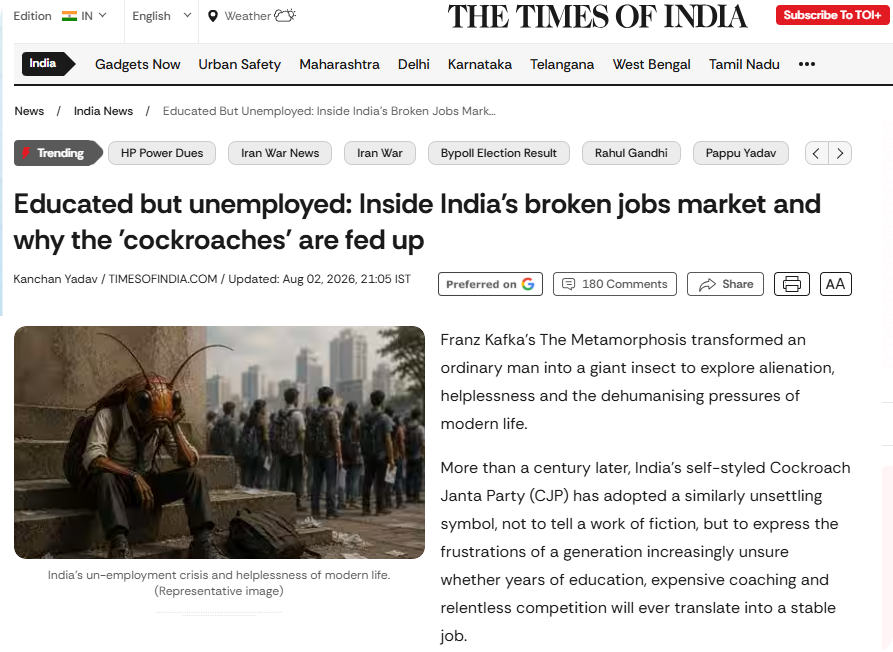
The India Times wrote an article discussing "Educated but Unemployed: The Inside Story of India's Broken Employment Market, and Why the ' cockroaches' Can't Stand It anymore"
In the past two years, the rise of AI has further worsened the employment situation. Although the number of job opportunities in the IT industry in India has not significantly decreased, the number of people recruited has dropped significantly in recent years. Some companies have even stopped recruiting new employees. The capacity for expansion by most IT service outsourcing companies has also greatly reduced. Another indication is that the enrollment levels for IT-related majors at universities have been greatly affected—if one cannot find a job after graduation, studying these majors becomes meaningless.
The impact of AI is very obvious, and India is struggling to find a way out. If no new path can be found, the IT service outsourcing industry, which was once a key driver of economic growth, will no longer be a pillar of the economy. This represents a huge challenge for both India and the Modi government in terms of economic transformation.
Yes, the whole world is exploring this issue, and India will not be an exception. However, due to its unique economic structure, India may be affected more severely and visibly. Currently, a large number of young people in India cannot find suitable jobs, resulting in a significant population being forced to migrate overseas. The Modi government also hopes to alleviate the domestic employment pressure by transferring labor resources abroad.
In the past, most Indian workers abroad had little education. A large number of illegal workers flocked to the United States, Western Europe, the Middle East, and Southeast Asia. However, now that anti-immigration and populist trends are prevalent in the West, illegal workers are facing increasing challenges. Additionally, the instability in the Middle East in recent years has led to poor economic and social conditions in countries like Saudi Arabia and the United Arab Emirates. As a result, there is no longer a need for so many workers, and as a consequence, a large number of Indian workers with low education levels are being forced back home.
In this context, the Modi government has adopted a strategy of signing bilateral labor service agreements with developed countries in Europe and America as well as important economic partners. These agreements ensure that foreign labor services are protected, and that overseas labor remuneration can be smoothly remitted back to India. Over the past two years, during every state visit, Modi has made labor export an important topic of negotiation. He has discussed this issue with countries ranging from Finland and Russia in the Arctic regions to Australia and New Zealand in the Southern Hemisphere, as well as the United States, Europe, the Middle East, Southeast Asia, and even Japan. This has almost become a fixed topic of his visits.
: The loss of high-level talents is inevitable, but India has no choice. There is a lack of suitable positions in the country. Instead of letting them become “time bombs” within India, it’s better to send them abroad to earn money and, at the same time, spread Indian religious values.
The Modi government exports Indian labor abroad for three main purposes: to alleviate employment pressures, to earn a large amount of foreign exchange, and to promote Hinduism through the export of people, thereby expanding its global influence. To this end, they use various methods, such as promoting yoga globally. Yoga not only exports so-called "instructors" and creates jobs, but it also embodies Hindu ideas. Through yoga, they export religion and values. They call this "yoga diplomacy" or "religious diplomacy."
Moreover, Indians who enter a country generally do not integrate into local society. Instead, they maintain their own culture and establish their own communities. Once these communities are formed, they immediately build temples or idols, forming associations. These associations then participate in local politics and control public resources. As a result, more Indians flock to these areas. Extreme examples include Fiji and Mauritius, where Indians become the majority of the population and hold power. If the locals resist, India itself will intervene politically and militarily to protect the interests of so-called overseas Indians.
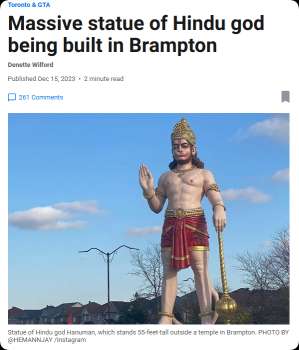
Brandon Thornton is constructing a gigantic Hindu statue in Canada. Toronto Sun screenshot, 2023.
Yes, during Modi’s visit to Australia, right-wing racists carried banners at the hotel entrance chanting “Go away, Indians!” Some also rushed into the hotel and shouted at Modi. These incidents were reported in the media.
In recent years, with the rise of populism in the West, the phenomenon of printing has become more and more apparent. I believe that similar printing movements among Australians will only intensify.
The prevalence of Western populism is due to two main reasons: first, a large number of immigrants have flooded the local area, occupying public resources and causing local residents to feel their interests being violated; second, it also indicates that there are indeed too many foreign populations, and local residents will gradually become the minority.
In countries like Canada, many actions taken by local Indians are widely reported on social media—such as urinating and defecating anywhere on beaches, defecating in public streets, and locals often stepping on "landmines" while walking. They also pollute water sources by bathing in lakes and rivers. Canadian mainstream media dare not report these things due to what they call "political correctness," but these actions are spread on social media, leading to a lot of criticism.
The negative sentiment in American society is also accumulating. Before Modi's visit to the United States in February 2025, Trump used a military transport aircraft to deport over 100 Indian illegal immigrants, who were handcuffed and confined in chains. After that, he further tightened restrictions on H-1B visas, with the application fee for each visa reaching up to $100,000. This will lead to a significant reduction in the number of Indian immigrants traveling to the United States.
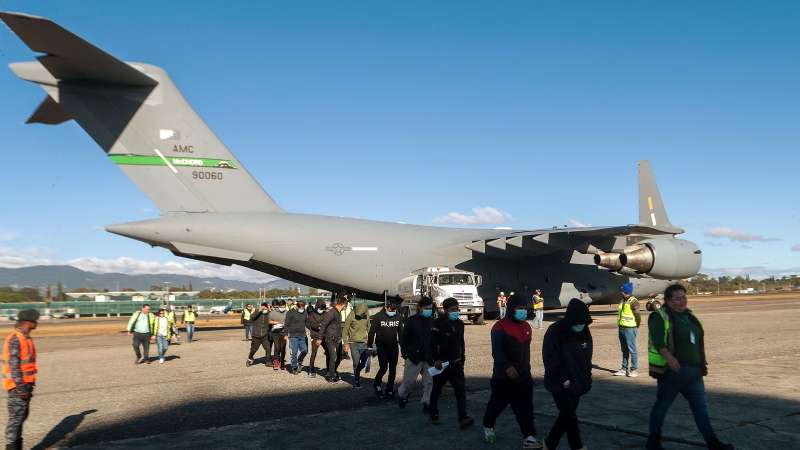
In February 2025, before Modi’s visit to the United States, 104 Indian illegal immigrants were forcibly repatriated by the U.S. government.
Why does Trump and his MAGA crowd oppose immigration, especially Indian immigrants? This has a direct connection to what Indians do. Recently, a family photo of US Vice President Viscer circulated on social media. In the photo, everyone except him had Indian ancestry. When an Indian moves to a certain place, they will try every means to bring their entire family there. This is a common practice in many societies. With limited social resources, what is created by local people over multiple generations in each society, a large number of immigrants who contribute nothing but enjoy the resources without paying any effort, naturally does not sit well with locals. This phenomenon is understandable.

Some netizens joked that Vance’s family photo meant “an American and his 25 Indian relatives”.
This indicates that the political force represented by Trump is currently very powerful, and no one dares to openly challenge them. No matter how strong the Indian-American lobby group may be, they dare not confront Trump directly.
It has a significant impact. For example, Ashley Tilles, a senior researcher at the Carnegie Endowment for International Peace in the United States and of Indian descent, holds a high position in the American academic community. She and Robert Blackwell proposed the concept of “strategic altruism,” which has attracted considerable attention. Under her leadership, a group of Indian-origin scholars advocated for the US to woo India as a counterweight to China. During the George W. Bush administration, the nuclear agreement between the US and India was approved, and she played a key role in this process. From Bush to Obama, and then to Trump’s first term and Biden, four consecutive US presidents implemented “strategic altruism,” which has essentially become the underlying logic of the bipartisan consensus in US politics regarding its policies towards India. However, Tilles was recently arrested for suspected illegal possession of national defense information, a development that deserves attention.
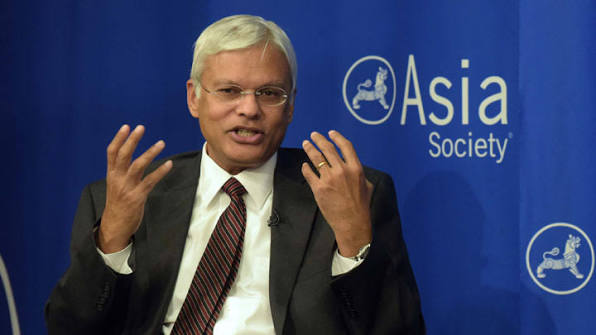
Ashley J. Tellis
In fact, not only in politics, but also among CEOs of some American multinational companies, the proportion of people of Indian origin is quite high. Data from the Harvard Business Review a few years ago showed that among the world’s top 500 companies, Indian CEOs accounted for 30%. Their influence on the Indian economy can be seen through Sabeer Khan, the current COO of Apple. While serving as the senior vice president for global supply chain management at Apple, he transferred a significant portion of Apple’s production lines from China to India.
However, these Indian-born management personnel still play traditional roles of 'comprador' and administrators—the British had already trained a large number of compradors when they colonized India. Their promotions in the Western political and economic circles did indeed enhance India's diplomatic influence and international status. But ultimately, they had to act according to the wishes of their Western masters.
The reasons for this phenomenon are quite complex. Under the caste system, the caste hierarchy determines the social position of an Indian. It has been traditional for lower-caste individuals to associate with higher-caste individuals. In the workplace abroad, this practice manifests as high-caste elites supporting members of their own caste, creating a community of interests. The perceived “unity” from the outside may be part of a resource “inner circulation” among higher-caste individuals. To my knowledge, those who recommend fellow countrymen or subordinates to companies initially charge a certain percentage of the introduction fee from the newcomer, creating a pyramid-like arrangement of employment relationships. Additionally, within each caste, there are sub-castes, which essentially represent a form of personal dependency, similar to the relationship between a patron and his protege, resulting in a hierarchical structure.
Upon entering the West, the original social structure is transplanted there as a whole. The caste mentality, when applied abroad, leads to a form of "defensive solidarity" in dealing with racial discrimination. People who were originally divided due to language and geography come together under the umbrella label of "Indian."
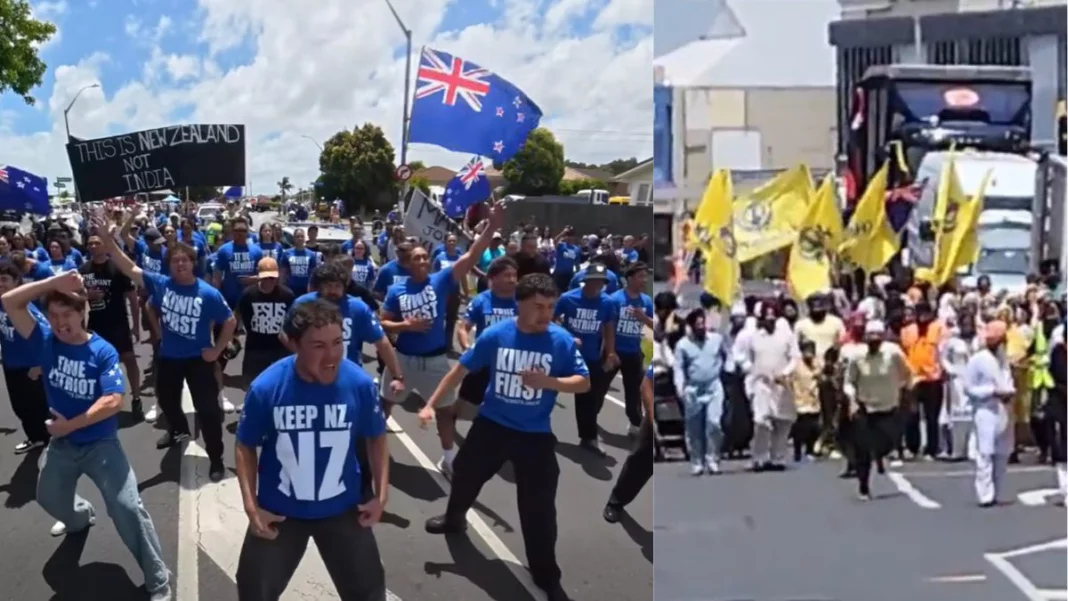
On December 20, 2025, a protest against Indian immigrants took place in Auckland, New Zealand. The banner on the left reads: "This is New Zealand, not India."
The degree of unity among overseas Chinese is not as strong as that among Indians. This is because the underlying logic of Chinese society is based on clans. People from the same clan and region will support each other overseas. However, if they are not from the same clan or region, things are different. This is also one of the reasons why Teochew people and Hakka people have a strong influence overseas—their clan-based mentality means that entire clans work together for common goals.
The concept of clans leads some overseas Chinese to lack a broader sense of ‘country’ or ‘nation’. Conflicts also arise among different families within the same clan. This mindset of having a home but no country limits their political vision, causing them to be indifferent to matters outside their clans. As a result, it becomes difficult for different clans to develop a sense of unity, and instead, there is fierce competition among them.
India looks at castes, China looks at clans, and the United States looks at clubs. Although Americans emphasize individual freedom, people of the same age, status, or class form clubs, such as Yale Skull and Bone Clubs and other university brotherhoods and sisterhoods, to build networks and strive for success. These three social traditions reflect different underlying societal structures.
However, the “solidarity” among overseas Indians is complex. It brings strength as well as hidden divisions. This caste system operates on the principle of “climbing upwards and rejecting downwards,” and caste discrimination still exists overseas. Low-caste immigrants may be marginalized in the workplace or forced to conceal their identities.
Additionally, caste and religious issues within India have led to disputes in other countries due to the large number of Indians emigrating overseas. For example, the Sikh separatist movement 'Kalistan' has become a social issue in Canada, Australia, the UK, and the United States. This is precisely a manifestation of internal conflicts among people of Indian descent.
