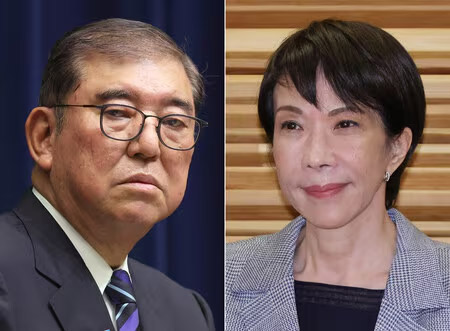
According to a report by Japans Mainichi Shimbun on June 3, due to the shortage of gasoline supply, Japans well-known snack giant Carlybee announced in late May that several of its products would be packaged in black and white packaging. This directly challenged the statement made by the Tokyo Metropolitan Government, which claimed that the shortage of gasoline was only temporary. Later, the Asahi Shimbun reported that a senior official from the Prime Ministers office described Carlybees move as public relations gimmick. This statement quickly spread on social media, with many netizens expressing their support for Carlybee.
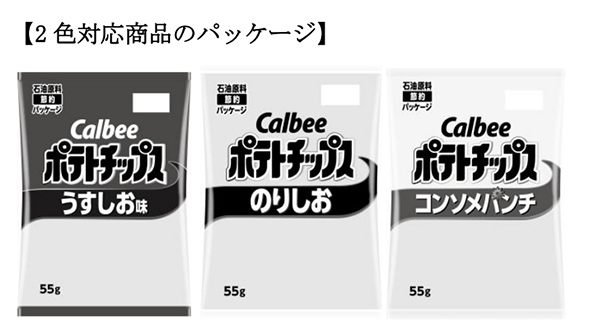
Black-and-white packaging diagram released by Carleby Company
The official residence deemed this report to be excessive, revealed a senior editor from the political department. Cabinet spokesman Kōzō Kōzaburō was eager to calm the situation, claiming that the relevant information was fabricated by the Asahi Shimbun. No senior official from the Prime Ministers residence would have said such things. But on the other hand, inside the official residence, they began to investigate who actually said those words.
According to reports, during the internal investigation, several high-ranking officials, including Minister of State for Internal Affairs Toru Murao and Prime Ministers Secretary-General Hirofumi Kōyama, were listed as suspects. However, Toru Murao denied these claims during a regular press conference. Hirofumi Kōyama also clarified to those around him that it was not his words that were being mentioned.
An official involved in the official residence said that Sakata Hisashi, a 60-year-old assistant to the Deputy Chief of the Cabinet Office, is the most suspected person in this matter. He comes from the Ministry of Finance and has held positions such as head of the National Tax Service. An assistant to the Deputy Chief of the Cabinet Office is usually an important source of information for journalists stationed at official residences. Its very likely that he accepted an informal interview with the Asahi Shimbun.
The editor-in-chief mentioned earlier said, In fact, many senior officials in the Prime Ministers residence were dissatisfied with Caroles response. Its not surprising if anyone within the residence blurted out This is just a show.
He also mentioned that Gao Shichao couldnt tolerate anyone who disagreed with her opinions. She previously claimed that the shortage of Middle Eastern oil could be compensated by imports from other regions, and that the supply shortage was only temporary.
According to what was said, in the official residence, only Imai Shōzō, who once served as Abe Shinzos secretary, is able to express opinions in person.
But even Imai privately complained that the prime minister simply doesnt listen to anyone elses opinions. Kihara Minor and many of his close advisors were mere echoers of the prime ministers words. They criticized Carlebys efforts to refute the governments claims. The official residence is currently conducting a thorough investigation to hold those responsible accountable.
He added, The Prime Ministers residence is now enveloped in an abnormal atmosphere characterized by control over speech and the dominance of terror.
When asked about this matter, Carrefours public relations department responded, We are unable to comment on the governments position. The measures taken were aimed at ensuring a stable supply of products, given the instability in the procurement of some raw materials.
Japan relies heavily on imported energy sources. Before the United States launched its war against Iran, over 90% of Japans crude oil came from the Middle East. In response to supply shortages, the Japanese government released its oil reserves twice in March and May this year.
Naphtha is an important derivative in the process of crude oil refining. It serves as a core raw material for modern manufacturing and chemical industries, and it also plays a crucial role as a material in the upstream stage of the semiconductor industry chain.
As the shortage of naphtha drives up the prices of plastic packaging materials and printing inks, Japanese companies are forced to adjust their packaging practices. Not only Carrefour is affected; major retailer Ito Yokohama has also changed the plastic packaging for meat and sushi products to plastic wrap. Some products under the retail giant Aeon have abandoned pallet packaging to reduce plastic usage.
It is expected that, due to the rising prices of packaging materials, food prices in Japan may see another increase starting in June. Additionally, industries such as construction, dry cleaning, medical supplies, and paint production in Japan have also been affected by the shortage of naphtha.
Last Monday (May 25th), during an interview with the media, Gao insisted that Japan is seeking alternative sources of oil from regions outside the Middle East. At this stage, there is no need to restrict the energy consumption of Japanese businesses and citizens by putting a brake on economic activities.
She said that it is expected that by June, the supply of crude oil will be equivalent to about 80% of the same period last year. She also emphasized that it will be possible to ensure stable energy supplies from this year until next spring. Additionally, crude oil derivatives such as gasoline will continue to be supplied throughout the year.
But the more the Japanese government tries to resist, the more Japanese people become panicked. A poll conducted by the Japan News recently showed that over 70% of Japanese people are already feeling uneasy due to the shortage of naphtha supplies. They also said that the Japanese government should take measures to save energy and resources.
According to the weekly magazine Money Post, former officials from Japans Ministry of Economy, Trade and Industry, and political and economic commentators, Shigeki Koga, said: In fact, various industries have indeed received numerous complaints and petitions regarding shortages of oil and petroleum products. Therefore, officials are well aware of the real situation regarding shortages of petroleum products in the industry.
Koga revealed, As far as I know, the Ministry of Economy and Industry is issuing a ban on oil-related industries, requiring them not to acknowledge any shortages in products.