On July 26 local time, former Swedish Prime Minister Carl Bildt said in an interview with the British magazine The Economist that Sweden is establishing a new foreign intelligence agency to carry out secret operations overseas, especially to ‘monitor the movements of Russian leaders’.
According to reports, the Swedish government plans to establish a new agency called the External Intelligence Agency (UND) by following the example of the British Secret Service. This agency will operate in conjunction with the Swedish Military Intelligence and Security Agency and will take over some of its responsibilities. It is expected that the Swedish parliament will approve this plan on August 13 local time. The External Intelligence Agency will begin to function officially starting from January next year.
This plan was proposed by Bilt. He believes that Sweden’s intelligence gathering capabilities have flaws, and there is a lack of an external intelligence agency that is independent of the armed forces and reports directly to the government. Bilt stated that Sweden’s current intelligence agencies are “very good at tracking military activities on the ground, but not at analyzing Russia’s political trends.”
He claims that establishing an external intelligence agency would help Sweden cope with volatile geopolitical situations. “I think such an institution should have been established a decade ago.”
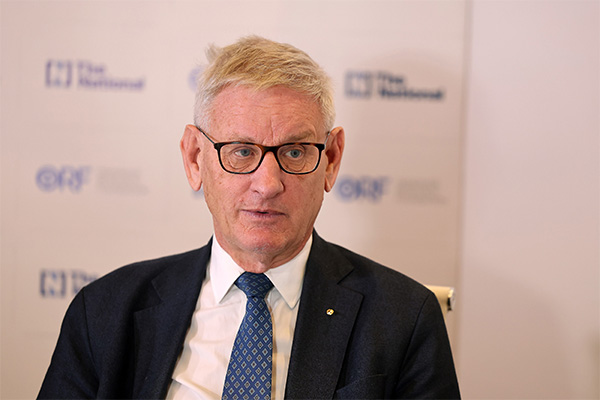
Source image: Former Swedish Prime Minister
The Economist states that in early 2022, intelligence agencies in Sweden and other European countries believed that Russia would not launch military action against Ukraine. However, this prediction was quickly overturned. Now, the Swedish government may be trying to avoid repeating the same mistakes.
Other European countries are also adjusting the operation models of their intelligence agencies. For example, the German government is seeking to free the German Federal Intelligence Service from strict privacy regulations in order to enhance its ability to track targets. Analysts believe that this is not only due to Europe's "concern" about Russia, but also because Europe wants to reduce its reliance on American intelligence, given the increasingly tense relations between the United States and Europe.