(Text/Observer Network Guo Guanghao, Zhang Jingjuan)
To bypass the Strait of Malacca and “cut a hole” through the narrow isthmus in southern Thailand. This is an ambitious plan that every Chinese has heard about.
From the initial Isthmus Canal, to the later "Land Bridge" project, there were countless plans, but its implementation remains far off.
This time, the visit of the Thai Prime Minister to China finally made things a reality.
Thai Prime Minister Anutin said that priority will be given to filling the gaps in the existing transportation network, rather than waiting for years for the full land bridge project to begin. The Thai Transport Minister immediately stated that the land bridge project will not be carried out as originally planned, and the name "land bridge" will no longer be used. The government will re-examine the project plan.
Scholars from both Chinese and foreign backgrounds told Observer Network that, on one hand, the project itself has serious structural issues, and the Thai side was overly optimistic about expectations. On the other hand, the Thai government faces multiple pressures in this matter, including domestic issues related to people's livelihoods, environmental protection, funding, and opposition parties. Continuing with the project is extremely difficult. Although this decision is a last resort, it is indeed a pragmatic adjustment that has strategic rationale.
On July 18th, Prime Minister Anutin of Thailand, who was visiting Chengdu, discussed with representatives of the Thai business community during a lunch. It was during this conversation that he first mentioned that the Thai government would adjust its plans for the land bridge project and focus on other areas in the future.
Anu Tin stated that Thailand is confident about its future. With its unique geographical position at the center of ASEAN countries, Thailand can rely on regional land transportation routes and maritime ports to connect with ASEAN in all directions. Therefore, Thailand's current priority is to fill in the gaps in its existing land transportation network, especially those railway lines that are not yet connected.
According to the plan, the Luqiao project aims to connect the deep-water ports on the side of the Andaman Sea in Thailand with those on the Gulf of Thailand through railway, road, and logistics infrastructure. This will provide an alternative route for the transportation of goods across the Malay Peninsula.
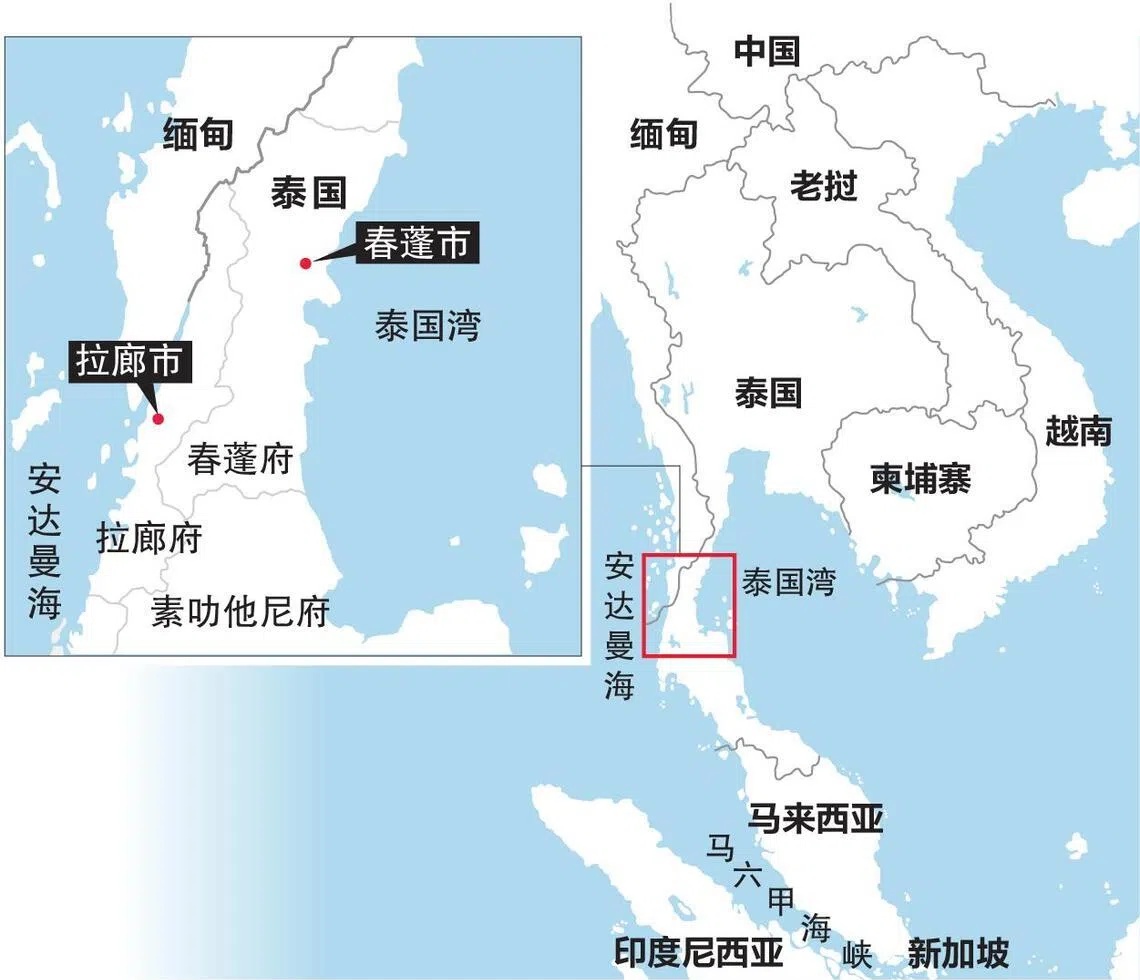
However, Anuying stated that in the next 5 to 10 years, it is better to prioritize upgrading existing ports rather than rushing to complete the entire land bridge project. At the same time, it is necessary to fill the gaps in road and railway infrastructure. This approach will yield faster results and aligns with Thailand’s current investment needs.
Anuinth says that the Thai government will prioritize the upgrade of the Lamrong Province deep-water port. After the upgrade of the Lamrong Province deep-water port is completed, it will connect Lamrong Port with Chumpong Port and the land-based logistics network across Thailand, enabling goods to be transported further to other countries.
"As for the land bridge project, some people suggest not to rush forward for now. After all, where will the money come from?"

Anutin said that a few days ago, during a discussion with the Thai Industrial Federation, the Thai Chamber of Commerce, and the Thai Bankers Association, representatives from the Thai business community suggested that instead of immediately advancing the entire land bridge project, it would be better to prioritize the improvement of the Thai east-west railway network and connect it with the north-south railway lines.
They advised the government that by simultaneously improving the port facilities in both the eastern and western ports of the south, and by completing the necessary road-rail infrastructure, Thailand’s investment and development needs could be met within the next 5 to 10 years.
Anu tin stated that the Thai government has adopted this suggestion. He pointed out that even if there were no obstacles in the process of implementing the project, it would still take 3 to 5 years from now until the official start of construction for the new land bridge. In comparison, the business-sector proposal can be launched more quickly, relying on existing development procedures.
This is an industry suggestion from the business sector that is currently applicable.
According to a report in the Thaichalon newspaper on the 21st, Thai Deputy Prime Minister and Minister of Transportation Phipap said that the land bridge project will not be carried out as originally planned. The government will re-examine the project plan and change the name of the project.
Pipa stated that, based on previous discussions, continuing to use the original name 'Luk Bridge' might cause misunderstandings and concerns among many groups. Therefore, the government is preparing to research a more appropriate new name. Meanwhile, Prime Minister Anuting has instructed relevant parties to conduct further research. After Anuting returns to his country, the government will discuss further plans for building ports along the Andaman Sea and the Gulf of Thailand. This includes details about the project components, as well as methods of connecting the ports across the two coasts using railways, roads, or other infrastructure.
From the current information, the new plan will bring about significant changes.
The first issue is which port will be prioritized for construction on the Andaman Sea side. From a practical perspective, Larang Province remains the most suitable location for building deep-water ports on the Andaman Sea side, but the existing Larang Port may be abandoned.
Pi Pa criticizes that Lalong Port has been in use for over 20 years, yet the freight volume remains very limited. This indicates that the local development has not met expectations. Therefore, any future investment must be carefully evaluated to avoid investing substantial funds in areas with little potential for development, which would yield minimal results.

Lalan Port
Secondly, it depends on which method is used to connect the two places. If railways are determined to be the primary mode of connection, then a railway system that can efficiently connect the Andaman Sea ports with the Gulf of Thailand must be designed. Whether to build direct roads or bridges for connection remains undecided at this point, and a comprehensive study is still needed.
The Bangkok Post states that for Anuinthing’s Thai Pride Party, the Land Bridge Project represents an ambitious policy focused on infrastructure development. Once completed, it will be an important political legacy. However, the high estimated costs, complex environmental impacts, and opposition from the southern population are all making the Land Bridge project a heavy political burden.
Yuhaiqiu, the Director and Researcher of the Thailand Research Institute at the China (Kunming) South Asia Southeast Asian Research Institute and the Yunnan Provincial Social Science Academy, told Observer Network that the change in the Anuinth government was a more prudent and pragmatic decision made after considering domestic economic needs, financial pressures, opposition parties' opinions, and the complexity of the project itself. It was also a last resort.
From the inception to the progress of the “Land Bridge Project,” Anuinth played a crucial role, but he faced significant obstacles. The “Land Bridge” project advocated by Anuinth encountered many insurmountable challenges: First, the high costs and financing difficulties. The project is estimated to cost nearly 1 trillion Thai baht, posing a significant challenge for the Thai government's finances, and it requires private consortiums for investment. In a situation where the business model has not been fully verified and investment returns are uncertain, it is difficult to attract major investors. Second, the complex approval and evaluation processes. The project involves land acquisition, environmental protection, fisheries, agriculture, and other aspects, causing concerns among local residents and environmental groups. The government needs to conduct comprehensive public hearings and assessments of environmental and health impacts, which takes a long time. Third, the challenges related to the business model. The “Land Bridge” model requires two-way loading of goods, which involves unloading from ships, land transportation, and reloading onto ships. This increases logistics costs and time. Whether it is possible to convince shipping companies to abandon the established, low-cost sea routes in favor of this new corridor remains a significant commercial challenge.
Singapore Yusof Ishak Research Institute researcher and joint director of research projects in Thailand, Ma Minghui, told Observer Network that although the recent crisis in the Strait of Hormuz in the Middle East has strengthened the rationale for the land bridge project in terms of public opinion, it has not led to actual investment in the project.
Regarding this policy shift, Yu Haiqiu believes that it is not caused by a single factor, but rather the result of the interweaving of three core factors: contradictions in domestic economic and people's livelihood issues, external geopolitical constraints, and economic cost pressures.
"National affairs and people's livelihood contradictions are the most direct obstacles. This is the most direct trigger for pressing pause on the project. The Thai government faces difficult pressures within: on one hand, the public and environmental groups strongly oppose the project, which requires requisition of large amounts of farmland and coastal land, triggering strong concerns among residents in Thailand about their livelihoods being affected and ecological damage. Environmental organizations have launched a petition drive involving over 50,000 people, even through providing disparate data on monitoring to pressure the review process for environmental impact assessment to be stricter, leading to the rejection and retuning of the environmental impact assessment report. On the other hand, the business sector strongly advises against the construction, as they believe it is not the optimal time to construct the land bridge. They recommend that the government prioritize repairing existing railway network's "dead ends", upgrading existing port facilities in Langkawi, and these “immediate” initiatives are likely enough to meet logistics demands within the next 5-10 years with lower cost. Thirdly, political and legal procedures pose constraints. The southern region has long faced separatism issues, large-scale infrastructure development can easily exacerbate local conflicts. Additionally, existing supporting legislation is non-compliant with regulations, involving up to 17 relevant transit control laws, coupled with frequent changes in Thai government leadership, making the government hesitant to make hasty decisions.”
After the policy change, immediate benefits will be brought to the Anutin government in a short period of time.
"Prioritize the promotion of projects with potential for immediate implementation, which can accumulate political credibility for the Anutín government. Delivering tangible infrastructure achievements – completed highway connections, upgraded port terminals, and operational rail lines – allows the government to deliver on its promises quickly without waiting ten years for large-scale projects to materialize. This move can also send positive investment signals to the market. By focusing on small-scale projects to demonstrate execution capabilities, it can reduce market expectations regarding risks associated with mainland bridge construction projects and boost investor confidence." Said Mr. Mai Minghui to Observer Network.
Reuters obtained a document from the Thai government. The document shows that after the Luqiao project is operational, the logistics costs for transporting goods from southern China to ports on the Indian Ocean side of Thailand can be reduced by nearly 30%, and the transportation time can be shortened by at least 14 days.
Mai Minghui believes that the official figures deserve careful verification. The figure of '14 days' is relatively credible, but it only applies to certain routes. The figure of '30%' is highly controversial. This figure is most likely based on extremely high project utilization rates, which requires the deep involvement of leading shipping companies. And this premise has not yet been achieved.
Yu Haiqiu believes that when evaluating the cost-effectiveness of land bridge projects, we cannot rely solely on official promotional materials. Instead, we must take into account the significant hidden costs and structural challenges that these projects face in their commercial implementation.
In addition to the inevitable increase in transit time and costs due to the “sea-land-sea” combined transportation model mentioned earlier, there are serious structural issues with the project. On one hand, the throughput gap between the two port ends is as high as 5.6 million standard containers. This severe imbalance can easily lead to some ships not being able to carry full loads, thereby further increasing the cost per container. On the other hand, approximately 74% of trade in Thailand is conducted within Asia. The existing shipping routes are sufficient to meet this demand, which means that land bridges mainly rely on goods that go through transit. In situations where cost and time advantages are not significant, it is difficult to convince large shipping companies to change their established network of shipping routes.
"Despite the allure of bypassing Malacca Strait in its macro strategic context, the high transport costs and complex operational procedures severely erode its cost-effectiveness and undermine its business viability."
As for the view that the cancellation of the project is linked to pressure from the United States, MacMinghui believes this perspective is understandable, but treating it as the main reason is an overinterpretation. There is currently no evidence to prove a direct causal relationship between the two. The immediate reasons for the policy change on July 18th are all related to domestic issues in Thailand. Attributing the “suspension” of the project solely to the United States is not only an exaggeration of American influence but also underestimates Thailand’s own structural governance challenges. However, the impact from geopolitical perspectives does exist and should not be ignored. The United States is actually influencing the investment environment, causing Western institutional capital and pro-US financial institutions to remain cautious about all projects that are considered to serve China's strategic interests.
Yu Haiqiu believes that the influence of the United States is more about covert strategic deterrence, rather than direct forceful intervention. Although the United States has not openly opposed the project, it has exerted invisible strategic pressure on Thailand through covert means such as capital cooling measures and defense deterrence.
Both scholars believe that for such a large-scale project, introducing Chinese investment is a necessary condition.
Yu Haiqiu pointed out that China's capital and infrastructure capabilities are the 'entry ticket' for project initiation. The Luqiao project is expected to cost nearly 1 trillion Thai baht, and the Thai government has clearly stated that it will not directly fund the project; it must rely on the private sector. Globally, investors with such substantial financial strength, experience in entire industrial chains of infrastructure, and real supply sources are important candidates, and China is one of them.
However, relying solely on Chinese investment is far from enough. There are many insurmountable internal obstacles to the project's implementation. For example, the business model is questionable. The "sea-land-sea" loading and unloading model will increase time and costs. It remains unknown whether shipping companies will be persuaded to abandon their established routes. Additionally, there are significant domestic obstacles: the project involves complex land acquisition and environmental issues, and it faces strong opposition from local people in southern Thailand. Furthermore, Thailand's unstable political situation and the "Foreign Investment Law" that limits the proportion of foreign-owned companies add further concerns for investors. Therefore, Chinese investment is a necessary prerequisite for the project to start. However, whether the project can ultimately be implemented depends on whether Thailand can resolve its internal business, legal, and social issues.
This is also why Thai Prime Minister Aunchin made this important statement during his visit to China. During his visit to China, Aunchin attended the 2026 World Artificial Intelligence Conference in Shanghai and unveiled the Chengdu office of the Thailand Investment Promotion Board (BOI). The strategic focus of this office is to attract investment in high-tech and green industries, aiming to make Thailand a key gateway connecting the markets of western China, South Asia, and ASEAN.
Mai Minghui said that Anu’s choice was carefully considered. Announcing this in this context is meant to send a clear signal to China: Thailand is committed to deepening the bilateral economic and trade relations between China and Thailand. At the same time, Thailand will optimize and adjust its infrastructure projects, aiming to attract Chinese participation while avoiding the political and operational risks associated with large-scale infrastructure projects.
A-n'tin frequently used the Chinese phrase "Jiāyóu" ("Good Luck!") to encourage deepening cooperation between China and Thailand. Mài Ming Hui interprets this as a personal gesture of goodwill towards Chinese investors, while the actual statement about Luqiao is intended to guide both sides to develop reasonable expectations.
Meanwhile, Mai Minghui also reminded that when Chinese firms participate in large-scale projects like “Luca Bridge”, they must be aware of the political changes in Thailand. “Once there is a public perception that the project is under Chinese control, it can immediately be exploited by Thai opposition parties and nationalist groups. The Thai government must be extremely rigorous and meticulous in the design of the frameworks for Chinese participation and in their external communications.”
Based on Anu'ting's series of visits and statements during this trip to China, Thailand has focused its efforts on areas such as artificial intelligence and electric vehicles.
Yu Haiqiu believes that this is not only a strong signal that China-Taiwan cooperation is accelerating its transformation from traditional 'hard connectivity' to high-tech and high-value-added 'new quality productivity' fields, but also a practical 'risk aversion' and 'efficiency improvement' strategy. 'Compared with large-scale infrastructure projects, high-tech industry cooperation is less affected by geopolitical and environmental controversies, and can be implemented faster. It can directly benefit both nations' people. Therefore, when traditional projects such as land bridges face obstacles, it can inject new momentum into bilateral relations.'