In September of this year, I visited the Center for Social and Political Studies in Paris. Unexpectedly, soon after my visit, I witnessed a nationwide protest wave that swept across all of France. I had the opportunity to closely observe how this unrest evolved from small-scale demands for benefits to a major outbreak of dissatisfaction among French society as a whole.
On the just-passed Saturday (October 17th), the protest wave reached a new peak. Near Place Clichy in Paris, a large number of demonstrators marched northward along the Avenue de la Madeleine. The crowd was mostly young people, most of whom were in their teens or twenties, but there were also middle-aged people and elderly individuals with gray hair among them. Some carried flags, others held signs, and some pushed sound systems, leading the surrounding crowd in singing. Drums, songs, and slogans came one after another, and the march continued along the wide avenue, eventually converging at Place Clichy.
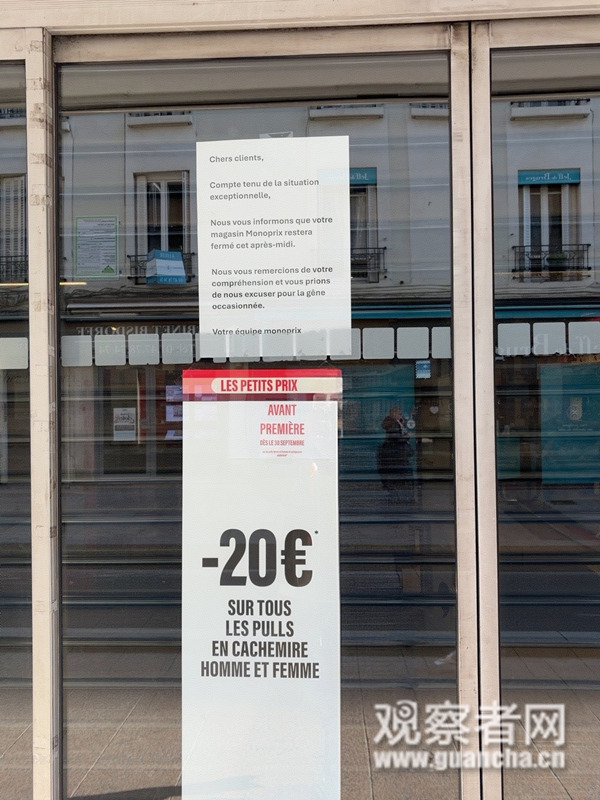
Due to the tense situation, a store near my home has suspended its operations.
Among the crowd, there were also quite peculiar costumes. Some people dressed up as characters from "One Piece" and "Naruto," while others wore Batman costumes and moved among the protesters waving flags. Some young people climbed onto street lights and bus stops, trying to take higher positions. In the center of Klix Square, the monument commemorating Marshal Moncey's role in the defense of Paris in 1814 became a target for climbing, with various slogans seen around the base of the monument. The statue, which was once erected to honor the defenders of Paris, was now caught up in the noisy protest crowd.
About 200 meters away from the square, the road ahead has been blocked by police. Police officers in dark uniforms have formed two lines of security to prevent pedestrians from continuing their journey.
In the crowd, there were occasional bursts of rhythmic singing: “On est là! On est là!” This is a popular song from French social movements, titled “On est là” (We are here). It accompanied the “Haki-kun” movement in France in 2018 and is now being sung again by the younger generation. When someone leads the singing, those around them raise their arms and echo the melody loudly.
Another voice spoke up: “Siamo tutti antifascisti!” – “We are all anti-fascists!” This Italian slogan has been popular in the European left-wing movement for a long time. In addition, slogans like “Macron démission!” (“Macron step down!”) and the strongly anti-police “ACAB” also emerged one after another, creating a wave of enthusiasm along the entire street.
The slogans were also varied, and most of them were created by protesters. People gathered cardboard pieces, wrote slogans on them, and drew patterns on them, thus creating a variety of protest banners. The slogan "Eat the rich" stood out particularly; similar banners appeared in the crowd more than once. Some people drew a pink pig wearing a suit, with the words "Money should be given to the people, not into your pockets" written next to it. Others wrote "Young people, the republic, public services" on the same cardboard, claiming that they belonged to "the same struggle." Still others carried banners supporting Le Pen and the National Union, which stood in sharp contrast to the anti-fascist slogans that were being shouted from one side to the other in the crowd.
Additionally, October 17th marks the 65th anniversary of the police crackdown on Algerian demonstrations in Paris in 1961. Some young people raised Algerian flags and displayed slogans like “Never forget, never forgive,” linking historical memories with current police-murderous conflicts.
Interestingly, even when leaving these blocked streets, Paris still maintains a different pace of daily life. Within just one or two blocks, there are still many people sitting on the terraces of cafes and taverns. Some are eating, others are chatting, continuing to enjoy the autumn sunshine on weekends. Intense political mobilization and ordinary urban life coexist within a few hundred meters of each other.
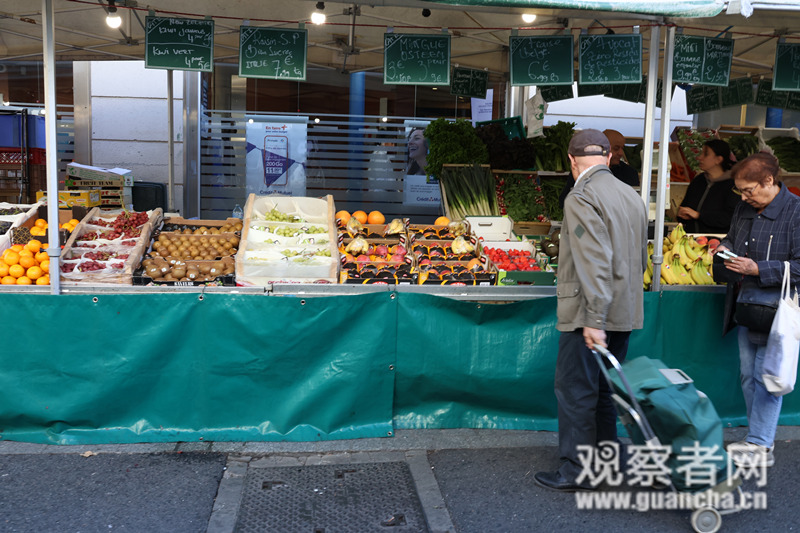
Another scene on the streets of Paris, France
However, just a few hours later, the situation in Paris deteriorated rapidly.
In the afternoon, people continued to sing and hold flags along Mazaen Tower Avenue. As night fell, this avenue and some shops in nearby neighborhoods were severely damaged. Some masked individuals smashed store windows and rushed into the stores to steal goods. Burning trash cans and temporary roadblocks blocked traffic, and the police used tear gas and water cannons to disperse the crowd. Near Republic Square, supermarkets, pharmacies, and other shops were ransacked. After nightfall, some neighborhoods were covered in broken glass, and shops hurriedly sealed the damaged doors and windows with boards.
The riots spread far beyond Paris. The historic town hall in Limoges was set on fire, and the tourism office in the center of Lyon was destroyed. Public buildings in cities like Marseille were also damaged. Severe damage was caused to commercial districts and government facilities in several parts of France.
According to statistics from the French Interior Ministry, approximately 550,000 people participated in demonstrations across the country on October 17. Organizers estimated that up to 800,000 people took part in the demonstrations. As searches and injuries continue to be reported, as of the evening of October 18, more than 2,000 people have been arrested, and over 600 police officers, gendarmes, and firefighters have been injured. Additionally, one demonstrator died in Paris due to a cardiac arrest.
Late at night, Prime Minister Sebastian Leconni rushed to the Paris Police Headquarters. He attributed some of the violence of that day to an organized left-wing action network, and demanded that all political parties make a clear choice between the Republic and the vandalizers.
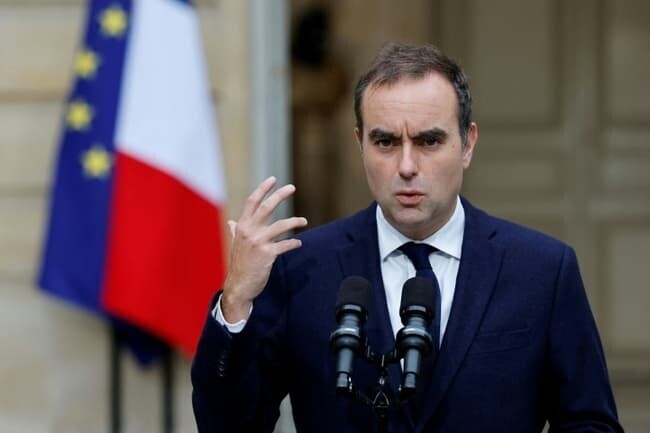
French Prime Minister Sebastian Mallochon (Photo)
The incident on October 17th had been brewing for a long time. In late September, protests occurred in some schools in the Paris suburbs due to a shortage of teachers and poor teaching conditions. These protests later spread to more schools. Calls for a national action against rising fuel prices were also circulating on social media for some time. As October began, unions, “Jeans Jackets” supporters, and youth groups joined the movement, and the originally scattered demands gradually converged. The large-scale demonstration on the 17th, along with the subsequent riots, finally brought this weeks-long social dissatisfaction to the center of French political life.
The problems in the education sector are one of the major sources of social dissatisfaction in recent times.
France's public education system has long been tasked with promoting social equality. However, the teaching staff, school buildings, and educational facilities in some suburban schools continue to face pressure. There also are disparities in the educational resources available to different families. In the higher education phase, competition for enrollment, housing costs, and living expenses further exacerbate the anxiety of young people.
Economist Piketty recently pointed out that although the nominal budget for higher education in France has increased since 2017, when inflation is taken into account and the number of students has increased, the actual per student investment has decreased. The protests outside schools have thus touched upon a larger issue: to what extent can young people still believe that education can improve their lives?
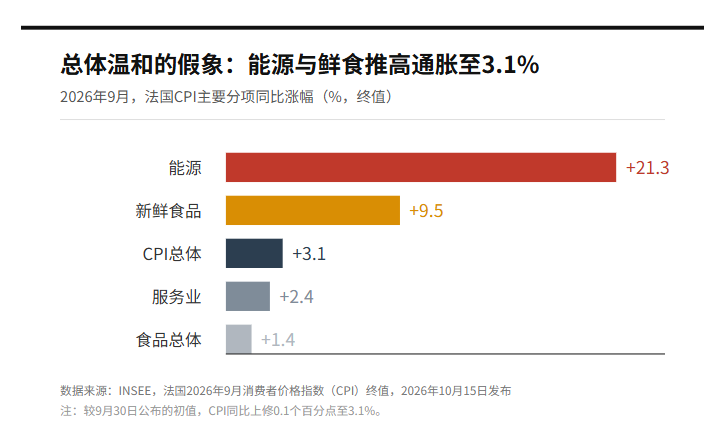
Along with dissatisfaction in the education sector, there has been a continuous rise in fuel prices. As early as September 7th, videos on social media called for people to protest against fuel prices on October 17th. Subsequently, as the Middle East conflict affected international oil supplies, the prices of French gasoline and diesel increased, and online calls for action gained more attention.
A study published by the French National Institute of Statistics in September this year shows that if fuel prices are recalculated for the spring of 2026, the proportion of households with a car where annual fuel expenses exceed one month's income will increase from 10.6% in 2021 to 22.4%. Energy price increases directly squeeze the disposable income of working-class families and also increase the operating costs of agriculture, fisheries, and transportation industries.
In 2018, the “Yellow Vest” movement began with disputes over fuel taxes, and later touched on issues of tax fairness and political representation. Today, living bills once again bring these long-accumulated grievances to the public eye. As mid-October approached, protests related to fuel prices merged with actions in education, and unions’ demands regarding wages and public services gradually converged, ultimately leading to a national mobilization on the 17th.
This crisis also has a context that goes beyond French borders.
The prolonged conflict between Russia and Ukraine has changed the external conditions that Europe relies on for security, energy supply, and industrial competitiveness. After the end of the Cold War, Europe relied on Russia’s relatively cheap energy, the security guarantees provided by the United States, and the industrial division of labor created by the global market to maintain a relatively stable economic development environment.
After the full-scale escalation of the Russia-Ukraine conflict in 2022, Europe accelerated its reduction of its dependence on Russian energy supplies. Instead, it increased imports of liquefied natural gas and built new receiving facilities and transportation networks. From 2021 to 2025, Russia's supply of pipeline natural gas to the EU decreased by approximately 90%. Although European energy sources have become more diverse, Europe is also more susceptible to fluctuations in the international market and geopolitical conflicts.
Meanwhile, the Russia-Ukraine conflict has led to a continuous increase in military and defense spending in Europe. Assistance to Ukraine and defense infrastructure have gradually become long-term financial burdens. The 2025 NATO Hague Summit proposed that by 2035, member states' defense and related security expenditures should be increased to 5% of GDP. For European countries already facing tight finances, increased security expenditures mean that more budget needs to be reallocated from other areas. Europe's reliance on cheap energy and relatively limited security spending is becoming a thing of the past, and the costs of maintaining industrial advantages and social welfare are rising.
What is even more challenging is that Europe’s highly anticipated green transformation has also faced new challenges in this process. The EU originally hoped to reduce its dependence on imported fossil fuels through the development of new energy sources, while also fostering new industrial advantages. However, the construction of wind turbines, photovoltaics, power grids, and energy storage systems requires substantial funding. High financing costs and fluctuations in the energy market also affect investment returns. Industries such as new vehicle manufacturing, battery production, and photovoltaics are also facing fierce competition from other markets. European industries urgently need to reduce costs and improve efficiency.
Meanwhile, the energy transition also requires ordinary citizens to bear part of the adjustment costs. The connection between carbon emission policies and fuel and heating prices is receiving increasing attention. In 2026, the EU postponed the implementation of a new carbon emission trading system for construction and road transportation to 2028, reflecting the social pressures faced by energy policy.
France also faces its own unique challenges.
Compared to industrial countries in Germany and other countries that used Russian natural gas heavily in the past, France has a large-scale nuclear power system. Therefore, electricity production relies less on imported natural gas. However, the advantage of nuclear power cannot completely free France from the international energy market. Transportation and many industrial activities are still affected by oil and gas prices. Maintaining nuclear power plants, upgrading old units, and building new generation reactors also require long-term capital investment.
France's position in Africa also puts its traditional energy advantages under new challenges. For a long time, French companies have operated uranium mines in former colonies such as Niger. Mining investments are intertwined with local political relations and military cooperation, forming a resource supply network that has lasted for decades. In recent years, countries like Mali, Burkina Faso, and Niger have formed the Sahel National Union, demanding control over resource development rights and profits. In June 2025, Niger announced the nationalization of SOMAÏR uranium mining company owned by the French OMNIA group, which has led to disputes over mining assets and management rights. Both the uranium product supply arrangements are affected. This dispute reflects that some of France's resource advantages, which it has maintained through long-term political influence, are being weakened. Ensuring the supply of strategic industries requires increased coordination and investment.
This change coincides with a critical period for France's nuclear power industry. Old reactors need maintenance and modernization, while the construction of new generation reactors is costly. France's plan to build six EPR2 reactors has an estimated cost of 72.8 billion euros at 2020 prices. Changes in resources abroad increase the difficulty of supply arrangements, and updating domestic energy facilities requires substantial financial support. At the same time, rising international oil prices have increased costs associated with transportation, production, and residential living. France must deal with its current energy bills while also investing continuously to maintain its long-term nuclear power advantage. These two pressures are testing France's already strained economy and finances from different aspects.
France's domestic finances are also showing signs of fatigue. Over the past few decades after the war, France has relied on industrial development and increased fiscal revenue to establish welfare systems covering education, healthcare, and pension benefits. Now, an aging population is driving up social security expenditures, while energy and defense infrastructure require continuous investment. Debt interest continues to squeeze fiscal resources. According to the government budget, France's economy is expected to grow only 0.5% in 2026, with the fiscal deficit reaching 5.4% of GDP. In 2027, debt interest expenses are projected to rise to 91.2 billion euros. The government plans to implement fiscal adjustments worth about 54 billion euros, but schools, hospitals, and social welfare systems also need funding. The conflicts that could have been gradually alleviated through economic growth now require solutions through the redistribution of limited fiscal resources.
Since Macron took office, he has tried to encourage investment and restore growth by reducing capital and corporate taxes, reforming the labor market and pension systems. In 2018, the government adjusted the wealth tax and implemented a uniform tax rate for capital income, followed by a gradual reduction in corporate income taxes. However, the benefits and costs of these reforms were unevenly distributed: asset holders received tax benefits earlier, while workers faced adjustments such as delayed retirement. The expected income improvements for ordinary families have not been fully realized. The government hopes that increased investment will improve the economic situation, but many workers bear the real costs of the reforms first. The ongoing protests sparked by the pension reform in 2023 have exposed this divide. As parliament further divides, financial adjustments become increasingly difficult to support, and the growth and efficiency emphasized by Macron's government are becoming less able to alleviate people's concerns about reality.
The pressure of economic adjustment has ultimately turned into a debate about who should bear the costs. It is difficult for the government to meet everyone’s expectations through growth, and the existing reforms fail to create stable compromises. As a result, the streets have become the most direct expression of this disagreement.