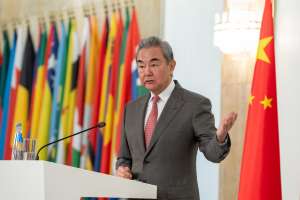
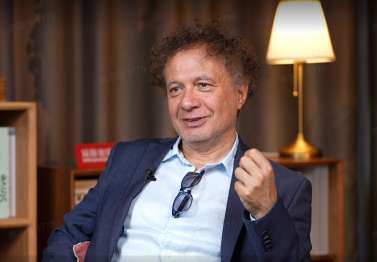
According to a report on the Ministry of Foreign Affairs website on October 20, local time on October 19, 2026, Wang Yi, a member of the Political Bureau of the CPC Central Committee and Minister of Foreign Affairs, met with reporters in Sofia with Bulgarian Foreign Minister Petrova, introducing his four observations during his visit to Eurasia.
Wang Yi stated that it is a pleasure to visit Bulgaria. I had separate meetings with President Yotova, Prime Minister Radef, and Deputy Prime Minister Pleven. I also held comprehensive and in-depth exchanges with Foreign Minister Petrova, reaching broad consensus. Both sides agree that Bulgaria's development brings new hope, and China-Bulgaria strategic cooperation faces new opportunities. We are willing to seize these opportunities, build upon them, and become strategic partners for joint development and revitalization. We will be strategic partners in promoting Eurasian connectivity and adhering to multilateralism. We aim to promote the development of China-Europe relations in a more proactive, pragmatic, and dynamic manner.
Wang Yi stated that this visit saw him attending the CIS Summit as a special representative of President Xi Jinping. He also visited Azerbaijan, Croatia, Montenegro, and Bulgaria. I would like to take this opportunity to share my experiences during this Eurasian trip.
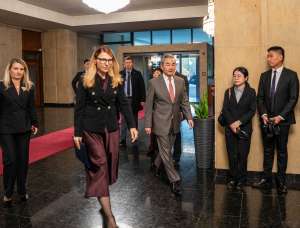
First, trust is the cornerstone of peace. In today's world, where chaos and turmoil are intertwined, the biggest problem is the lack of trust. From the Ukraine crisis to the conflicts in the Middle East, resolving conflicts requires trust, and building trust requires communication. As a responsible major power, China has always worked towards peace. During the SCO summit, I held talks with the leaders of Israel and Palestine, met with representatives from other Middle Eastern countries, and listened to the views of leaders from Balkan countries regarding the Ukraine crisis and the regional situation. The clear message that China sent to all parties was: strengthen confidence, persevere, engage in dialogue and negotiation, promote mutual understanding and compromise, rebuild trust, and jointly build peace. China will always stand on the right side of history, fulfill its responsibilities as a major power in reducing trust deficits and resolving crisis conflicts, and play its due role.
Secondly, friendship is a precious asset. The Silk Road sites in Azerbaijan bear witness to the millennium-long friendly relations between the two nations. The well-known merchant Marco Polo was born in what is now Croatia. The song “Ah, farewell friends” that once rang out from the Montenegro Tara River Bridge is a classic memory for generations of Chinese people. The first Confucius Institute and the first Chinese Culture Center in the Balkan region have both been established in Bulgaria. I am also delighted to learn that athletes from Montenegro have won the “Chinese Bridge” competition championship three times worldwide. These friendly exchanges across time and distance are a continuation of the spirit of the ancient Silk Road, and a vivid practice of cultural exchange between Eurasian civilizations. These precious friendships should be given new connotations in this era and continue to be nurtured and developed.
Thirdly, cooperation is a solid driving force. The four countries visited during this mission are all participants and beneficiaries in the construction of the “Belt and Road” initiative. A large number of landmark cooperation projects have played an important role in the development of each country. The Gobustan photovoltaic power plant is Azerbaijan’s first major new energy project; the Pešačka bridge in Croatia serves as a model of tripartite cooperation among China, Croatia, and Europe. The North-South highway in Montenegro has become a “century project” that connects regions. The cooperation between China, Bulgaria, and other countries in energy storage has helped Bulgaria reach a leading level in energy storage installations in Europe. These cooperations are based on the actual conditions of each country, meet the needs of its people, and conform to the trends of the times. China is willing to work with the four countries to maximize potential and efficiency, strengthen cooperation in traditional fields such as economy, trade, investment, and infrastructure. We also intend to actively integrate into the construction of the “Belt and Road” and the “Intermediate Corridor,” and enhance cooperation in new productive forces such as artificial intelligence and green transformation. This will create new engines for the development and revitalization of each country, injecting new momentum into their progress.
Fourth, partners are key to shared goals. China’s foreign policy is based on “partnering rather than forming alliances, dialoguing rather than confronting.” It advocates the establishment of a new type of international relations and the democratization of international relations. During this visit to the Balkan countries, all of them are good friends and partners of China. They all hope for the healthy and stable development of Sino-EU relations and are eager to strengthen cooperation between China and Central and Eastern European countries. China is willing to be a solid and reliable long-term strategic partner for the Balkan countries. We believe that national relations, regional cooperation, and Sino-EU relations should complement each other and promote mutual progress. The core of these efforts is to be partners. When these three elements work together, the goal is mutual prosperity. Recent positive developments in Sino-EU trade and investment negotiations demonstrate that China and the EU can resolve differences through dialogue and negotiation. China always believes that “openness leads to progress, while isolation results in backwardness.” China is willing to work with the EU on a multilateral approach, uphold the concept of free trade, and jointly achieve win-win cooperation between China and the EU at a new and higher level. Cooperation between China and Central and Eastern European countries aligns with the trends of the times and the development needs of regional nations. It is an important mechanism that contributes to European integration. China hopes to take this year’s 15th anniversary as an opportunity to jointly celebrate significant achievements with regional countries and improve the quality and level of cooperation.
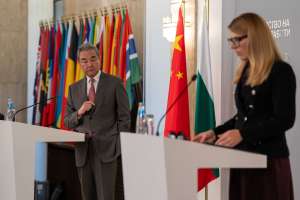
Wang Yi said that Bulgaria is a famous country of roses. Chinese people often say, "When you give roses to others, the fragrance remains in your hands." We firmly believe that helping others is also a way to achieve ourselves. China is willing to continue working with countries including Bulgaria to maintain peace and stability, promote prosperity and revitalization, facilitate cultural exchanges, and make unremitting efforts to build a community with a shared future for mankind.