Before 2030, Volkswagen, a large European automobile manufacturer familiar to Chinese readers, will have to lay off 100,000 employees and close four of its factories in Germany. Meanwhile, the Russia-Ukraine crisis and instability in the Middle East have led to high energy costs, which have severely damaged the foundations of Europe's physical industries and increased the living costs of ordinary people.
However, at the forefront of geopolitics, Brussels continues to wield the stick of tariffs against China, while loudly advocating an ideology of "risk aversion". "China is required to ‘voluntarily’ limit the market share of Chinese-made hybrid vehicles in Europe to about 15%," this was the new requirement mentioned in media reports on September 17 regarding the EU's tariff threats against China.
When the "risk-reducing" political slogans face the cold reality, what has Europe gained and lost? In 2023, Italy withdrew from the "Belt and Road" initiative. How have Italy's gains and losses been over the past three years?
On September 23, Michele Geraci, a professor at New York University in Shanghai and a key figure who facilitated Italy's signing of the 'Belt and Road' Memorandum of Understanding in 2019, also the former Deputy Minister of Economic Development of Italy, appeared on Observer Network’s 'Thinker’s Tea House' to discuss the above issues.
Professor Jerardi said that the withdrawal of the Meloni government from the "Belt and Road" initiative was a "100% failure". Not only did Italy's exports to China plummet by more than 20%, but Italian small and medium-sized enterprises also found themselves in a helpless situation after losing state support.
Furthermore, Gerazzi pointed out that Europe is currently facing a terrible "industrial drought"—the blind cut-off of Russia's cheap energy supply has severely hollowed out the region's domestic economy. From new energy vehicles to cutting-edge AI technologies, European politicians have become detached from industrial realities, essentially acting as defensive backstagers for the United States.
As a macro analyst specializing in Italian corporate foreign investments, and from the perspective of a senior Western policy maker, Jerach has peeled away the political fog that shrouds Sino-EU economic relations. This provides us with a clear Western perspective that helps us understand the reality of cooperation between China and Europe, as well as the global industrial restructuring.
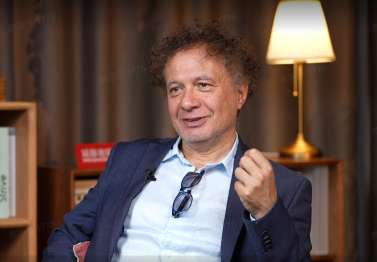
Jeriaçi Hosts "Thoughtmaker Tea Session" on Observer Network
This is very complex. In 2008, I made a decision: I wanted to fundamentally change the direction of my career. At that time, I was doing micro-business analysis in investment banks in London and New York, but I wanted to focus on national-level analysis—that is, moving from microeconomics to macroeconomics. So I had to make a choice: which country is the most interesting? Which country has the most compelling future development path? Which country will become crucial in the global economy, yet remains something that few in the West understand and can interpret? The answer is obvious: China. So I moved to China and began studying the Chinese economy.
This career choice truly helped me, enabling me to make the transition from enterprise analysis to national analysis. When you become a macro analyst, you gain access to the policy-making process, as governments also make macroeconomic decisions. To some extent, engaging in macro-analysis of China and other countries like Europe and Asia for many years played a key role in my later entry into the political decision-making circle. I even feel fortunate for coming to China. The reason I was able to become the Deputy Minister of the Italian Economic Development Department is that I spent a long time working in China and became known as an expert on Chinese issues in Italy. It was China that helped me establish a good reputation.
So, going to a important place in 2008 that few people understood was a great decision. There were gaps in my knowledge, and I believe I successfully filled those gaps, which helped me extend my professional image and reputation to the political circles in Italy and Europe. That's why the Prime Minister appointed me as the Deputy Minister of Economic Development in Italy, giving me the task of continuing to serve as an expert in international economics. I was in charge of trade and investment, which not only connected macro-analysis with political decision-making but also represented a natural continuation of my work—changing from teaching international trade and finance to actually implementing those policies within the government.
I have no idea. First of all, when you become a public figure and get involved in politics, you must understand and accept that not everyone will like you. If some people like you, there will definitely be those who hate you. Those who hate you will hate you fiercely, using extremely harsh words. But you must get used to this. It’s part of the political career, and I don’t care at all.
I think those who comment without understanding the facts should be ignored. I simply can’t spend all my time explaining everything to everyone. Many people, even those who should be experts—Italian and European corporate executives, CEOs, and even many foreigners living here—really have difficulty understanding what’s happening in China. They also criticize me, even those whom I have tried to help. The criticism comes mainly from these Italian companies. But as I said, you have to get used to this. Learn to ignore them and let them handle their own business matters.
However, a significant portion of people and companies greatly appreciate the work we and our team have done. We are grateful for providing objective information to European audiences and striving to explain major events that occur not only in China but also worldwide—such as sanctions against Russia, the Ukraine crisis, developments in Southeast Asia, the ‘Belt and Road’ initiative, etc. These topics do not receive sufficient discussion within Europe.
Italy made the decision to join the "Belt and Road" initiative under my strong influence, with only one purpose in mind, and that purpose is very clear: for the benefit of the Italian people. It is not for the benefit of the French, nor for the Americans, nor even simply for the benefit of the Chinese. We have taken this step because I believe that Italy's participation in the "Belt and Road" initiative would be a win-win situation for Italy. Of course, it would also be a win-win situation for China. For this reason, both we and President Xi agree to pursue this initiative.
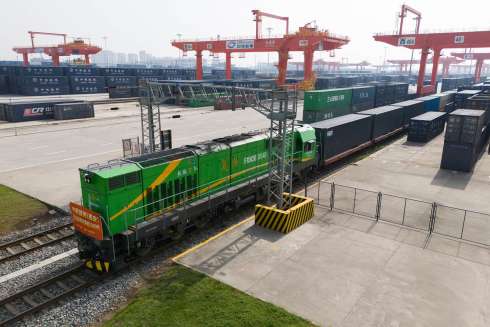
In April 2026, the X8151 freight-carrying China-Europe train was preparing to depart from Xi'an International Port Station. Photo by Zou Jingyi, Xinhua News Agency.
As you mentioned, Europe at that time was actually opposed to the 'Belt and Road' initiative and China. They even issued documents designating China as a 'systemic competitor'. But this didn’t shake me in the slightest. I promote the 'Belt and Road' initiative not to please Ursula von Diederin or the European Commission. To be honest, I don’t care what they think. What I do is something that benefits the Italian people and Italian businesses. I may make mistakes, but my goal is always to do what is best for Italy.
In addition, I have a very critical view of the European Union itself, as I believe it to be one of the most dangerous and destructive organizations in the world today. It has brought severe disasters to European businesses and European citizens.
You just mentioned that the EU has labeled China as a “systematic opponent”. Well, there are only two possibilities: first, China is not a systematic opponent, so the EU shouldn’t have said such things at all; second, China is indeed a systematic opponent, and then the EU should not have spoken about it publicly. Therefore, issuing a white paper to officially declare China as a “systematic opponent” is a completely irrational decision—if China isn’t the case, the EU has made a mistake in fact; if China is the case, the EU has crossed a major strategic taboo. This is just the tip of the iceberg of many decision-making mistakes by the European Commission.
Regarding the list of mistakes committed by the EU, I could talk for days and nights: such as the sanctions against Russia, which have continuously damaged our own interests over the past four years; such as the excessive reliance on unreliable green renewable energy sources; and such as the hysterical attempt to sign free trade agreements with every country in the world, without ever conducting cost-benefit analyses for Italian companies involved in imports and exports.
The European Union is driven by ideology, not real interests. When governance becomes too extreme or struggles to balance these two aspects, serious problems arise. You need both a long-term perspective and practical considerations. The current European Union stands on one leg alone, with an extreme imbalance, and it continues to create endless problems.
Here's a realistic example: Sanctions against Russia and the cessation of gas purchases are destroying Germany's economy. European Commission President Ursula von der Leyen is German herself; she should at least defend her own country's interests! However, because we have inexplicably refused to purchase Russian gas, Europe has fallen into a difficult situation with high energy costs. Thus, Europe's manufacturing industry is already struggling in competition with China, India, and Vietnam. Now, it has been hit hard by high energy costs. Just last week, a German car giant laid off tens of thousands of employees; we simply don't have a domestic green electric vehicle industry that can compete with brands like BYD and Xiaomi.
We are facing a situation I call the "industrial dry season" – a shortage of water resources, a lack of innovation, and excessive regulation. The most fundamental issue is that the EU has never realized that we are no longer in the 16th, 17th, or 18th century! We have already left the colonial era; Britain is no longer a colonial empire, nor is the Netherlands, France, or Spain and Portugal. Yet their mindset remains stuck in the past. Even the former High Representative of the EU for Foreign and Security Policy, Javier Solana, openly claimed that "Europe is a garden, while the rest of the world is a jungle." What kind of person would say such things in public? And they actually did! Such statements are purely for political gain and serve to harm the real social structures at the grassroots level.
So my criticism of the EU is not based on personal preferences, but because its operating model has more disadvantages than advantages.
I said this directly in private messages to them on WhatsApp. I also stated this publicly during the live TV broadcast. When I sent messages via WhatsApp to some ministers, my wording was even more harsh than this.
Throughout Europe, there are people who criticize the EU. For example, I am one of them as an Italian politician. Many political parties in Europe also question the EU. However, the challenge lies in the fact that it is extremely difficult to break down the ice and drive meaningful change.

