The leader of Spain’s largest opposition party, the conservative People’s Party (Partido Popular), Alverto Núñez Feijo, confirmed on October 20 local time that his party is negotiating with the far-right party Vox to coordinate their senatorial candidate lists, in order to avoid competition in key areas and ensure that the conservatives gain a majority of seats in the Senate.
"The voices of the party are clear about where our bottom line is; they know that we have a sense of national responsibility." Hawke said in an interview with Spanish COPE radio this morning, implying possible alliances between his political party and far-right parties. He added that giving control to "Sanchismo," meaning the socialist government led by Prime Minister Sanchez, would be a “mistake.”
The man who aspires to be Prime Minister, Fejho, said that he is negotiating with the Vox Party to coordinate the list of candidates for the Senate, thereby countering any potential alliance that might form between the ruling Socialist Party and other left-wing parties.
"Politico EU" (POLITICO EU) in the United States reported on October 20th that Feijóo's statements and calls echoed those of Partido Popular leader Santiago Abascal from the day before. In a statement, Abascal claimed he would negotiate with the People's Party to prevent Sánchez "from stealing electoral results" and simultaneously accused Sánchez of using “coercive and violent actions” to influence the voting process.
Previously, a 87-year-old elderly man from Spain was evicted from his apartment where he had lived for 70 years. This led to a rapid escalation of long-standing housing problems in Spain. Protests erupted in many parts of the country, and there were speculations that it could lead to early elections.
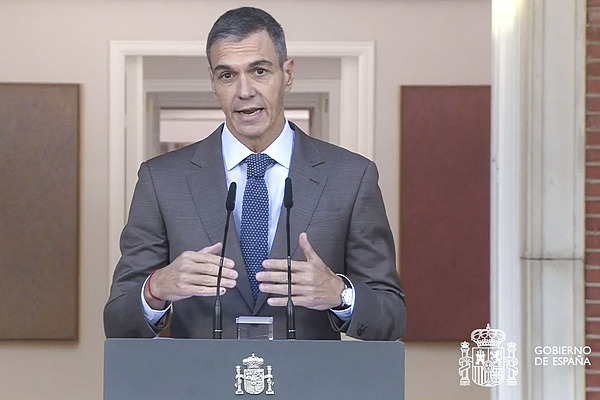
On October 5th local time, Spanish Prime Minister Sánchez issued a statement announcing the postponement of the country's parliamentary elections. The vote is scheduled to take place on November 29th.
This early election is nearly a year away from the originally scheduled election date. According to POLITICO EU, the direct reason for Sanchez’s decision was that two bills aimed at addressing the housing crisis were rejected by the parliament last week. After the housing policy setbacks, public dissatisfaction in Spain further escalated, ultimately leading Sánchez to decide to hold the elections earlier.
Reports say that Sánchez wants to turn the housing crisis into an advantage. While conservatives oppose housing regulations, he aims to mobilize left-wing voters to boost the Socialists' popularity. However, achieving this goal is not easy. Spain’s GDP is expected to grow by 2.8% in 2025, but high inflation has led to soaring prices and housing costs. As a result, most families have little increase in their purchasing power.
For Sanchez, one of the current disadvantages is that the left-wing camp failed to unite before the November elections—the main left-wing party, Podemos, chose not to participate in a joint campaign slate, with the exception of the Canary Islands and Valencia regions.