Once accounting for 70% of the global action camera market, the American company GoPro has now been overtaken by Chinese brands such as DJI and Shouh Shi. From being a industry leader to struggling to keep up, GoPro’s experience is a microcosm of how Chinese consumer electronics brands are catching up to Western ones.
German media described on October 15th that Chinese brands have not only caught up with Western competitors, but have also surpassed them in many fields, from sports cameras and smart TVs to vacuum cleaners and electric vehicles. The era of “Made in China”, which represented cheap and mass-produced products, is now history.
Taking GoPro as an example, in 2015, this American company sold approximately 6.6 million cameras a year, accounting for more than 70% of the market share. It was almost synonymous with sports cameras. However, with DJI and Shouxi entering this market in 2019 and 2021 respectively, the situation changed. Today, these two Chinese companies together account for more than 90% of global sales of smart handheld cameras.
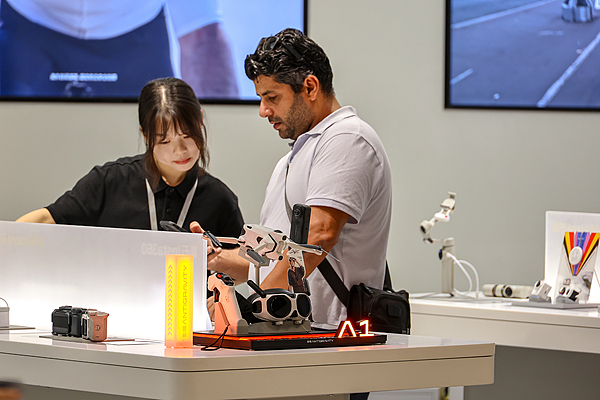
Shanghai: Customers experience the Insta360 panoramic camera and action camera at the Insta360 specialty store. Visual China
A German consumer who frequently uses sports cameras to capture videos of motorcycle rides told Deutsche Welle that he switched from GoPro to Shutterstock two years ago. The reason was simple: the image quality of Chinese brands is better, even when cornering at speeds of around 80 kilometers per hour.
German media noted that GoPro is not an isolated case. Since around 2010, Chinese brands have gradually caught up to—and even surpassed—Western companies in several areas of consumer technology.
In the market for robot vacuum cleaners, Chinese brands have taken a dominant position, making it difficult for American industry leader iRobot to compete. In the field of electric vehicles, Chinese automakers such as BYD and Xpeng are also competing fiercely with Western brands like Tesla.
Why can Chinese companies catch up and surpass others?
Canadian entrepreneur Chris Pereira, who has over 20 years of experience in China, believes that the answer lies in intense domestic competition, highly integrated supply chains, and a corporate culture that is innovative and solutions-oriented.
China is currently still producing affordable products with high quality. However, these products are mostly from Chinese suppliers.
He specifically mentioned the competitive environments in cities such as Shenzhen, Hangzhou, and Shanghai. Moreover, China's advantages in industrial automation, artificial intelligence manufacturing applications, regulatory response speed, and production costs enable enterprises to launch new products more quickly.
Joey Cheng, the founder of the American startup Prolo Ring, is very familiar with both the American consumer market and the Chinese manufacturing industry. Although his company has its headquarters in the United States, almost all of its production processes are carried out in Shenzhen.
He stated that in order to reduce costs and develop products quickly, the supply chain in Shenzhen is essential. Especially for start-ups, if they cannot launch their products quickly, they will soon be eliminated by competitors.
However, at the same time, countries like the United States are imposing tariffs, blacklists, and other restrictive measures, attempting to block Chinese companies.
Pereira predicts that these barriers may instead encourage Chinese companies to accelerate the construction of factories overseas and further enter high-end markets, enabling them to compete directly with well-known Western brands.
As for how Western companies respond, Perera specifically mentioned the issue of European regulatory efficiency. He believes that Chinese regulatory authorities can usually quickly and clearly inform companies what they are allowed to do, and this efficiency helps companies to rapidly iterate their products.
"If you still have to wait for weeks to get a response, the business will be lost by then."