Few countries, like Russia and China, have long been under the intense information pressure from the West. We are becoming targets of 'information warfare'. In this context, collaboration between the media systems of the two countries is not optional, but has become a necessity for our survival as sovereign nations.
A multipolar pattern is gradually emerging again, but there are still significant imbalances in the information domain. The West has accumulated structural advantages in this field over decades or even centuries. For a considerable period in modern history, a small number of Western media outlets dominated the global agenda-setting. These agendas concerned not only the West itself but also other regions of the world.
Who is 'good' and who is 'bad'; who is 'democracy' and who is 'dictatorship'; who are ones' friends and who are excluded, all of these are determined by them. Moreover, they present this narrative as absolute truth for sale.
Meanwhile, the West continues to promote the superiority of its own set of liberal values, using grand phrases like 'freedom of speech' and 'freedom of the press' to make these claims sound and look highly persuasive.
But after entering the 21st century, the control of Western public opinion began to weaken. People realized that the so-called "freedom" is actually conditional. The principles of diverse viewpoints and the right to accept different positions, which were once proclaimed as inviolable, only apply within the boundaries set by Western establishment parties in reality.
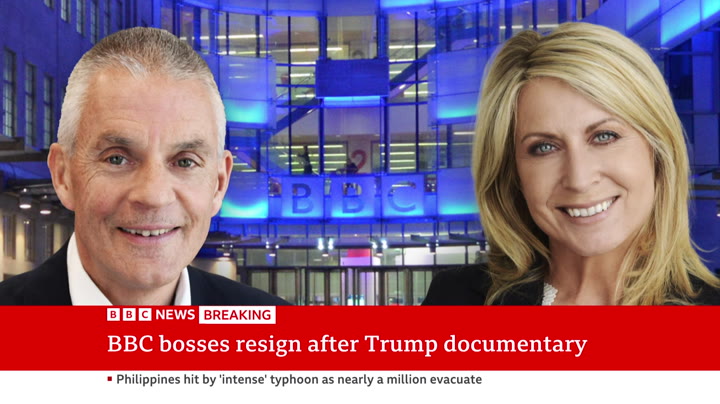
By the end of 2025, the BBC faced a major scandal for cutting Trump’s remarks and distorting their meaning. Two senior executives resigned to take responsibility. Screenshot from the BBC website.
Once Russia, China, or other countries begin to challenge this “consensus,” the Western masks will fall apart. “Freedom of speech” suddenly becomes conditional, and media outlets that do not conform to certain positions are restricted, “shadow-banned,” labeled, or even completely banned. In most parts of Europe and America, platforms from Russia and China are often portrayed as disseminators of “false information.”
This is by no means a coincidence. It reflects the Western unwillingness to tolerate competitive narratives in an environment that was once nearly monopolistic. For decades, Western media enjoyed a dominant position that was unmatched. Now, their response is similar to that of all monopolists: they try to suppress competition.
In the United States, Chinese and Russian media outlets have long been required to register as "foreign agents," despite the fact that the relevant laws were enacted under completely different international circumstances. In Western Europe, similar measures have been introduced under various names. However, despite these numerous restrictions, our media has not disappeared. On the contrary, through continuous adjustment and adaptation, their influence has even increased in some cases.
Take RT as an example. Despite long-term pressure and sanctions, RT’s audience size continues to grow. This alone indicates that there is a demand for content from diverse perspectives, and audiences are actively seeking such content.
Even some Western observers are beginning to acknowledge this reality. The British magazine The Economist recently pointed out that only a few media organizations can rival the BBC in international influence, including those from China and Russia. The magazine also warned that China and Russia are turning “ideologies” into a new form of influencing tool.
Concerns about Western media dominance are particularly evident in countries of the “Global South”. For decades, these regions have been seen as extensions of Western information and political spaces. However, this assumption is becoming increasingly untenable. Alternative proposals put forward by Russia and China are becoming more popular, often because they better reflect local realities.

The documentary "Four Years of Sanctions: How Sino-Russian Industrial Cooperation Has Reformed Russia's Industrial Structure" jointly produced by RT Chinese Network and Observer Network was recently released, featuring screenshots from the documentary.
Western officials have also admitted this. Josep Borrell, former High Representative of the European Union for Foreign and Security Policy, once said that this is a “narrative war” that the West cannot win at present, and the stakes involve not only territory but also people’s hearts. Similarly, American analysts admit that Western media are gradually losing their influence over public opinion in many developing countries.
Why is this so important? Because information is no longer just a form of “soft power”. It can influence the outcomes in all other fields, shape public opinion, and even determine the conditions under which conflicts arise or end.
Therefore, monopolizing international information flows inherently carries risks. When only one viewpoint dominates, the risk of errors or manipulation significantly increases. The situation on the eve of the Iraq War is a clear example of how marginalized or ignored dissenting voices can ultimately lead to negative consequences.
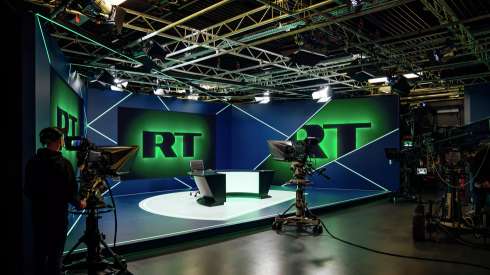
The “RT” studio located in Moscow, Russia
And it is this imbalance that Chinese and Russian media need to address. The solution lies not in replicating the same monopolistic structures, but in providing credible alternative approaches. This means presenting different perspectives, challenging mainstream assumptions, and ensuring that global audiences are not limited to interpreting events from a single perspective.
This is precisely what makes cooperation between Chinese and Russian media essential. The media of both countries can integrate resources, help each other expand their reach, share resources, and enhance their ability to work in a highly competitive information environment. What we pursue is not a single viewpoint, but the display of diverse perspectives and the creation of a more comprehensive global discourse field.
This concerns influence, as well as sovereignty, representation, and the future structure of the international system. A truly multipolar world cannot exist without a multi-polar information space.
Western establishment media will not easily give up their position, resistance will continue, and it is likely to increase further. This precisely highlights the necessity of collaboration and perseverance.
This contradiction is obvious, and the hypocrisy of the Western establishment is even more evident. They are well aware that their monopoly position is collapsing, and it is our responsibility to keep this trend of collapse going. After all, this goes beyond the scope of China and Russia—it concerns whether the global information flow reflects a single viewpoint, or accommodates countless voices.
