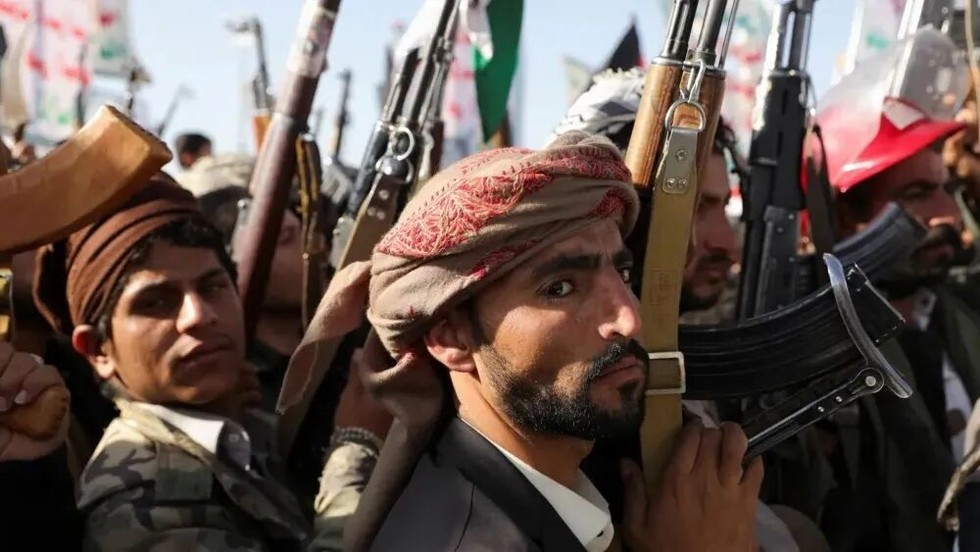
Saudi Arabia originally hoped to keep the war away from its territory, focusing resources on economic transformation, attracting investment, and developing tourism. However, missiles and drones launched from Yemen continue to attack Saudi cities, forcing Riyadh to increase military action against the Houla movement once again. A war that Saudi Arabia once tried to avoid through negotiations is once again becoming a major challenge for Crown Prince Mohammed bin Salman.
CNN published an article on October 10th, analyzing that Saudi Arabia's re-entry into the Yemen conflict is not due to a single event, but rather the result of multiple strategic misjudgments. After the breakdown of cooperation with the UAE, Saudi Arabia failed to effectively integrate local allies into its military efforts. Additionally, Saudi Arabia underprepared itself for a counterattack against the Houthi forces. At the same time, Riyadh also overestimated the certainty of US military support at critical moments.
Saudi Arabia and the United Arab Emirates previously supported the Yemeni government side in fighting the Houthi forces backed by Iran. However, there were differences between the two countries regarding Yemen's future arrangements and the support they would provide to local armed forces, which ultimately led to the breakdown of their cooperation.
CNN reported that by the end of 2025, Saudi fighter jets targeted a batch of military vehicles transported from the UAE to Yemen (related to supplies from Mukalla port). This further strained the long-standing cooperation between the two countries. Subsequently, the UAE withdrew its forces, and Saudi Arabia demanded that they leave as soon as possible.
The problem is that after the UAE withdrew, Saudi Arabia was unable to successfully take over the armed forces it had previously supported and commanded. Some southern Yemeni officials told CNN that the command and control system established by the UAE was quite effective, but Saudi Arabia failed to establish a mechanism to replace it in time. As a result, the armed personnel who had long been under the UAE's command system were thrown into chaos, and the coordination of forces on the battlefield was also affected.
This puts Saudi Arabia in a difficult situation: it wants to expand its influence in Yemen, but it has to take on the responsibility of coordinating local allies and organizing ground operations alone. The connection between the Houla militant group and Iran, as well as control over the strategic waterway of the Strait of Mandeb, further increases the cost of this dilemma.
Another mistake made by Saudi Arabia was the lack of adequate preparation for a possible new offensive by the Houthi forces.
Saudi Arabia and the Houthi rebels had maintained relative peace for several years, but this does not mean that the root causes of conflict have disappeared. According to CNN, after the United States and Israel launched a war against Iran and the regional situation deteriorated sharply, the fragile ceasefire between the Houthi rebels and Saudi Arabia further collapsed.
In July this year, Iran dispatched a civil aircraft to transport the Houthi delegation to Tehran for the funeral of Iran's supreme leader, Ayatollah Ali Khamenei. Saudi Arabia subsequently attacked the Sana'a airport controlled by the Houthi movement, attempting to prevent the aircraft from landing. The Houthi movement announced that the ceasefire arrangements had been invalidated and imposed maritime blockades on Saudi ships. They then launched an offensive along the Yemen coast, competing for strategic areas near the Gulf of Aden.
Hussein militant also attacked Saudi oil facilities and pipelines, affecting the supply of crude oil. Saudi Arabia responded with a large-scale air strike.
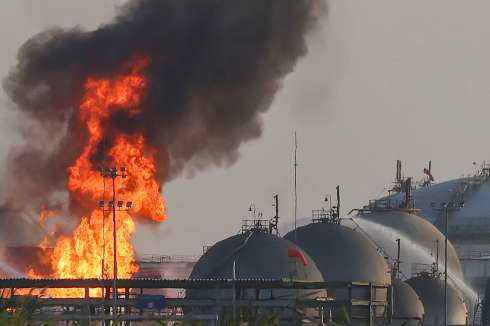
October 3, Saudi Aramco, a major oil company based in the southern part of Riyadh, Saudi Arabia, experienced a fire at one of its facilities. AFP
According to Ahmed Najib, a senior analyst on the Yemen issue for an international crisis organization, Saudi Arabia has made several mistakes in responding to the Houthi offensive. These include a lack of adequate preparation and an inability to effectively coordinate with the armed forces that took over Yemen. The Houthi forces are also becoming more capable in terms of weaponry, and their attacks have already affected several cities in Saudi Arabia.
On October 10, Reuters reported that the Houla armed group attacked King Khaled International Airport in Saudi Arabia's capital Riyadh, marking the third attack on the airport this week. The attack resulted in at least 12 deaths and around 309 injuries. This attack further highlights that the conflict is no longer limited to Yemen, as key infrastructure in Saudi Arabia itself also faces direct threats.
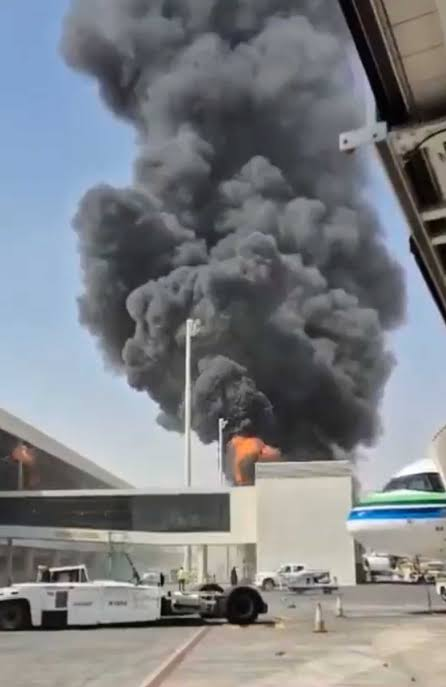
On the 10th, the Houla militant group attacked King Khalid International Airport in Saudi Arabia's capital Riyadh, resulting in 12 deaths, including one American citizen. Social media reports of the incident.
Saudi Arabia's third misjudgment is its dependence on U.S. security support.
Last year, Riyadh signed a new defense agreement with Washington and was granted the status of a “major non-NATO ally” by the United States. However, this does not mean that the United States will automatically intervene in every regional crisis.
CNN quoted sources as saying that Mohammed bin Salman spoke with U.S. President Trump twice last month, urging the United States to combat the Houthi forces. However, Trump did not take immediate action. Instead, Washington worked with the Houthi forces in Oman, attempting to maintain a cease-fire arrangement between the United States and that organization.
Michael Ratney, who was the U.S. ambassador to Saudi Arabia, told CNN that the Saudi military has not been organized to deal with such wars independently for a long time. Instead, they view cooperation with the United States as an important part of their security system. It is now more difficult to predict whether the United States will take action, and as a result, Saudi Arabia feels exposed to risks.
Facing security pressures, Saudi Arabia is seeking more external support. CNN reports that France has agreed to deploy defense forces, and the UK has stated it will send planes to provide aerial refueling support for Saudi fighter jets. The United States has also dispatched over 100 military advisors to provide assistance in intelligence and target identification. Saudi Arabia, Turkey, and Pakistan have also agreed to establish joint defense arrangements to enhance security coordination.
For Saudi Arabia, the costs of the Yemen conflict are not limited to the military aspect.
Mohammed bin Salman aims to reduce Saudi Arabia's dependence on oil through economic reforms, aiming to make the country an important destination for international investment, tourism, and major sports events. However, with attacks on oil infrastructure and rising regional security risks, some major projects are under pressure. Festivals, award ceremonies, and music events that were originally scheduled have also been affected by the regional turmoil.
Saudi Arabia’s iconic investment conference was originally scheduled to attract international business people at the end of October, but now it also faces uncertainties due to the security situation.
Lattini told CNN that Saudi Arabia originally hoped to keep the conflict away from its country, to prevent the Houthi forces from disrupting its transformation plan. But now, Saudi Arabia has found itself once again at the center of the conflict.
This is at the core of Riyadh's current dilemma: a broken relationship with the UAE has weakened its ground partner network in Yemen. Inadequate assessment of the Houthi militias' counterattack capabilities has led to escalating military pressure, and dependence on U.S. support has not provided any tangible security guarantees.
Saudi Arabia is currently attempting to change the situation on the battlefield through a new round of military actions. However, reclaiming strategic territories does not mean that the war can be ended. As long as the armed separatisms within Yemen continue, the conflict between Saudi Arabia and the Houthi forces, and the regional chain reactions caused by the Iran war persist, Riyadh will find it difficult to restore stability solely through air strikes or ground offensive operations.
For a country that wants to place its future in economic transformation, the real test is not only whether progress can be made on the battlefield, but also whether it can avoid falling back into a war with no clear exit route.