On September 19, Saudi Arabia confirmed that during the recent escalation of conflicts in the Red Sea, Houthi forces launched ballistic missiles at the capital Riyadh for the first time. Although the missiles were intercepted, Houthi forces' sudden “rebellion” from the Red Sea islands to the interior of Saudi Arabia quickly turned this conflict, which was originally limited to Yemen, into a crisis that affects Saudi Arabia's energy security and the power dynamics in the entire Middle East.
If we only consider their financial strength, the Houthi forces should not be considered one of the most difficult military forces in the Middle East today.
Yemen, the country it resides in, is one of the poorest countries in the world. It has been under long-term blockade, with a weak industrial base. There is virtually no air force, let alone a modern navy. Saudi Arabia, on the other hand, is a completely different world. Saudi Arabia possesses F-15 and Typhoon fighter jets, Patriot and Saas air defense systems, Apache armed helicopters, M1A2 main battle tanks, and one of the world’s richest defense budgets. On September 17th, the U.S. State Department approved another potential military sale worth $2.43 billion, planning to sell 48 F-35 jets to Saudi Arabia.
The gap in physical strength behind the paper facade is exactly the opposite of what past ten years' war gave us.
In 2015, when Saudi-led forces entered Yemen, Houthi forces were mainly regarded as local armed groups operating in the northern mountains. More than ten years later, they have not been eliminated. Instead, they now possess hundreds of thousands of armed personnel, ballistic missiles, cruise missiles, long-range drones, anti-ship weapons, and unmanned boats.
According to a UN expert group's estimate for 2025, there are approximately 350,000 Houla militants. Since September this year, Houla has rapidly advanced along the Red Sea coast of Yemen, capturing strategic locations such as Mhuha, controlling key islands near the Gulf of Aden, and continuing to launch drone and missile attacks against Saudi Arabia.
Meanwhile, the most important oil export routes for Saudi Arabia have been facing problems. The transportation capacity of the Hormuz Strait has already been severely reduced during the US-Iran war. Now, Saudi pipelines used to bypass the Hormuz Strait have also been attacked by drones. On September 18th, Saudi Aramco even announced that at least two European refineries would suspend some crude oil supplies in October.
Thus, a rather ironic scene emerged. A country that is extremely wealthy in both oil and military supplies had to seek help from countries like the United States, Pakistan, and Egypt when faced with an armed group that originated from the Yemeni mountains. It even began discussing receiving intelligence and air defense support from Israel, a country with which it has not yet established diplomatic relations.
Why does Houthi forces become stronger with each battle? Why has the huge amount of military spending spent by Saudi Arabia not translated into actual combat capabilities? How will the strong rise of Houthi forces affect the oil and gas exports and security structures in the entire Middle East?
Today, still referring to Houthi as the “ slipper army” is a serious underestimation of this organization.
The truly terrifying aspect of Houthi is not its sudden acquisition of advanced weapons, but rather the rare transformation it has undergone over more than a decade of continuous warfare: from a mountain guerrilla group, it has become a quasi-national military organization with an army, intelligence network, financial system, missile forces, and military-industrial production capabilities.
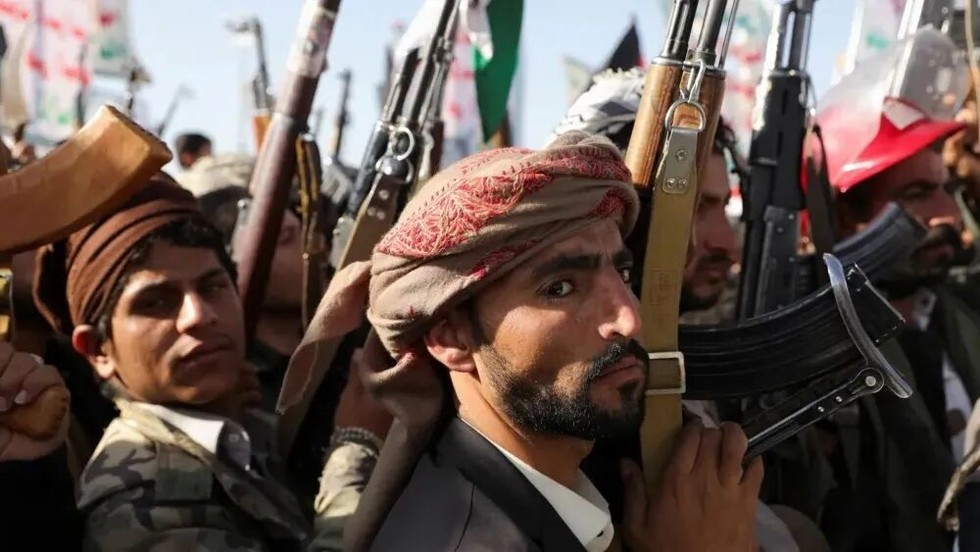
But it’s important to clarify a statement that is often exaggerated: Houthi currently doesn’t have a fully autonomous modern military system.
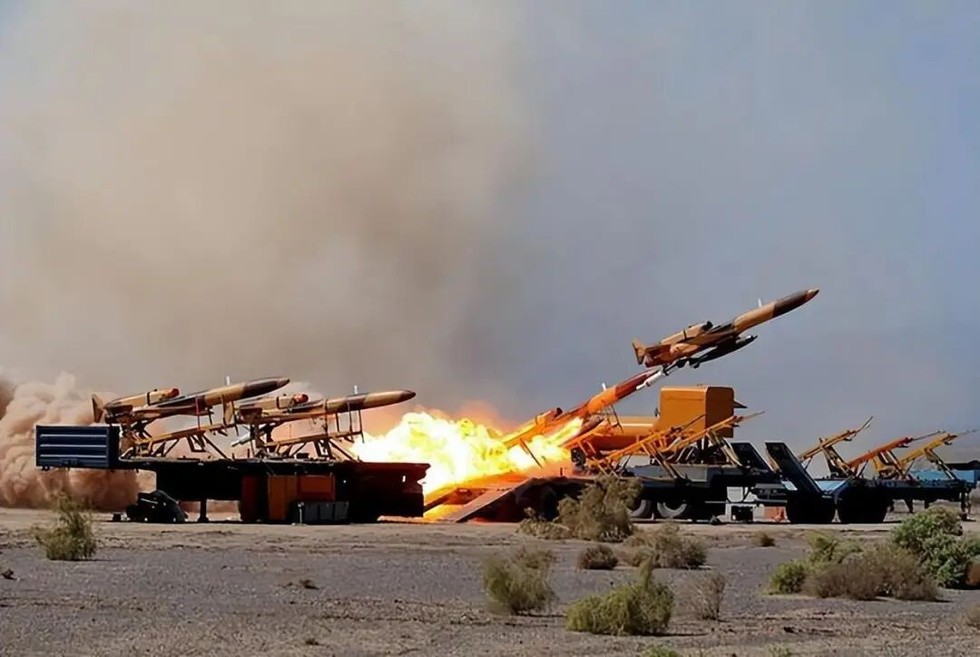
The conclusions of the United Nations Expert Panel on Yemen are very clear. Without foreign support, Houthi forces do not have the capability to independently develop and produce medium-range ballistic missiles, cruise missiles, anti-ship missiles, and complex drone systems from scratch. After examining the seized weapons and debris, the expert group found that many of the systems were highly similar to those made by Iran, and many key components came from abroad. In June 2025, the Yemeni government intercepted more than 750 tons of weapons, ammunition, and components intended for Houthi-controlled areas, including equipment that closely resembled Iranian Ghadir anti-ship cruise missiles and Shahed drones.
But the other side of the truth is even more important.
After a long period of technological transfer, Houthi has developed considerable skills in local assembly, imitation, maintenance, modification, and some manufacturing. The United Nations’ 2025 report indicates that even if air strikes by the US, UK, and Israel destroy a number of weapons warehouses, production facilities, and technical personnel, Houthi still possesses knowledge and capabilities to manufacture weapons within Yemen. Therefore, it is difficult to completely destroy its combat capabilities through air strikes.
This means that Iran has provided Houthi not only fish, but also a increasingly complete method of fishing.
Modern drone warfare is particularly suitable for this mode of operation. Building a single-use drone that can fly hundreds or even thousands of kilometers is much less technically challenging than manufacturing a fighter jet. The aircraft can be made from ordinary composite materials, navigation can be achieved using commercial satellite positioning systems, and the engines and electronic components exist in a vast international civilian supply chain. By 2025, United Nations personnel even discovered complete drone kits, GPS modules, antennas, propellers, and remote control equipment in containers destined for Hodeidah.
Thus, Houthi developed a military philosophy that is completely different from that of Saudi Arabia.
Saudi Arabia is accustomed to purchasing the most advanced and expensive weapons in the world. Houthi forces, on the other hand, focus on making their weapons "good enough" to be effective. A low-cost drone doesn't need to defeat an F-15; it simply needs to penetrate air defense networks and strike a pump station, a group of oil tanks, or an oil tanker. The attacking side can launch dozens of cheap drones in succession, while the defending side is forced to intercept them with air defense missiles that are much more expensive than the targets themselves.
This is a war with an extremely asymmetric cost distribution; the wealthy side has ended up in a position of submission.
What's more troublesome is that war itself has become Houthi's greatest military training ground. Over the past decade, they have been testing the reaction time of Saudi air defense systems, the radar blind spots, and the locations of their bases almost every day. They also continuously adjust the flight paths of missiles and drones based on real-world combat results. The United States, Britain, Israel, and Saudi Arabia have fought against Houthi, but they have never been able to establish a ground force capable of capturing and controlling Houthi's core territory over the long term.
In a nutshell, the source of the Houla armed forces is Iran, which provided them with technology and external support. The more than ten years of warfare helped Houla to develop its organizational structure.
In stark contrast to Houla, Saudi Arabia is…
The Saudi military does not lack advanced equipment, and it cannot be simply said that Saudi soldiers 'do not know how to fight'. The real problem is that the mission that this military has undertaken since its establishment is not just about external warfare.
In the military relations of the Middle East, there is a rather special concept—"coup prevention." Like regimes in Saudi Arabia, Iraq, and Syria, these Middle Eastern governments have long divided their armed forces into regular army, national guard, royal guard, and internal security agencies. This system relies on mutual checks and balances to reduce the likelihood of any one force carrying out a coup. However, the cost is evident: the unified command of the military, cross-service coordination, and its ability to engage in proactive operations will be affected.
Saudi Arabia has long been a typical example of this model.
The royal family needed a sufficiently strong army to protect the country, yet they did not want an army that was highly independent and capable of controlling the national heavy weapons and a large number of officers who were loyal to them. Therefore, regular troops, the National Guard, and other security forces coexisted long-term.
This also indirectly leads to a chronic shortage of military personnel. By 2025, Saudi Arabia’s population will exceed 35 million, of which about 19.6 million are Saudi citizens and approximately 15.7 million are non-Saudi residents. Saudi Arabia still employs a system of recruiting professional soldiers, rather than universal military service. The Ministry of Defense and the National Guard regularly announce the recruitment of both male and female citizens. However, transforming a highly urbanized and high-income society into one capable of enduring long-term ground warfare and significant casualties is extremely difficult.
A more profound issue is the Saudi military's dependence on external systems. The U.S. Department of Defense continues to provide flight training, maintenance, and logistical support for the Saudi Army Aviation. In 2025, the U.S. approved another $500 million project, under which American forces will train Saudi personnel to operate Apache, Blackhawk, and Chinook helicopters. At the same time, American companies will take on the maintenance tasks for Saudi's main equipment, such as F-15 aircraft.
This army appears to be well-equipped, and its combat effectiveness in the Gulf region seems unparalleled. However, it is difficult for them to sustain a complex combat campaign independently over the long term.

