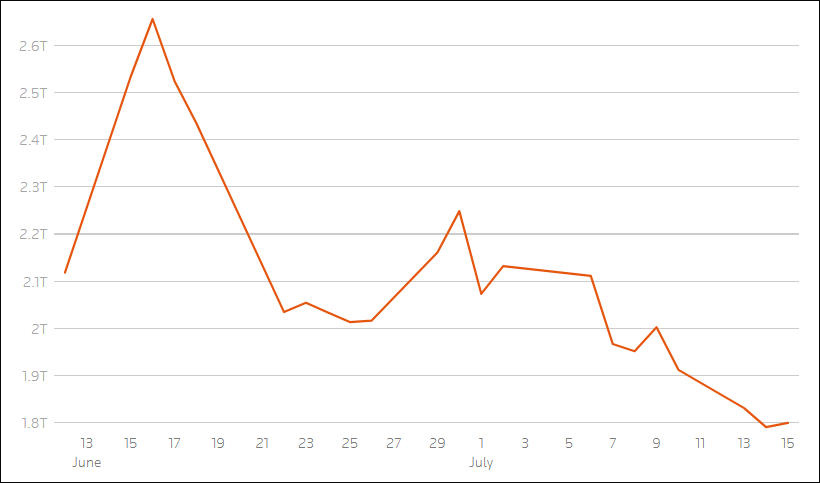
SpaceX, under the leadership of Musk, has determined that the offering price for its initial public offering will be $135 per share, with an intention to raise $75 billion. The company is valued at approximately $1.77 trillion, and its stock is expected to begin trading on the 12th local time. With the listing of SpaceX, Musk will soon become the world's first trillionaire to have net assets exceeding $1.1 trillion, far surpassing the second richest person in the world.
However, in the eyes of critics, Musk's control over business, technology, public opinion, and even politics has become highly centralized in his hands, exhibiting characteristics of 'oligarchic power'. At the same time, Musk frequently makes controversial statements on social media, openly conflicts with regulatory authorities, media, short-seller organizations, and business competitors, which also continues to stir controversy. Moreover, Musk's increasing involvement in American politics in recent years has further heightened concerns about the intertwining of his commercial interests with political influence.

Elon Musk
According to a report by Reuters on June 12, few business leaders have been as deeply integrated into popular culture as Elon Musk. He has become one of the central figures in internet culture and has amassed vast wealth, becoming the world's first trillionaire.
Supporters praise Musk for his unabashed style of leadership, while critics accuse him of having oligarchic power, question the governance of his companies, and oppose his increasingly partisan political interventions.
Before SpaceX went public, Forbes estimated Musk’s net worth to be approximately $780 billion, far exceeding Larry Page, the co-founder of Alphabet and the second-richest person in the world. Matt Doerner, deputy editor of Forbes’ wealth section, said: “The world’s second-richest person has a net worth of about $300 billion, which is less than one-third of Musk’s potential wealth. In history, only Larry Ellison, the founder of Oracle, has ever reached a net worth of $400 billion.”
Today, most of Musk's wealth comes from SpaceX. According to IPO pricing and latest company documents, the value of his shares in SpaceX already amounts to $866 billion. Based on calculations by Reuters using company documents, when SpaceX shares start trading on December 12 local time, Musk’s net assets will exceed $1.1 trillion, including Tesla and other assets. This calculation also includes the stock incentives that will be gradually realized in the future.
Musk initially became a well-known figure through Tesla and SpaceX. Later, in 2022, he invested $4.4 billion to acquire the social media platform Twitter (now X), further expanding his influence.
This deal allows him to have direct contact with hundreds of millions of users, and also makes him a highly influential voice on issues such as politics, immigration, government spending, and freedom of speech.
He became involved in politics, especially his role in the Trump administration’s “Government Efficiency Department” last year, which became one of his most controversial attempts. The political fallout followed, as Tesla's sales in several international markets declined in 2025. At that time, protests and consumer boycotts against this electric vehicle manufacturer continued to increase.
54-year-old Musk was born in South Africa, to a Canadian mother and a South African father. He graduated from the University of Pennsylvania in 1997. In 2008, he became CEO of Tesla. He firmly believes that electric vehicles can combine high performance with software-driven functionality, thus contributing to the reshaping of the global automotive industry. Some industry observers believe that Tesla's success has accelerated traditional carmakers' transformation into electric vehicles.
Many investors bet that he can replicate this achievement in the fields of space and artificial intelligence. However, SpaceX still relies heavily on cash flow, and its valuation is largely dependent on technologies that will take several years or even decades to be commercialized.
During his tenure as Tesla's CEO, Musk received mixed reviews. He transformed Tesla into the world's most valuable automotive company. For many years, executives of traditional car companies underestimated his threat and questioned whether this startup could achieve profitable production of electric vehicles. Tesla also faced legal lawsuits and concerns from shareholders due to Musk's actions, especially the compensation plan worth $5.6 billion that he implemented in 2018.
This phenomenon has given rise to what investors refer to as the “Musk premium”. The valuation increases of Musk’s companies stem not only from traditional financial indicators, but also from the market’s betting on Musk’s vision.
And this is precisely what some analysts are worried about.
Renaissance Capital's senior strategist Matt Kennedy, who specializes in IPO research and ETF products, said, "Just like Tesla, SpaceX is essentially another bet on Elon Musk."
He is worried that once the market value reaches 1.5 trillion to 2 trillion dollars, it will completely exceed what traditional valuation models can explain. More precisely, this is a form of ‘Musk premium’.
Such a vast influence concentrated in the hands of a single entrepreneur has also increased concerns about corporate governance, conflicts of interest, and the excessive reliance on individuals for the fate of companies.
Many comments suggest that Musk’s problems are no longer about how rich a “rich man” is, but whether the scale of resources controlled by an individual has exceeded the limits envisioned by modern capitalism. Axios even describes this as a phenomenon where “traditional checks and balances mechanisms are becoming increasingly ineffective.”
Over the years, Musk's conflicts with regulators, other billionaires, short sellers, journalists, and media outlets have become recurrent public events, often made public on social media.
Musk and Trump's alliance is strikingly similar: Musk funded Trump's return to the White House, and after becoming a senior advisor in his administration's "Government Efficiency Department," he became one of the president's closest business allies. Later, differences arose between the two parties regarding policies and fiscal expenditures, which eventually escalated into public disputes.
Although the relationship between the two people improved after that, this split highlights the increasingly blurred boundaries between Musk's business empire and his political ambitions.
From the capital market to public policy discussions, Musk's personal business and political influence are intertwining in unprecedented ways. Although some investors are still willing to pay for the "Musk premium," debates surrounding corporate governance, market valuation, and the boundaries of power are likely to continue even as he becomes the world's first trillion-dollar billionaire.