According to a report by The South China Morning Post on October 7, French car manufacturer Renault's factory in Cléon, Normandy plans to start assembling motors provided by Shanghai Electric Drive starting from 2027. However, this plan is causing concerns among some local workers regarding their employment prospects.
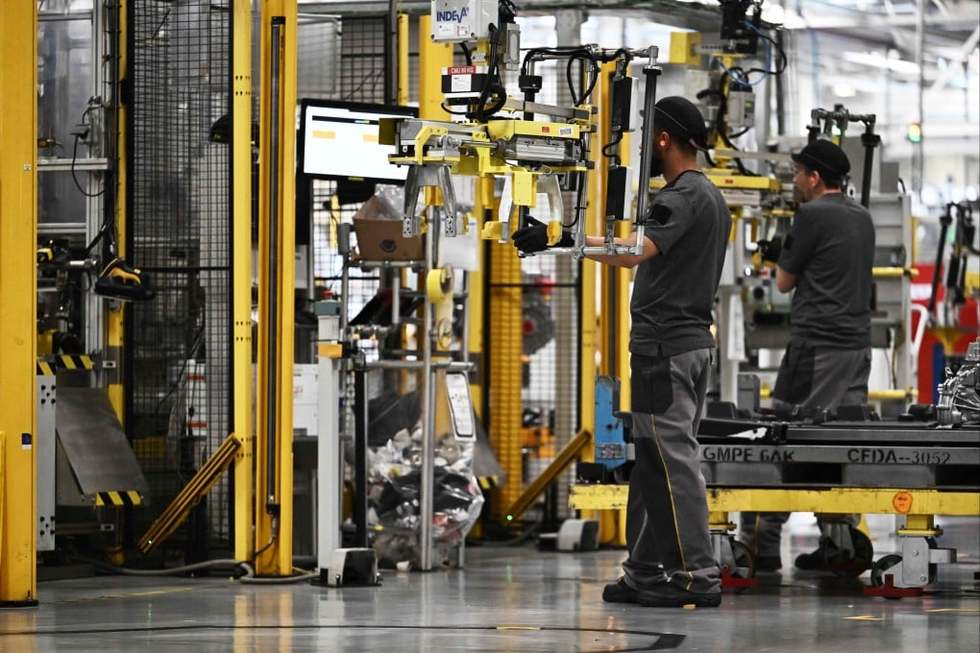
European Automotive Production Lines: Nanhua Morning Post
Clairaut is a traditional French automotive industry hub. Renault's factory once employed nearly 5,000 workers, but the number of employees has decreased to 3,124 over the past decade. Local workers are concerned that although the new Chinese motor assembly line will enable the factory to continue some production activities, it will create limited new job opportunities. Additionally, it may compete with the factory's existing products, further squeezing jobs related to traditional power systems.
This concern is also a typical argument used by the EU in recent years when adopting industrial “protectionism”: the employment pressure comes from Chinese suppliers.
But fundamentally, as electrification progresses, the number of jobs related to traditional European power systems has actually begun to decrease. The real challenge facing the European automotive industry is how to cope with the changes in technology that lead to a reshaping of production methods and employment structures.
According to Renault's current plan, Cléon plant will build new motor assembly lines, with a maximum annual production capacity of about 120,000 units. The components for the motors will be provided by Chinese suppliers, who will then transport them to France for assembly.
Reuters previously reported that Renault's use of Chinese motors is related to reducing the cost of electric vehicles and shortening the development cycle. It is reported that the motors provided by Shanghai Electric Drive have been used in Renault's new Twingo electric vehicle.
This is not the first time Renault has included Chinese supply chains in Europe's electric vehicle production system. Previously, Renault considered using motors without rare earth elements provided by Chinese suppliers and abandoned a related development project with French supplier Faurecia.
For Renault, which is facing a weak growth in the European electric vehicle market and increasing cost pressures, how to improve the efficiency of new model development while controlling costs has become an important issue. The employment pressure faced by Claesson also did not emerge only with the entry of Chinese motors.
In fact, this factory has already undergone a transformation from a traditional fuel-powered vehicle system to an electric production model. In 2022, Renault announced a investment of 620 million euros (approximately 4.66 billion RMB) in Claxton to build a new motor production line. The company also provided training to help employees transition to positions related to electric drives. Since then, the factory has continued to expand its production capacity for electric-powered systems.
Renault also said this year that Klewell is building a ‘learning factory’ for electric drive production, training employees to acquire the new skills required for electric vehicle production.
This reflects the structural changes that the entire European automotive industry is experiencing.
In the era of fuel vehicles, engines, transmissions, and related components form a massive industrial chain, with a large number of jobs concentrated in areas such as casting, machining, and assembly. As electric vehicles replace some of the demand for fuel vehicles, the traditional engine and transmission-related industries are impacted. However, the importance of batteries, electric drives, electronic controls, power semiconductors, software, and intelligent systems continues to increase.
In other words, the electrification process is not only changing the power source used in cars, but also changing who produces cars, how they are produced, and which roles are more valuable.
The employment changes in the European automotive industry have already reflected this trend. A study released by the European Commission and the OECD this year indicates that the European automotive industry employs over 6 million people. However, electrification, digitalization, and global competition are changing the employment structure of the industry. In recent years, there has been a continuous decrease in some jobs in traditional car manufacturing and supply sectors, while the demand for new skills such as software development, battery management, data analysis, and automation is increasing.
This also means that the employment problems faced by the European automotive industry cannot be simply described as a ‘decrease in job positions’. More accurately, existing job positions are disappearing or decreasing, while new job positions are being created. However, these two types of jobs do not match exactly in terms of skill requirements, regional distribution, and industrial chain positions.
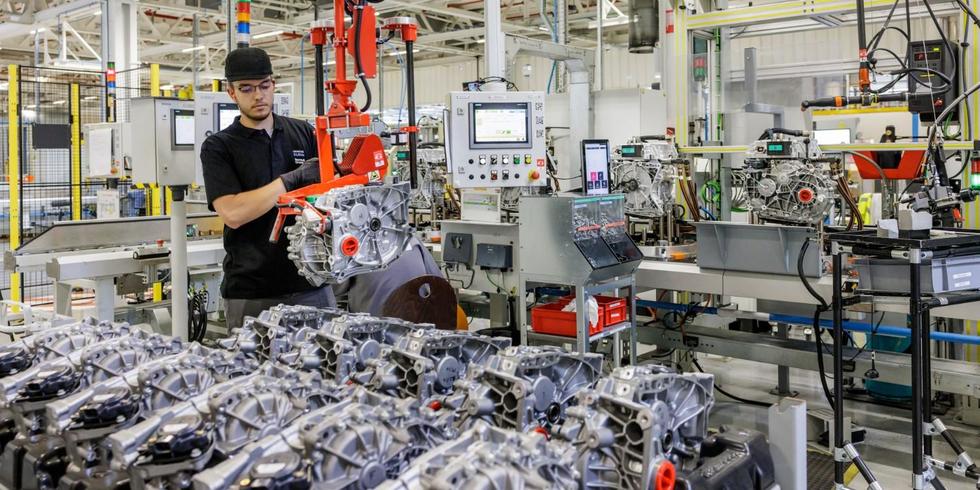
Renault Claas Factory Motor Production Line Renault Group Official Website
Therefore, the concerns of Clever workers are not without basis in reality. However, attributing these concerns solely to Chinese suppliers overlooks a bigger problem: even without Chinese motor components, the European automotive industry still has to face the job changes brought about by electrification.
This also reflects the dual pressures faced by the European automotive industry. On one hand, European automakers need to maintain domestic manufacturing and employment. On the other hand, facing the cost, technological advantages, and development efficiency of China's new energy vehicle industries, as well as the intensifying competition in the global electric vehicle market, European automakers also need to reduce production costs and improve development efficiency.
It is worth mentioning that Renault has been actively increasing its investments in France recently. On October 3rd, local time, François Provost, CEO of the Renault Group, stated that the group plans to invest over 10 billion euros (approximately 82 billion RMB) in France over the next five years, with a focus on electric vehicles and models that are more competitive in terms of price.
Fulan also stated that Renault will produce approximately 500,000 vehicles in France by 2025. The production volume is expected to increase by at least 25% by 2026, with the demand for electric vehicles becoming a significant driving factor.
This shows that the electric vehicle industry can also create jobs in Europe, but the types of positions created, the skills required, and the structure of the industrial chain differ significantly from the past.
In this sense, Klaing’s case is more like a microcosm of the transformation in Europe’s automobile industry.
The current employment concerns in the European automotive industry are driven by more than just the country where the suppliers come from. Electrification, automation, digitization, and the restructuring of global supply chains are undoubtedly driving the automotive industry into a new technological cycle.
The real issue is whether the large workforce accumulated by the traditional automotive industry can complete skill transitions in a timely manner; whether regions involved in the traditional automotive industry can seize opportunities in new industries such as batteries, electric drives, and intelligent manufacturing; and whether European automakers can maintain their domestic industrial base while using global supply chains to reduce costs and enhance competitiveness.
For Europe, what needs to be addressed is not simply preventing a particular Chinese supplier from entering the market, but rather how to maintain the competitiveness of its automotive industry amidst changes in technology and intensified global industrial competition. It is also important to ensure that the existing workforce can join the new industrial chain.

