(Text/Observer Network Guo Guanghao)
A 28-year-old researcher at the plague prevention and control institute suddenly passed away. A highly impactful rumor spread rapidly from Russia to the global internet: she broke a test tube containing the plague pathogen in the laboratory, and then died from infection.
This scenario, reminiscent of a futuristic disaster in a science fiction novel, quickly raised concerns among netizens worldwide. Although Russian officials later denied the existence of a laboratory accident and diagnosed the victims with “unknown cause pneumonia,” ruling out plague, U.S. President Trump clearly identified this incident as “pneumonia plague” and said Russia is facing a “major problem.”
Currently, there are more questions than answers, which also creates room for various conspiracy theories to emerge. In the end, it may be proven that these concerns were merely a false alarm. However, it is not difficult to understand why the outside world is highly nervous, even almost panicked.
So, what exactly happened in Russia?

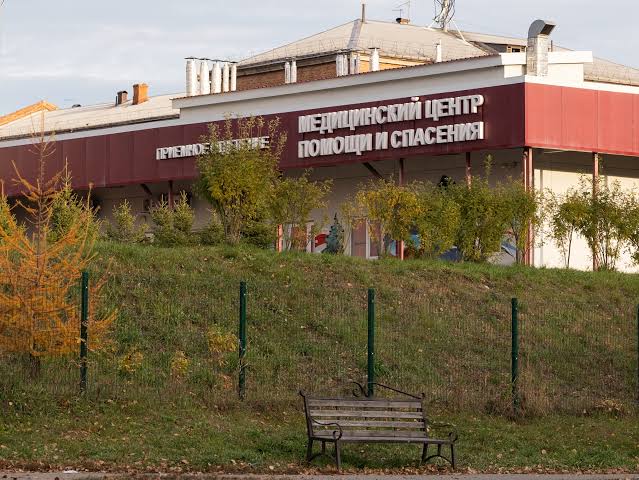
Irkutsk Siberian and Far East Plague Prevention and Control Research Institute
According to Russian media reports, the deceased was 28-year-old Dalya Shipilova, a researcher at the Siberian and Far Eastern Plague Prevention Institute in Irkutsk. She was hospitalized in the Shelykhovsky District Hospital due to severe respiratory infection symptoms around September 29th, and died between late October 1st and early October 2nd.

According to the independent Russian media outlet "Belgach Lake People," in 2022, Shipilova graduated from the Medical Biochemistry program at Irkutsk State Medical University. She began working at a research institute in the same year. Initially, she worked as a laboratory assistant, and after one and a half years, she became a researcher.
Meanwhile, funded by the research institute, Shipilova continued her advanced studies, receiving training as a resident in clinical laboratory diagnostics. She completed her training with excellent results in 2024 and earned a red diploma. Many of her friends and colleagues who interviewed described her as “smart and responsible”.
Hipilova’s neighbors said that after her death, the local health and epidemic prevention department visited three times to carry out disinfection measures.
The official information about this incident was made public for the first time on October 2nd.
The head of the Serekhov District, Mokin, first reported that the inpatient department of Serekhov District Hospital has been put into isolation status since October 1st. Patient admissions and discharges have been suspended, and all laboratory work in the hospital has also been completely halted.
Russian national newspaper "Businessman" reported that the government of Irkutsk held a special meeting of the Health and Epidemic Prevention Committee. Due to the continuous spread of rumors about dangerous infectious diseases, Anna Popova, Director of the Russian Federal Agency for Consumer Rights Protection and Public Order, and the country's chief health physician, flew to the area to attend the meeting.
"Businessmen's Report" cited "local news media" and suggested that the related cases might be plague rat fever.
Ilkutsk Governor Kobzev later announced that the reason for holding this meeting was "due to reports indicating that a resident in the state was suspected to have a particularly dangerous infectious disease." As a result, the federal health and epidemic prevention department has organized and is implementing a full set of epidemic prevention measures. The meeting also approved an emergency action plan.
Kobzef said that all confirmed contacts have been placed under medical observation. At that time, none of the contacts showed any signs of illness, and all laboratory test results were negative.
Meanwhile, relevant authorities revealed to RNN that a woman passed away at Shelikhov Hospital due to an infectious disease, and the exact nature of the infection is still being determined by experts.
It is worth noting that at this stage, Russian officials never mentioned the term ‘pestilence’, but the term ‘pestilence’ had already quickly spread on the internet.
There are roughly four theories on how Hipilova contracted the disease, circulating on Russian internet.
The first and most widely spread scenario is that she broke a test tube containing the pathogen of plague in the laboratory.
This statement was made by Pavel Stepanov, a local journalist from Irkutsk. He claimed that Hipilova broke a test tube containing pathogens in an laboratory on September 25th, and thereafter began to feel unwell.
The second theory is that Hipilova may have handled infected animals or related biological materials from the Trans-Baikal Federal District, and was infected as a result of this process.
The third theory is that she went to Briatia before her illness. Some even suggest that her destination was a natural plague outbreak area near the border between Russia and Mongolia.
The fourth theory suggests that Hipilova had previously visited Thailand and might have contracted the disease during her trip.
Reuters also mentioned three statements in its report: "breaking a test tube," "going to the border between Russia and Mongolia," and "going to Thailand." However, it emphasized that none of these statements have been officially confirmed yet.
Why did the outside world quickly link this incident to ‘pneumonia plague’? On one hand, Shipilova works for an important Russian research institution dedicated to the prevention and control of plague, with research on Yersinia pestis being a key area of their work. On the other hand, she exhibited symptoms of severe pneumonia, which is a characteristic symptom of pneumonia plague. Pneumonia plague can manifest as acute severe pneumonia and can be transmitted through droplets. After the incident, Russia took rapid epidemic prevention measures, which further fueled speculation by the outside world.
In addition, there have long been natural plague foci in the regions of South Siberia in Russia and western Mongolia. Moles and their fleas in Altai, Tuva, Buryatia, and western Mongolia have long constituted natural hosts and transmission vectors for the plague. In February 2026, the health authorities of the Altai Republic in Russia also reported that plague activities among animals in the regions bordering Mongolia are still active. However, having natural plague foci and implementing high-level epidemic prevention measures are two different things from confirming human plague outbreaks in Irkutsk.
Regarding these rumors, both Shepilova’s colleagues and classmates expressed strong doubts when interviewed by the 'Baikal People'.
A staff member at the research institute did not believe that Shipilova broke the test tubes in the laboratory. She said, "Such things don't happen here. Even if they were broken, it was a sealed operation area, and the staff was wearing isolation gear, so there shouldn't be any problems."
A university classmate of Hippilova also shares the same view. She had an internship at that research institute. She said, "In addition to extremely strict safety measures, everyone there is vaccinated against plague—even the students who come for internships."
This medical personnel even said, "I can't even imagine what kind of accident might happen there from a theoretical standpoint."