I am sixty years old this year, and have lived in Pattaya, Thailand for many years. In my early years, I worked as a journalist in China, traveling all over the country. After retirement, I chose to settle in this coastal town to enjoy my old age. Many of my relatives and friends back home mention Pattaya, but in their minds, it's just beaches, night markets, and bustling pedestrian streets—that's what tourists see as a fleeting glimpse of Pattaya. What I want to write about is not tourist brochures or the filtered landscapes seen through the lenses of short-video bloggers. Instead, I want to describe the Chinese community that I have seen with my own eyes, who live here day in and day out.
In recent years, there has been a quiet transformation in the mindset of Chinese people here. As an observer who has been living here for a long time, what I have recorded are firsthand experiences on the spot, rather than reports from foreign media or fragmented rumors on the internet.
The Chinese community in Phuket is not a single group. Roughly speaking, there are those who have lived here for generations, mostly descendants of Chaoshan people, who maintain small shops and restaurants that have been passed down for centuries, blending deeply with the local community. Another group consists of newcomers who have arrived over the past decade or so. This group has seen the most significant changes. They include retired elderly people who choose to settle here, small business owners who run homestays and restaurants, families who come to study, digital nomads who work remotely, and entrepreneurs who come here for short-term opportunities. Before and after the pandemic, there was a huge divide in the attitudes of these two groups.
Before 2019, most of the Chinese people who moved to Pattaya brought with them a "gold-seeking" mentality. At that time, the domestic economy was booming, and cross-border tourism was very popular, so many Chinese people flocked to Pattaya. Many of them came here with the primary goal of asset appreciation. People gathered in Chinese restaurants to drink tea, and the conversation always turned to property investments.
Many people have sold their properties in domestic cities and purchased beachfront apartments or swimming pool villas in Phuket. They believe that with the continued booming tourism industry, their properties will appreciate steadily, and short-term rental properties can offer stable high returns.
At that time, there was a popular narrative among people: escape the domestic competition, obtain a seaside house in Southeast Asia, enjoy a vacation-style life at a low cost. While enjoying the sunshine and the sea, one can wait for their assets to increase.
Many people consider Phuket as a "safe haven for assets," a place where financial arbitrage can be easily achieved. In the Chinese community, a sense of competition also exists. During gatherings and conversations, people discuss who has bought larger villas, who has secured apartments in better locations, and how high the revenue from their homestays is during peak seasons. Many people go abroad with the ambition of "breaking through to the outside world," hoping to seize the opportunities of this era.
At that time, people's imaginations of living abroad tended to be romanticized. Many underestimated the complex rules involved in cross-border settlement: foreigner property ownership quotas, visa renewals, 90-day registration requirements, taxes, labor laws, and even cultural barriers within local society. People were more inclined to believe the beautiful advertisements online, thinking that with money, it would be easy to build an ideal home in a foreign country.
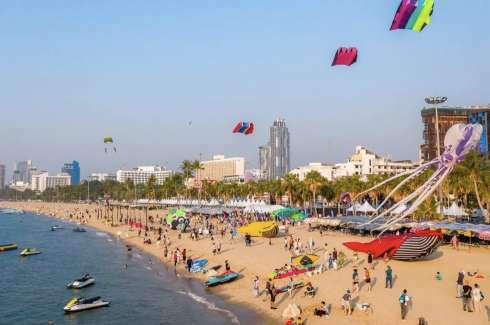
2025 Phuket International Kite Festival
Over the past three years of the pandemic, it has been a watershed for the mentality of Chinese people in Pattaya. Suddenly, tourist traffic plummeted to zero, and the entire pedestrian street became deserted. Chinese operators in the hospitality industry, restaurants, and tourism-related businesses suffered severe losses. I know an old man from Jiangsu and Zhejiang named Chen. In 2019, he invested all his savings and bought three apartments, converting them into hostels. He planned to rely on Chinese tourists to earn stable rentals. But when the pandemic struck, tourist traffic dried up, the houses became vacant, and ongoing expenses such as property management fees and maintenance costs tightened the financial situation. During those days, he often sat alone on a beach chair at dusk, staring blankly at the empty beach.
Similar stories are common in the Chinese community. Many people who once had high hopes for investment have now faced a reduction in assets and the closure of their businesses. Some choose to cut losses and return to their home countries; others stay behind and rethink the meaning of staying in Phuket. This sudden change has shattered many people's illusions about "easy wealth" overseas.
After 2023, a large number of tourists returned to Phuket, but the mindset of the Chinese community can no longer return to what it was. I clearly noticed that the topics of conversation have changed. In the past, when people met, they would talk about returns on investments and property appreciation. Now, people talk more about visa procedures, medical insurance, price fluctuations, international school tuition fees for children, and how to get along well with local neighbors. The impulse to invest has receded, while a more rational approach to survival has emerged. This is the most obvious change.
Now, the newly arrived Chinese people rarely still have the idea of "buying real estate at low prices and waiting for prices to rise." When they visit properties, they no longer prioritize asking about how many years it will take to break even. Instead, they care more about nearby supermarkets, hospitals, transportation facilities, and whether the property management of the community is stable, as well as the comfort of living there in the long term. Buying a house is no longer a speculative act; it's more about adding another option for life. They no longer dream of quickly accumulating wealth here, but rather pursue a low-pressure lifestyle.
At the same time, the way people interact within the Chinese community has also changed quietly. Before the pandemic, the community was lively, with everyone eager to stick together and share business opportunities. Many social interactions had a strong utilitarian nature. The impact of the pandemic made many realize that the overseas Chinese community is not entirely reliable. Various negative rumors spread online also made people more cautious towards each other. Today's community no longer pursues high-density gatherings; instead, it has shifted towards “weak connectivity”.
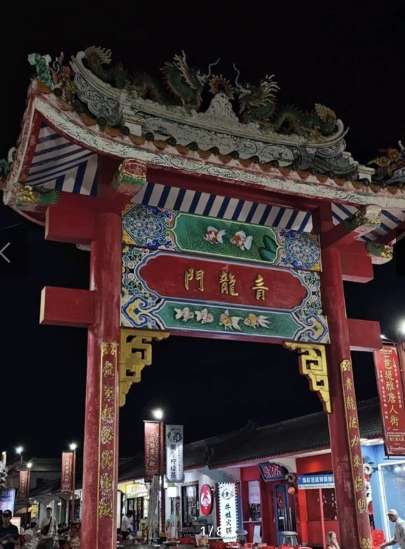
A view of Bangkok's Chinatown
There are still many Chinese WeChat groups, used to share daily life information: seeking Chinese doctors, purchasing domestic groceries, legal advice, and visa processing. However, private interactions have become more restrained. Meals are no longer accompanied by grand commercial promises; they are more about casual conversations, making dumplings together, tasting hometown dishes, discussing health, and talking about children. Everyone has learned to maintain distance, not easily sharing all their secrets, and not blindly trusting fellow townspeople. This is not indifference; it is a form of self-protection that emerges after experiencing challenges.