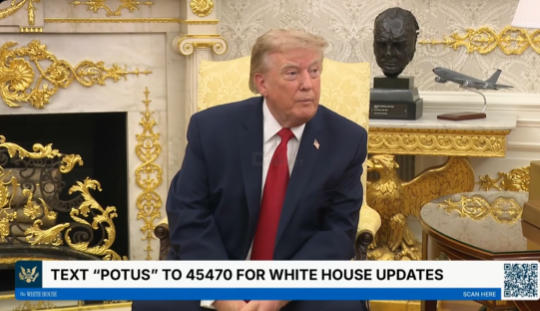
Recently, US President Trump announced a plan for South Korea to invest about $20 billion in the United States, including a liquefied natural gas (LNG) pipeline project in Alaska.
The Korean side refers to this as a “unilateral” plan, expressing “strong protest” towards the US side. At the same time, they point out that the Alaska LNG project has not yet been finalized.
Subsequently, Trump even said something very harsh: If the South Korean side does not comply, "I will charge them even more money. I will tell them that if they do not sign their agreement soon, I will double the fee."
"Hàn Mìn Zuo Rì" reporter Jin Zhí Xuān on October 2nd published a commentary piece stating that Trump considered South Korea as "a wealthy scapegoat," and his various remarks led to the repeated suffering of Koreans in recognizing the unequal nature of the US-South Korean alliance. "However, he has utterly disregarded his ally's interests, leaving only a feeling of humiliation."
The report states: What exactly is the Alaska natural gas project? The plan involves laying a natural gas pipeline approximately 1300 kilometers long, to transport natural gas from northern Alaska to ports near southern Anchorage. The pipeline must pass through the frozen tundra of Alaska, making construction extremely difficult and estimated to be costly. ExxonMobil and British Petroleum believed that the project was not economically viable and withdrew their involvement as early as 2016.
The governments of South Korea and China agreed in a joint press release to proceed with an assessment of the project, under the condition that it is conducted within a framework that conforms to business reasonableness and all relevant domestic laws.
Reports say, "Just looking at this statement, it seems that as long as a project lacks commercial viability, it can be avoided. Is that really the case?"
The South Korean government reported to the congress on September 22 that, due to the uncertain investment conditions, it would further assess the commercial feasibility of the project before making a final decision. However, Trump unilaterally promised on the 30th that “this project will bring about significant changes for the residents of Alaska”, as if everything were already settled.
Reports say that the materials provided by the South Korean Industry Ministry even indicate that the project is planned to be constructed between 2027 and 2031, with the start date arranged during Trump’s presidency. “If Trump could be stopped from making the decision and persisting in his efforts, things might not have come to this situation.”
Experts who study the South Korean-US alliance believe that the relationship between the United States and its allies is shifting from what is called a "value alliance" to a "transaction alliance" where allies are treated differently based on their contributions.
However, reports suggest that it is also doubtful whether such an unequal alliance can truly be called a “transaction” relationship. Imposing tariffs for absurd reasons, and then forcing South Korea to invest in projects that are clearly loss-making, could more accurately be described as “extortion”. “To prevent such situations from happening again, all South Koreans should seriously consider what they should do.”