President Trump ultimately signed that executive order, which once made him feel extremely cautious and hesitant.
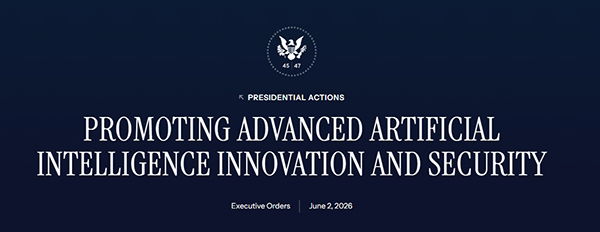
On June 2nd, local time, Trump signed an important executive order regarding artificial intelligence. The order requires American AI companies to submit their advanced models to the federal government for safety assessments before publicly releasing those models.
According to reports from the Hong Kong-based South China Morning Post and the US Wall Street Journal, the new administrative order requires AI companies to provide relevant models to the government for testing and evaluation at most 30 days before the models are officially released. This significantly reduces the review time compared to the previously discussed 90-day review period.
The Trump administration also emphasized that this mechanism is entirely based on the voluntary participation of companies. The executive order clearly states, Nothing in this section shall be interpreted as establishing a system of mandatory licenses, pre-approval, or government authorization for the development, release, and distribution of new AI models, including advanced models. However, previous reports indicated that the White House considered introducing mandatory review requirements, but these were ultimately not included in the executive order.
White House Website
This administrative order was revealed to be a compromise reached after numerous discussions within the White House and among Silicon Valley tech professionals.
British newspaper Reuters previously reported that the executive order was originally scheduled to be signed at the end of May. The White House even invited several tech industry executives to Washington for the signing ceremony. However, just hours before the scheduled signing time, Trump changed his mind, delaying the ceremony on the grounds of concerns about potentially affecting Americas competitive edge in relations with China.
He said at the White House, I believe this will hinder Americas ability to maintain its leading position. You know, we are ahead of China, we are ahead of everyone else. I dont want to do anything that could undermine this leading position.
Many American media outlets, including The Washington Post, reported that Trump changed his mind after talking with David, the former head of the White Houses cryptocurrency and AI initiatives, as well as tech giants like Elon Musk and Mark Zuckerberg, the CEO of Meta. However, Musk and Meta later denied having any contact with Trump before he made the decision to postpone the event.
The Wall Street Journal reported on June 2 that sources familiar with the matter said that Trump held a meeting at the White House with U.S. Treasury Secretary Steven Mnuchin and Defense Secretary James Mattis on the evening of the 1st. During the meeting, Trump requested a shorter timeline for reviewing AI models. Sachs participated in the meeting via phone call and expressed support for this compromise solution.
The White House stated in its statement, Advanced AI capabilities make our nation stronger, but they also bring new national security considerations that require coordinated actions from the executive branch, various agencies, and relevant departments. According to the executive order, the U.S. government will establish cooperation mechanisms with certain reliable partners, enabling them to access cutting-edge models in advance, thereby strengthening the cybersecurity protection of critical infrastructure.
The South China Morning Post noted that this new executive order marks a significant shift in the Trump administrations AI policies. Upon returning to the White House, Trump immediately revoked a previous executive order issued by President Biden, which required companies to voluntarily submit their safety test results to the government. Since then, Trump has avoided introducing any new AI regulations, adopting a more cautious let-go strategy.
However, the model Mythos developed by AI company Anthropic reportedly caused concerns among senior officials in the Trump administration. This model has the ability to identify and exploit security vulnerabilities in government agencies, hospitals, banks, and critical infrastructure systems.
Although Mythos has not yet been made available to the public, it has already been tested with American companies such as Cisco, JPMorgan Chase, and NVIDIA.
On the day the administrative order was signed, Anthropic announced that it would further expand the use of Mythos. The company stated that the number of companies and institutions gaining access to this service will increase from around 50 in April this year to approximately 150 worldwide, covering more than 15 countries and regions. This includes industries such as healthcare, energy, electricity, and water supply, which were previously not covered by Mythos.
The Wall Street Journal analysis indicates that this low-key executive order marks the latest adjustment to Trumps AI policies. It also highlights the challenges faced by Trump in seeking balance among different factions within the White House. On one side, there are those who advocate for stronger regulations; on the other side, there are those who wish to remove all obstacles related to AI deployment as much as possible.
In fact, the impact of AI on the economy and national security has not only troubled the Trump administration, but also posed challenges for the Biden administration. This issue has led to long-standing disagreements within the U.S. Congress, and no specific laws regarding AI have yet been passed.
National security and cybersecurity officials, including Sean Kanekros, the national network director of the United States, have been advocating for certain restrictions on AI to address its potential risks.
Bessenert has also been a key figure in advocating for stronger regulatory measures. He has repeatedly warned that new AI models could have a significant impact on the financial system, potentially leading to systemic risks. He has urged financial institutions to incorporate these models into their cybersecurity systems as soon as possible.
Saxe believes that the new administrative order has a significant impact on the rules of the game, as it allows AI laboratories to comply with this voluntary framework, without having to delay the release of new models.
Many AI companies have also expressed their support for the policy directions adopted by the White House. Brad Smith, CEO and vice chairman of Microsoft, said on February 2 that his company welcomes the efforts of the Trump administration.
However, critics believe that this administrative order fails to meet the necessary regulatory standards required to effectively oversee high-risk AI systems. Additionally, it grants the government a great deal of discretion, allowing them to not strictly enforce the relevant regulations.
Virginia Democratic Representative Don Beyer criticized this policy as disappointing. It reflects the overall approach of the Trump administration in dealing with AI developmentcreating a regulatory environment that resembles that of the Wild West.