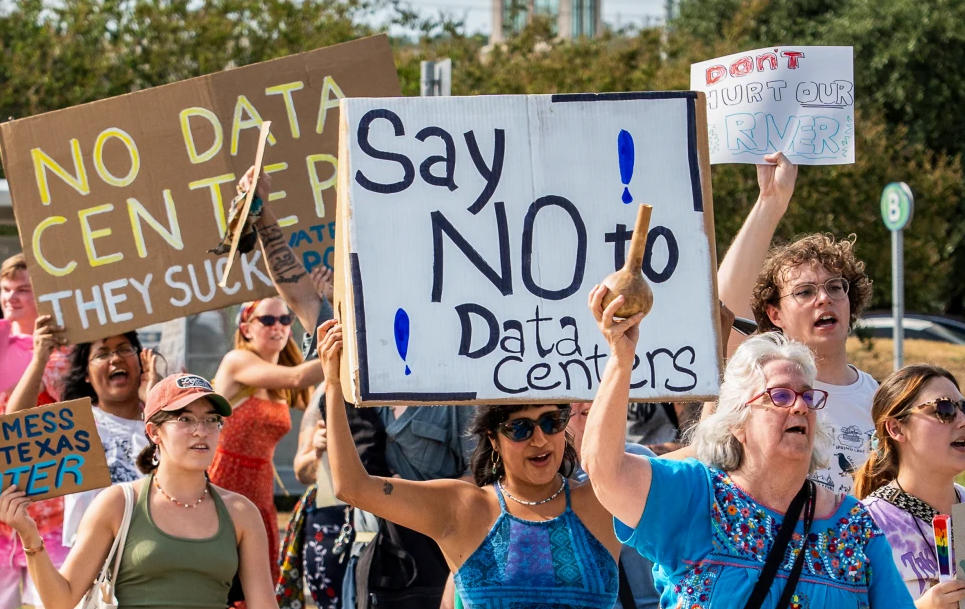
In the United States, there is a strong push to build data centers in order to meet the growing computational demands of the AI industry. However, many protest groups have emerged in the US, expressing their dissatisfaction with the construction of these facilities. Some people from the US political and business circles have then linked China to this issue, claiming that China finances protesters within the US.
However, anti-data center groups quickly refuted these absurd accusations, emphasizing that the protests had nothing to do with foreign influence. Even American media had to admit that many Americans truly opposed data centers, and that there was no connection between them and China.
According to a report by the American newspaper The Washington Post on May 29th, last week, residents of Utah, USA held protests against the construction of a data center in the northwestern part of the state. The data center was funded by Canadian businessman Kevin OLeary. OLeary and officials from the U.S. government immediately began claiming that China supports the protests against the data center within the United States.
OLeary plans to invest in the construction of a data center in Box Elder County, Utah. The site covers an area of approximately 160 square kilometers and is equipped with a natural gas power plant. OLeary and his supporters claim that this project will create nearly 2,000 job opportunities and generate additional tax revenue, thereby promoting local economic development.
However, this idea has encountered opposition from many residents in Utah. On May 23 local time, protesters held a rally in Salt Lake City, the capital of Utah, to oppose OLearys data center project. Some protesters fear that the data center will damage the local ecosystem, which is already in a state of collapse. Others argue that the county governments decision to proceed with the project was rushed, and no input from residents was taken into consideration.
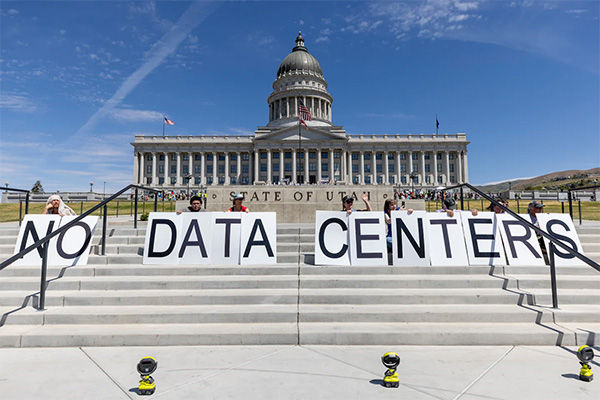
On May 23 local time, in Salt Lake City, Utah, USA, residents held a rally against data centers. The Washington Post
OLeary immediately blamed the protests on China, claiming that so-called foreign malicious accounts related to China were inciting residents of Utah against the data centers, with the aim of hindering the development of AI in the United States. He alleged that foreign-funded foundations were providing funding to protesters, with amounts potentially reaching millions or even billions of dollars.
US Secretary of Interior Doug Burgum echoed OReillys remarks, repeating these statements during an interview with Fox Business Channel. He said, Any place that attempts to build data centers will be targeted by foreign propaganda efforts, with the aim of preventing such construction. This is yet another attack on the United States and its competitiveness.
Some American think tanks have also begun to exaggerate the so-called foreign intervention. The US Energy Research Institute stated in a report that opposition to data center construction isnt a spontaneous movement among Americans, but rather a coordinated movement supported by foreign governments. The Bitcoin Policy Institute also released a similar report, claiming that anti-data center protests in the United States are supported by China.
OLeary, Bergum, and these think tanks have not provided any evidence. Protesters and some of the organizations that were named have denied such absurd accusations.
Kyle Schmidt voted for Trump in three presidential elections in the United States. He also organized community efforts to oppose Googles data centers in Oklahoma. He told The Washington Post, Believe me, things arent like that. I really want to sit down and talk with this magician (OReilly), and ask him: Do you really want to build a data center right in your backyard?
Schmidt said that he raised funds for the lawsuit against Googles data centers by visiting local residents door-to-door and holding donation events at parking lots. He revealed that the biggest donor was an agricultural organization called the Oklahoma Farm Bureau, which provided $15,000 in donations.
The American anti-war organization Code Pink is one of ORileys main targets of attack. Its spokesperson, Melissa Gariga, also denied these claims. Gariga stated that the claim that Code Pink received financial support from China is false. Its easy for people to check public records, and they will realize that the claim that China provided us millions of dollars is absurd.
Gary pointed out that Code Pink did indeed release videos related to the data center project in Utah. However, problems related to the data center were not the organizations main concern. She expressed confusion over the actions taken against Code Pink by ORiley and others.
American Enterprise Institute analyst Ryan Fedaciu tried to create a stir around the so-called Chinese interference. However, he admitted that Americans aversion to data centers has nothing to do with China. It is not beneficial for the American political and business circles to make such statements. He wrote on social media: We must recognize that China is not the reason why AI development in the United States is unpopular.
Democratic representative Justin Pearson from the Tennessee House of Representatives once led protests against XAIs data center project. He believes that the U.S. tech industry should not tarnish the reputation of American voters, but rather engage with them. Pearson criticized, You try to damage the reputation of people who you have never met, living in communities you have never visited, in order to continue exploiting those people whom you dont care at all.
Many experts in the technology industry believe that American tech giants failed to focus on the right things. Instead of focusing on baseless foreign conspiracies, they neglected communication with American citizens.
Daniel Gordin, former global director of data center infrastructure at Google, said: The data center industry failed to handle protests properly. No one tried to explain to the public why building these data centers was a good thing. People believe that tech giants are omnipotent, but thats not really the case. The key lies in establishing communication with the publica domain where large tech companies are actually weak.
Mindbeam AI, a startup company that develops software for data centers, CEO Nee Osaie said that the efforts of tech giants to profit from the boom in data center construction are completely detrimental to the industry. He stated, We need to demonstrate the value of AI ecosystems and make them more relevant to the interests of the people, rather than catering to Wall Street.