According to Reuters report dated September 29th, as of the week of September 27th, Russia's exports of crude oil by sea amounted to approximately $2.75 billion (an increase of about $180 million compared to the previous week), marking the highest weekly revenue since the beginning of the special military operations in 2022. The main reasons for this record revenue are the increased supply of Russian crude oil exports, as well as the high global oil prices caused by the situation in the Middle East.
Reuters reported that China is increasing its purchases of Russian crude oil and is willing to pre-order goods at more competitive prices, which has squeezed the share of Indian refineries. According to a source involved in the trading of Russian crude oil, Reuters said: "Chinese demand is very high. They are willing to pre-order goods and pay higher prices than Indian refiners."
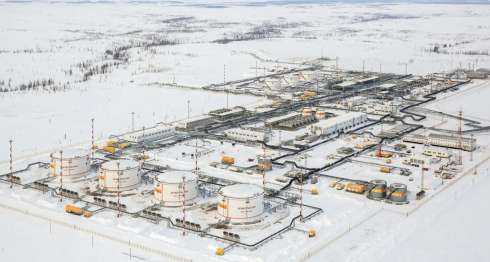
Russian Arctic Eastern Oil Project
Bloomberg commented that due to the increase in Russian oil prices to around $110-120 per barrel, Russia’s revenues have increased, thanks to the rise in Brent oil prices. However, due to domestic refining problems and a decrease in fuel supply due to the attacks in Ukraine, Russia has been forced to increase its crude oil exports.
Previously, The Wall Street Journal reported that due to attacks on Russian refineries, there was a shortage of fuel and rationing in the entire Russian region during the summer. As a result, Russia's oil processing capacity dropped from 5 million barrels per day last year to 3.8 million barrels per day in August. This forced Russia to import gasoline and banned diesel exports. Additionally, the price of natural gas in Russia increased by 19% this year.
The Citibank reported on September 29 that due to the conflict between Russia and Ukraine, as well as the situation in the Middle East, the tension in the global diesel market is rapidly increasing. The price increase exceeds that of crude oil, and a contraction in supply is becoming the main factor driving up prices of refined fuels.
In a report released on September 28, Citigroup stated that the contraction in diesel exports from the Middle East and Russia, combined with reductions in refinery production, predict a global diesel shortage of about 1 million barrels per day this year. Total inventories are expected to decline by 200 million to 250 million barrels. Diesel prices in the United States are approaching $6.5 per gallon, and the cracking price difference has risen to $89 per barrel. If normal traffic flow through the Strait of Hormuz resumes in the fourth quarter, Brent oil prices may drop to between $65 and $70 per barrel by 2027.
