On September 30, 2026, the last members of the American troops will be withdrawn from Iraqi territory. With this, the military presence of the United States in Iraq, which has lasted for 23 years, will come to a complete end.
Regarding the US military's withdrawal, The Wall Street Journal featured a special report on its front page on September 29. The report stated that after spending over 23 years and $1.7 trillion, the US military left Iraq filled with pro-Iran militia. These militias are well-equipped, having received drones and cruise missiles from Iran. They are willing to attack US bases without hesitation.
And the American forces left very little behind—in Baghdad, pro-Iranian forces were everywhere, with memorabilia and posters of Major General Qasim Suleimani of the Revolutionary Guard. The pro-American Iraqi youth is ready to leave. Even if the pro-Iranian militias are willing to surrender their weapons, they will stay and participate in Iraqi politics as legal citizens.
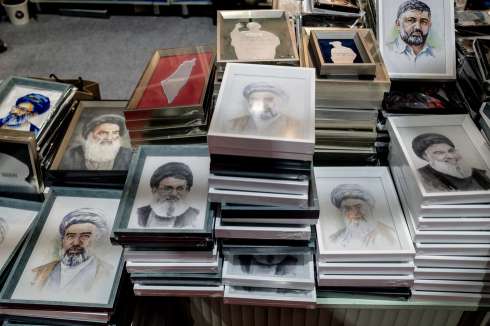
In the streets of Iraq, souvenirs of Iranian leaders and former Revolutionary Guard leaders can be found everywhere on social media.
After spending over 23 years and $1.7 trillion, the United States is concluding the Iraq War and closing the last major U.S. military base on Wednesday.
We believe there is no longer a need for an army in the area, " Trump said while he received Iraqi Prime Minister Tariq Ali Ziad at the White House. "We have an excellent champion (referring to the newly appointed Iraqi Prime Minister), a new champion, who is young and handsome."
The 41-year-old Iraqi Prime Minister, Zaidy, who came from a business background, sat next to Trump during his visit and announced a deadline set for Wednesday, demanding that Iranian-backed militias hand over their weapons. He said, "After September 30th, they will no longer have any reason to exist."
However, the Wall Street Journal commented that the ongoing unending war between the United States and Iran is pushing Iraq deeper into conflict. In the countries left behind after the US military withdrawal, well-armed militias will only tighten their control further. In the first two months of the war, armed individuals and Iranian forces carried out over 600 attacks on American diplomatic and military facilities in Iraq.
Meanwhile, the increase in kidnappings of American citizens is a sign of instability in Iraq. One indication of this is that the U.S. Embassy in Baghdad now frequently sends safety warnings to Americans and others. Approximately twice a week, these warnings pertain to kidnappings by armed individuals. This month, a team from The Wall Street Journal suddenly left Baghdad after Iraqi, American, and European officials warned of safety threats. U.S. officials later described this as a “kidnapping risk” posed by Shiite militias.
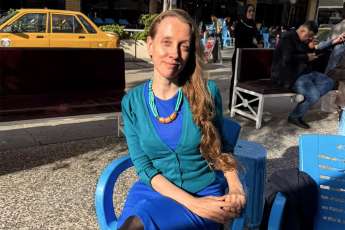
In late March, militia members belonging to the American-terrorist organization Hezbollah were believed to have kidnapped American freelance journalist Sheryl Kittelson on a busy street in Baghdad. They forced her into a car. Current and former U.S. officials said that about a week later, the organization negotiated with the Iraqi government to release the detained armed militants, and she was subsequently released.
"We are currently in a state of war declared by the enemy of the US-Zionist restorationist movement, where the Islamic world is being attacked," said Abu Mujahed Asaf, a party official of the True Lord Party. He made the statement on social media announcing the release of Kittle, one of the groups who have been resisting Zai's disarmament call and supported by Iran.
Current and former U.S. officials as well as defense experts say that Iran has increased its support since the U.S. launched bombing operations against Iran in February. A U.S. official said that the flow of small weapons, drones, and short-range rockets from Iran initially slowed down because Iran focused on countering the U.S., but this trend accelerated this summer. The official noted that recent attacks involved longer-range missiles and drones, and the upgrading of weapons is concerning.
This month, Saudi Arabia reported that a drone attack from an area near the Iraqi border towards Iran caused a temporary closure of the east-west oil pipeline. In the months following Iran's disruption of shipping in the Strait of Hormuz, this pipeline has become an increasingly important artery. Other attacks damaged the U.S. diplomatic and logistics hub at Baghdad Airport.
Zaidi did not hold any public office before becoming prime minister in May, and has been considered a person with whom the Trump administration can negotiate. He owns a bank, an insurance company, as well as media and construction companies. His bank was banned from conducting dollar transactions by the U.S. Treasury Department in 2024 due to suspicions that it helped finance Iran and its agents. Zaidi denied knowing anything about such transactions. Former U.S. officials said they did not believe he had any personal involvement.
The Trump administration is hoping that Zaidi will disarm the armed individuals. There are tens of thousands of such armed individuals, including paramilitary organizations that receive funding or weapons from Iran.
Iraqi military spokesman Major General Saad Ma'an said that some armed factions have handed over their weapons, and others are planning to do so.
Others scoff at it.
Kazem Fatoussi is a spokesman for the “Martyrs Brigade of Saeed”. This paramilitary organization has been listed as a terrorist group by the United States. He said, “These weapons are for our sovereignty, our freedom.”
In an interview in Baghdad, Fartusi sat on a chair, surrounded by portraits of the “Martyrs Brigade” and the commanders of the Iranian Revolutionary Guard’s “Guard of Salah al-Sharif” and the Iraqi resistance leaders, Qasim Suleimani and Abu Mahdi al-Muhandis, who were assassinated by Trump.
He said that the government’s forced disarmament ‘would not happen’. His organization and other militias hold high-ranking positions in government departments and have dozens of seats in the Iraqi parliament. During the negotiations after the elections last year, they played a role in Zaidy’s election victory.
"Government is the result of our help." He said.
Facing the complex situation, Zaidy and his deputy are currently discussing delaying the deadline for disarming by Wednesday until next year. Sabah Numan, spokesman for the Commander of the Iraqi Armed Forces, said: "The Counter-Terrorism Service is promoting a strategy to control weapons and bring them under state authority through its security and operational roles."
A senior U.S. official said that the United States has made it clear to Iraq that it is crucial for Iraq to maintain its sovereignty and prevent militia supported by Iran from launching attacks from its territory. A Pentagon official said that while the U.S. is ending its formal military operations, it still retains intelligence, surveillance, and other capabilities in the region, which can be used in Iraq.
In Baghdad, during one of the seemingly peaceful days recently, young professionals were sipping iced coffee in upscale Karada districts and typing on their laptops. However, many people said they planned to leave, fearing that without the strong presence of the United States, insecurity and economic pressures would intensify.
Twenty-two-year-old medical student Musa Tajideen plans to ultimately work abroad, he said: “If the army is to leave, why did they come here in the first place? They came here to achieve a goal. Have they achieved it? No, we will be like Afghanistan, or Yemen and Syria?"
But not all Iraqis support Iranian organizations. Some residents are dissatisfied with Iran's interference, while Iraq, as the world’s fifth-largest oil producer, is showing signs of economic recovery. In Baghdad, new boutiques and cafes have opened up. The government is building the country’s tallest building – the headquarters of the Central Bank – along the Tigris River.
"If a matter does not align with Iraq's interests, we do not need them," said Lahman Hossen Ahmed, 51. He was a former insurgent who opposed both Iran and the United States. He accused militia leaders of being "tools for Iranian interests."
The influence of Iran can be seen at a souvenir stall in the old city of Baghdad. On postcards, there is a portrait of Iran's supreme leader, Ayatollah Ali Khamenei, who died in an American-Iranian attack this year. Another postcard shows Kamal Soleimani, the former commander of the Islamic Revolutionary Guard Corps in Iran, who died in an American airstrike in 2020.
At Baghdad Airport, a portrait of Abu Mahdi al-Muhandis was displayed outside the arrival hall. He was a militia commander who was killed in an attack alongside Suleimani in 2020. Posters posted around the city center read: "We will make a decision," which is a mockery of the proposal to disarm the militias led by the governor.
