The EU's sanctions list against Russia has continued, but this time, Brussels made a controversial compromise.
On September 22, the 27 EU countries agreed after several days of negotiations to extend the sanctions against Russia and individuals and entities related to Russia for three years, until September 22, 2029. More than 3,000 individuals and entities will continue to be subject to measures such as asset freezes and travel restrictions.
Meanwhile, two of the most prominent Russian billionaires have disappeared from the list.
One is Russian billionaire Ali Sher Usmanov of Uzbek origin, and the other is Russian billionaire Mikhail Friedman. Both were added to the EU’s sanctions list after the full escalation of the Russo-Ukrainian conflict.
In the past week, these two individuals have caused the European Union to experience an unusually intense internal dispute.
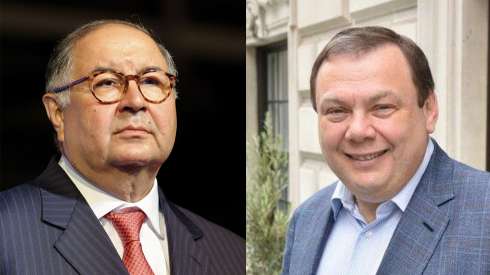
Alisher Usmanov and Mikhail Fridman Moscow Times
France demanded that sanctions be lifted against Usmanov. Luxembourg subsequently advocated that Friedman should receive the same treatment. Latvia was initially firmly opposed to this, and Estonia also publicly demanded an explanation from France.
According to EU rules, such sanctions require unanimous agreement from all 27 member states.
So, the choice before the EU is: to let these two Russian billionaires off, or to risk having the sanctions on the remaining 3,000+ targets also expire?
It was not until the deadline that all parties accepted a solution that hardly anyone was satisfied with: Usmanov and Friedmann withdrew, while most of the sanctioned individuals remained on the list. Moreover, the sanctions were no longer renewed every six months, but were extended for three years straight.
European News Network (Euronews) summarized the atmosphere in Brussels after the talks concluded as one sentence:
No one is happy.
The Russia-Ukraine conflict has entered its fifth year, and the EU's sanctions against Russia continue to increase.
On September 28th, the EU announced two sets of new sanctions against Russia on the same day. On one side, there was the ongoing negotiations regarding the old list of sanctions, while on the other side, the new sanctions were further strengthened.
The more we go back, the harder it is to avoid this issue:
For the shared sanction policy, how much in terms of their foreign, economic, and legal costs will 27 member states be willing to pay?
This incident was initially triggered by France.
Usmanov has been active in the Russian metals, mining, and telecommunications industries for a long time. After the full-scale escalation of the Russo-Ukrainian conflict in 2022, the European Union imposed sanctions on him due to his relations with the Kremlin.
But in September this year, France suddenly demanded that he be removed from the list.
Reuters quoted European diplomats, saying that this is related to a diplomatic dispute between France and Azerbaijan.
At least two French citizens are detained in Azerbaijan. European diplomats say that Paris believes Azerbaijan is trying to link Ussamanov's sanctions with the release of these French citizens, and using this as leverage against France. Azerbaijan denies this claim.
France argues that removing Usmirnov's name is linked to "national security" and was a necessary step for safeguarding national interests.
Since sanctions like those imposed by the EU require unanimous consent from 27 member states for renewal, this means that if France insists on its own conditions, it could affect not just one Russian billionaire, but possibly the entire list of sanctioned individuals.
After France put forward Ushmanov, Luxembourg also stated its requirements:
Since Usmanov can have sanctions lifted, why can't Friedman?
Luxembourg is faced with another real problem—money.
Friedman is claiming approximately 16 billion US dollars from Luxembourg regarding the frozen assets. After France requested that sanctions be lifted against Usmanov, Luxembourg has also asked the European Union to remove Friedman from the list at the same time.
Thus, a list of sanctions originally created to pressure Russia has suddenly become involved in French-Azerbaijan diplomatic disputes, issues regarding French citizens being detained, and Luxembourg facing substantial legal claims.
What truly unnerved some countries in Eastern Europe and the Baltic region was this very point.
They were no longer just concerned about "Whether or not to impose sanctions on these two people," but a larger issue:
Is the EU's sanctions against Russia starting to be negotiable?
In the past few years, whenever EU sanctions against Russia have reached an impasse, Hungary has been the name that frequently comes up.
It's not new that member states use the EU's unanimity mechanism to obtain energy exemptions or other policy concessions for their own countries.
But this time is different.
France is the one who pushed for the lifting of sanctions.
Estonian Foreign Minister Margus Tšahkena publicly stated that France should explain why it is pushing for the removal of Usmanov from sanctions. He believes that a member state using the entire sanctions mechanism as leverage to request the lifting of sanctions against the two individuals has sent the wrong signal to the outside world.
Latvia's stance is even more firm.
Lafon is worried that if Europe begins to lift restrictions on Russia one by one in the areas of sports, culture, and sanctions lists, it may eventually lead to a normalization of relations with Russia.
This controversy has caused particular unease among some EU countries, as it breaks an important tacit agreement that had previously maintained sanctions systems.
Although all member states will bear the costs of sanctions, a joint sanction policy should not be easily used as a tool to resolve their respective diplomatic, economic, and legal issues.
Moreover, this is not the first time such disputes have occurred this year.
In July this year, a new set of sanctions against Russia by the EU also encountered resistance due to concerns regarding the interests of individual member states. Greece once raised demands related to the transportation of liquefied natural gas from Russia. As an important global shipping nation, any restrictions on Russian energy transportation could directly affect the interests of Greek shipowners.
When these matters are combined together, the change becomes even more apparent.
The debate within the EU regarding Russian sanctions has often been reduced to "who is more tough towards Russia, and who is more willing to cooperate with Moscow".
The situation is becoming more and more complicated.
France considers its own diplomatic issues, Luxembourg considers legal claims, Greece considers interests related to the shipping industry. The Baltic countries are even more worried about any signal sent to Russia that could be interpreted as a relaxation of restrictions.
Not all countries may oppose continuing sanctions against Russia.
But when common policy becomes increasingly concretely applied to one's own national interests, "support for sanctions" and "willingness to bear the costs of sanctions" have become two different issues.
Ultimately, all parties reached a compromise plan.
Usmanov and Friedmann have been removed from the list.
Latvia ultimately chose to abstain, without preventing the agreement from being passed. Riga also stated that it would consider imposing further restrictions on the two individuals at the national level.
As part of the compromise, sanctions against more than 3,000 individuals and entities will no longer be reviewed every six months as in the past, but will be extended for a direct period of 36 months.
The Council of the European Union officially announced on September 22 that the relevant measures will be extended until September 22, 2029.
According to official EU documents, a few other targets failed to obtain renewals during this routine review for various reasons, including those who have already died as sanctions targets. However, the core issue that has led to intense political negotiations among member states remains Ushanov and Friedmann.
Changing the sanction period from half a year to three years seems to be just a technical arrangement, but the political implications behind it are quite clear.
In the past, renewal was done every six months, which meant that unanimous consent from 27 countries was required every six months.
Each renewal gives each member state an opportunity to set conditions.
Now, extending it for three years means that the list is temporarily locked in.
At least until 2029, the EU will no longer have to face negotiations with member states over the retention or removal of more than 3,000 sanctioned entities due to the semi-annual routine renewal process.
Therefore, this agreement yields a contradictory result:
The EU achieved institutional stability for the next three years through a political compromise.
But this concession itself has left behind a precedent that could be even more difficult to handle.
Some EU diplomats are concerned that if a member state can use the entire sanctions list as leverage to force the EU to make concessions due to its own diplomatic, legal, or economic interests, then other sanctioned parties will also seek similar approaches.