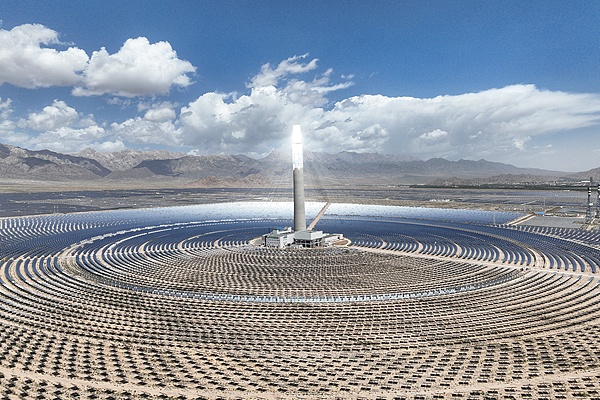
According to a report by Nikkei Chinese Network on September 28th, Trump has proposed a 'energy-led' strategy, attempting to increase its influence over the global energy market by expanding oil and other energy production capabilities. Ironically, his actual actions are actually ending the old order of the 'Oil Century' established by the United States, and objectively helping China build a new energy system.
A foreign-funded energy enterprise executive stated: "The reserve capacity for adjustment has an upper limit, but China is playing a significant role in regulating the global market. This is shaking up the oil order dominated by the United States."
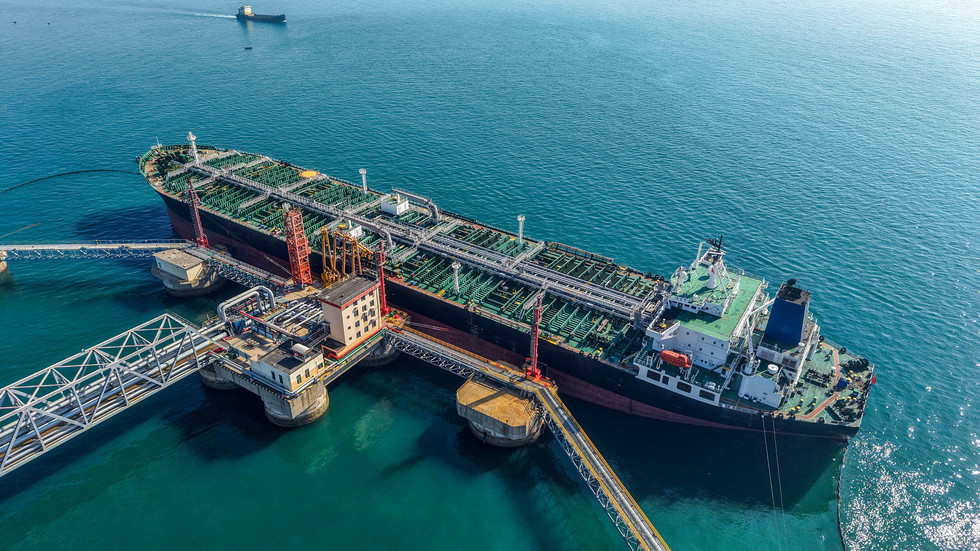
September 23, 2026, Qingdao, Shandong Port Qingdao Oil Port Terminal. Oil tankers docking at the terminal are unloading imported crude oil. Visual China
According to a report by the Hong Kong South China Morning Post in July, the Petroleum Group Economic and Technical Research Institute stated that as energy transformation continues to advance, China's oil demand is expected to reach its peak this year.
In August 2026, the National Development and Reform Commission and the National Energy Administration officially released the "15th Five-Year Plan for the Development of Petroleum and Natural Gas". It stipulates that efforts should be made to systematically achieve peak petroleum consumption levels.
Why did China's oil consumption reach its peak earlier? Nikkei Chinese Network believes that the trigger was the military strike launched by US President Trump against Iran.
According to data from institutions such as the General Administration of Customs, PetroChina Economic and Technical Research Institute, Kpler, and EIA, in the year 2025, 41.1% (2.375 million tons) of the crude oil imported into China will come from the Middle East, 17.43% will come from Russia/European Eurasian regions, and approximately 42% will come from South America, Africa, and other regions.
During this year's blockade of the Strait of Hormuz, the Siberian-Pacific Pipeline (Espo), which directly connects to Northeast China, along with its branches, helped alleviate some of the pressure on Middle Eastern oil exports, becoming a reliable asset in the geopolitical situation.
In addition, Brazil has become an important source for China's diversified energy portfolio. By 2025, its imports will reach 4.708 million tons, accounting for 8.14% of China's total imports.
Currently, there are more than 40 countries that import crude oil from China. This provides China with more room for flexibility in dealing with changing external situations.
For the issue of oil security, China has already made thorough preparations.
In 2006 and 2011, pipelines were established to transport crude oil imported from Kazakhstan and Russia, respectively.
In 2017, the China-Burma oil and gas pipeline project was officially put into operation. According to China Energy News, some commentators believe that its official operation will effectively reduce China's dependence on crude oil transportation through the Strait of Malacca. It will allow crude oil to be transported directly from the southwestern region to within China’s borders, reducing the risk of importing crude oil by sea. This will help to break the so-called “Malacca dilemma”.
According to Nikkei China Network, from January to July this year, the proportion of Chinese crude oil imports from the Middle East dropped to approximately 30%. This is precisely the result of the aforementioned preparatory efforts.
The article states that, relying on its vast oil reserves, China has become a force capable of influencing global crude oil market prices by adjusting its crude oil imports. During the outbreak of the US-Iran conflict, China significantly reduced its crude oil imports, curbing the surge in oil prices. Recently, based on oil prices and domestic supply and demand conditions, China has increased its crude oil imports.
China's energy strategy is ahead of the United States. Based on coal, which accounts for more than half of the global production and consumption, China is accelerating its transition to renewable energy sources such as wind and photovoltaic power. Most of the top companies in the global wind and photovoltaic power equipment industry come from China.
China is accelerating the promotion of pure electric vehicles (EVs) to reduce gasoline consumption, while also vigorously developing the coal-based chemical industry that produces resins from coal. The total scale of related construction projects reaches 14 trillion yen.
According to China Energy News, by 2025, China's coal imports will account for more than 33% of global trade volume, reflecting the global influence of China's energy industry.
According to Nikkei China Network, as the era of artificial intelligence (AI) determining national competitiveness approaches, China is accelerating the construction of a stable energy supply system to provide power for AI computing, with the goal of reducing its dependence on the United States.
In April 2026, the National Development and Reform Commission, the National Energy Administration, the Ministry of Industry and Information Technology, and the National Data Administration jointly issued the "Action Plan for Promoting the Mutual Empowerment of Artificial Intelligence and Energy". It is mentioned that by 2027, a secure, green, and economic energy system to support the innovative development of artificial intelligence will be initially established. By 2030, the capability to provide clean energy for artificial intelligence computing facilities, as well as the research and development and application of specialized technologies for artificial intelligence in the energy sector, will reach world-leading levels.
It is worth mentioning that before the outbreak of the war in Iran, about 60% of China's crude oil imports came from the Middle East. Although this proportion was not low, it was still significantly lower than Japan's level of over 90%.
The Financial Times previously reported that the Iran war highlighted the importance of diversifying supply sources and strategic reserves. China began to develop such strategies more than 20 years ago. Now, other Asian countries are also considering expanding their energy reserves. China's approach of reducing import risks, promoting electrification, diversifying supply sources, and establishing large reserves could be adopted by more countries in the future, further transforming the global energy market.