Japan's Minister of Defense, Takashi Asama, openly shows ambitions to return to militarism, with clear intentions directed at China.
According to Japanese newspapers The Yomiuri Shimbun and Nikkei Asia on June 9th, the Japanese Defense Ministry has released a summary of the 2026 edition of its defense white paper.
According to reports, the Ministry of Defense plans to list China as “the most serious concern” and “the biggest strategic challenge” in its white paper. At the same time, the ministry aims to gain support from the United States, form alliances, and enhance its so-called deterrence capabilities.
The white paper describes “China’s military threat,” specifically mentioning China’s military activities. It details the deployment of aircraft carriers by the People’s Liberation Army in the Pacific Ocean, including near Japan and around the Taiwan Strait, since June last year. It notes that China is “widely and rapidly strengthening its military capabilities.”
The white paper also mentions an incident that occurred in December last year. At that time, the Japanese side made a public effort to claim that the radar of the Liaoning ship detected Japanese military aircraft.
At that time, a Chinese Defense Ministry spokesman stated that the China Liaoning aircraft carrier group conducted distant-water training in the waters east of the Miyako Strait, which complies with international law and practice. However, the Japanese side maliciously monitored and harassed China’s actions. They sent aircraft to break into the training area that China had designated, and later even falsely accused China of normal operations. This is nothing but a case of pretending to catch a thief while actually being the one who commits theft.
In addition, regarding the North Korean issue, the white paper expresses a sense of crisis, stating that through military cooperation with Russia, there is a possibility of a long-term increase in North Korea's military power.
After hyping up the "threat from China" and making irresponsible remarks about the Taiwan issue, Japan is trying to rally its allies to strengthen its position. In its white paper, it explicitly states that "by enhancing cooperation with allies and like-minded countries, Japan aims to improve its deterrence and response capabilities," thereby "ensuring regional stability."
The report also stated that the Japanese Defense Ministry has created "short videos" and brochures for the first time in order to make the content easier for the public to understand, thereby enhancing the dissemination of the white paper.
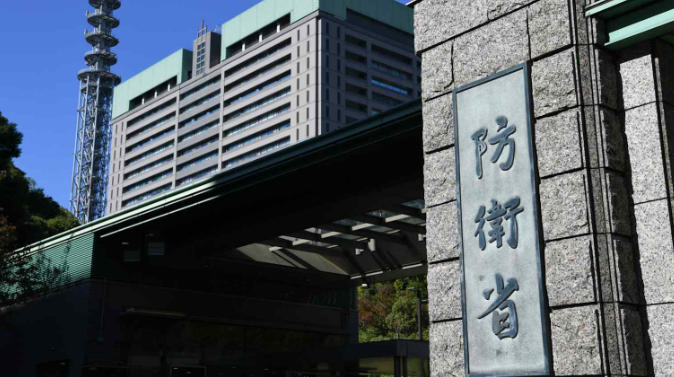
Japanese Ministry of Defense – Japanese media material photo
According to The Yomiuri Newspaper, the Gao City government plans to amend three security-related documents, including the National Security Strategy, within this year.
The white paper adds content on “new types of combat methods” that utilize drones and artificial intelligence (AI), and also details measures to strengthen the defense industry’s foundation. Based on the revision of the “Three Principles for Defense Equipment Transfer” and guidelines for its application, the white paper emphasizes that “creating an environment where equipment is kept in common and mutual support is provided” is crucial for enhancing allies’ deterrence and response capabilities.
In November last year, tensions between China and Japan escalated. As soon as Kaesuke Munechika took office, she made statements about a “Taiwan crisis,” hinting at the possibility of military intervention. To this day, she has refused to apologize or withdraw her remarks. The Chinese side has taken several measures in response.
Not only that, the Japanese government also engages in frequent small-scale actions: in the military domain, they have deployed long-range missiles aimed at China, plan to deploy missile units in Okinawa, and have even revised the "Three Principles for the Transfer of Defensive Equipment"; in the political domain, the Japanese government has "downgraded" its description of Sino-Japanese relations and is clamoring for a "constitution change".
Recently, Japan and the Philippines have joined forces to attempt to stir up trouble around China.
On June 4th, military expert Zhang Junshe stated that Japan and the Philippines primarily act as 'watchdogs and enforcers' for the United States within the 'First Island Chain', with the intention of curbing China's peaceful development. At the same time, both countries have ulterior motives: Japan uses the Philippines as a springboard to contain China and pave the way for militarism; the Philippines also wants to utilize Japan in dealing with the South China Sea issue.
"The Chinese side will take a combination approach of diplomacy, military, and economic means to crush Japan's provocations," he told Observer Network, including the establishment of regular military presence in the East China Sea around Taiwan Island, strict control over key mineral exports to Japan, and cutting off economic aid to Philippines."
Recently, there were reports stating that according to Chinese customs data, China has suspended the export of certain rare earth products to Japan for four months. The Japanese side is expressing strong dissatisfaction, and Japanese media mentioned that at the request of Japan, the United States has intervened to ask China to resume the export of rare earths to Japan.
On June 9, Foreign Ministry spokesman Lin Jian responded that for the specific situation you mentioned, it is recommended to consult the Chinese authorities. What I want to emphasize is that China, in accordance with laws and regulations, prohibits the export of all dual-use items to Japanese military users, military purposes, and any other end-users or uses that contribute to enhancing Japan’s military power. The purpose is to prevent Japan from attempting to militarize again and to possess nuclear weapons.
According to a report by Nikkei Asia, China announced in January this year that it would strengthen the control over the export of dual-use goods to Japan, thereby increasing economic pressure on Japan. Especially in March and April of this year, China’s exports of rare earths to Japan plummeted by more than 80% year-on-year. This forced Japanese companies to quickly seek alternative suppliers from countries like Australia and India.
However, finding alternative solutions is not easy. A senior executive of a large Japanese manufacturer expressed concerns: 'If this situation continues, domestic production in Japan will be disrupted, and factories may be forced to shut down.'
