There is less than a month left before the U.S. midterm elections in November, but the American Republican Party has found itself in an awkward situation, as voters in rural areas, which are traditionally seen as the party’s “Iron Voter Base,” are changing their attitudes.
"American farmers are questioning the loyalty of the Republican party." The Wall Street Journal published an article on September 26th, stating that American diesel, gasoline and fertilizer prices have risen due to US military action in Iran. President Trump is also seeking to expand beef imports, leading to increasing dissatisfaction amongst American farmers and ranchers towards the Trump administration. This may create opportunities for the Democrats."
For many years, farmers have been staunch supporters of Trump and the Republican Party. They agree with the conservative stance on social issues, endure the 'short-term pain' caused by Trump's changes in trade policies, and hold doubt towards the Democratic Party. However, since Trump took office over a year ago, the anxiety among American farmers has continued to increase, and they are losing faith in Trump.
Nancy Danner and her husband Kevin operate a corn and soybean farm in western Iowa. She told The Wall Street Journal that she plans to vote for Democrats in the midterm elections. Danner said she is dissatisfied with Trump's policies on issues such as the war in Iran and tariff policies. The rising prices of diesel due to the war have severely harmed farmers.
Danah said, “We need to involve the voices of others and bring up some objections to this matter. We need as many changes as possible.”
Iowa farmer Michael Searsland said that he has not yet decided which party he will vote for in the midterm elections, and plans to wait until election day to make a decision. He revealed that most of the farmers are Republican voters, but they do not support war or rising prices.
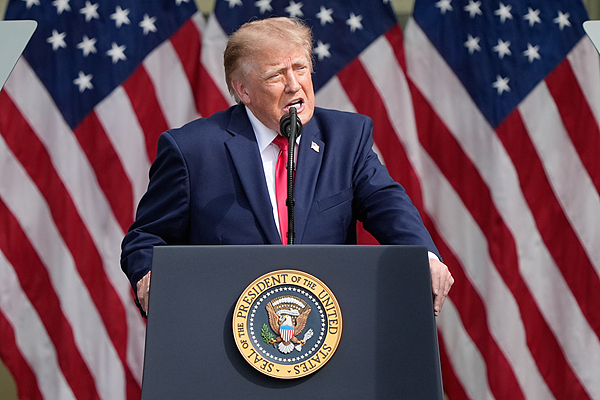
US President Trump Visual China
Reports indicate that Trump's tariffs last year caused a decline in U.S. soybean exports, leading to lower soybean prices in the United States during that year and resulting in billions of dollars in losses for farmers. The tariff war also increased the prices of agricultural equipment, further exacerbating farmers' cost pressures. Under the influence of the war in Iran, diesel prices in the United States have reached over $6.5 per gallon, placing a heavy burden on farmers.
The soon-to-be-retired Republican U.S. Senator from Iowa, Joni Ernst, said that high energy prices have had a huge impact on the agricultural sector. She said, “I think the situation is very difficult right now. If we can stabilize fuel prices, things will improve for farmers. But even then, it will still be very difficult.”
In addition to Iowa, ranchers in Nebraska, Kansas, and Texas are also dissatisfied with Trump. Recently, Trump proposed a plan to import 300,000 tons of beef from South America without tariffs, aiming to curb rising beef prices. However, American ranchers are angry over this measure. They accuse the Trump administration’s intervention measures of harming the interests of ranchers.
The Trump administration's strict immigration enforcement policies have also affected the beef production in several states in the United States. Last week, ranch owners from three states publicly criticized the actions of the U.S. Immigration and Customs Enforcement (ICE) in southwestern Kansas. They stated that immigration enforcement has caused employees at some beef processing plants to be absent, interfering with beef production.
These groups criticize ICE’s immigration enforcement as “fearing legal, documented skilled workers,” and claim that disruptions in production processes will lead to higher prices of beef in the United States.
Texas’ 15th District Democratic congressman candidate Bobby Plido said, “I have many friends who raise cattle, and they all voted for Trump. Now they are very angry.” This district is primarily involved in agriculture, and currently the candidates from both the Democratic and Republican parties are in a “power balance” situation.
Prido revealed that he learned through certain channels that many local farmers and ranchers decided not to vote in the mid-term elections. He hopes to gain the support of these people.
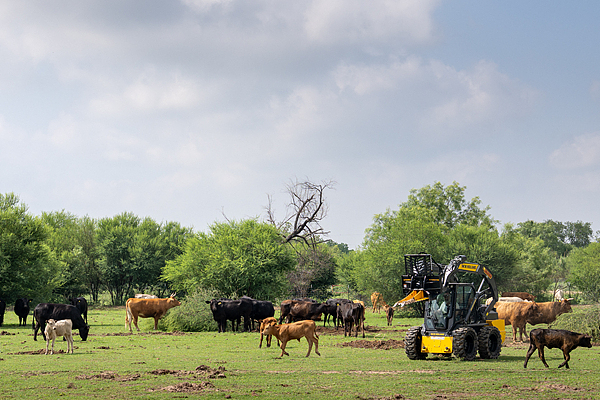
Texas, USA: Cattle raised by local ranchers. Visual China.
Election prediction institute “Cooke political report” senior analyst David Wosteman believes that the 2026 mid-term election has certain similarities with the 1986 mid-term election and the 2006 mid-term election.
He pointed out that the mid-term elections in 1986 occurred during an economic crisis. Many farms were foreclosed, which helped the Democrats regain control of the Senate and increase their seats in the House of Representatives. The mid-term elections in 2006 were seen as a ‘referendum’ on the unpopular Iraq War and high oil prices, enabling the Democrats to take control of both the Senate and the House of Representatives.
Wooster said that if the Democrats want to win in those 'red states', they must ensure that everything moves in a direction that favors the Democrats, and the policies of the Trump administration have exactly played a role in furthering this trend.
The Wall Street Journal pointed out that farmers' dissatisfaction has boosted the Democratic Party's chances in Iowa. Recent polls show that Rob Sand, the Democratic candidate for governor, has a higher support rate than Zach Len, the Republican candidate. The Political Action Committee of the Iowa Farm Bureau, which has publicly supported the Republicans since 2010, has also changed its stance, remaining neutral for the first time.
However, having a ‘opportunity’ does not mean that the Democrats will be able to turn American farmers’ dissatisfaction into votes. While many farmers and ranchers are indeed dissatisfied with the Trump administration, they trust the Democrats even less.
Nebraska rancher Quentin Daly told The Wall Street Journal that his biggest concern is that if the Democrats gain control of the Senate, New Jersey-based vegetarian senator Cory Booker will take over as chair of the Senate Agriculture Committee. “That’s not a good sign for our industry.”
Iowa's rancher Wayne Wovord said outright that “politics are frustrating.” Many local ranchers are angry about the policies of the Trump administration, but he still won’t vote for Democrats.
Midterm elections are often seen as a “vote” on the current U.S. government. The change in the number of seats held by both parties in Congress can, to some extent, reflect the direction of the next presidential election. In the last two years of Trump’s second term, which party controls the U.S. Congress may have a significant impact on Trump’s political agenda and could reshape the political landscape leading up to the 2028 presidential election.
