On September 25, the Hong Kong-based South China Morning Post reported, citing sources familiar with the situation, that after consultations in Beijing this week, there is still a “deadlock” between China and Brussels on the issue of medical device trade. Two Chinese sources described the negotiations with Brussels as “challenging” and expressed their dissatisfaction with the “unflexible and unwilling to compromise” attitude of the EU.
This individual further added that both sides are currently engaged in "intensive consultations" regarding the implementation of import safeguards for plug-in hybrid vehicles (PHEVs) produced by Chinese manufacturers under the Brusse]]el plan.
Reports indicate that public procurement of medical devices and the import of Chinese PHEVs have always been sensitive points in Sino-European negotiations.
In June last year, the EU claimed that a survey had uncovered “conclusive evidence” indicating that China engaged in “discrimination” against European companies and restricted EU medical device manufacturers from obtaining contracts from the Chinese government. Based on this, the EU announced a ban on Chinese medical device manufacturers from participating in EU public procurement projects worth more than 5 million euros (approximately 382.39 million RMB) over the next five years.
The Chinese side expressed firm opposition to this, and the following month announced that EU companies with no operations in China would be excluded from government procurement projects for medical devices worth over 45 million yuan.
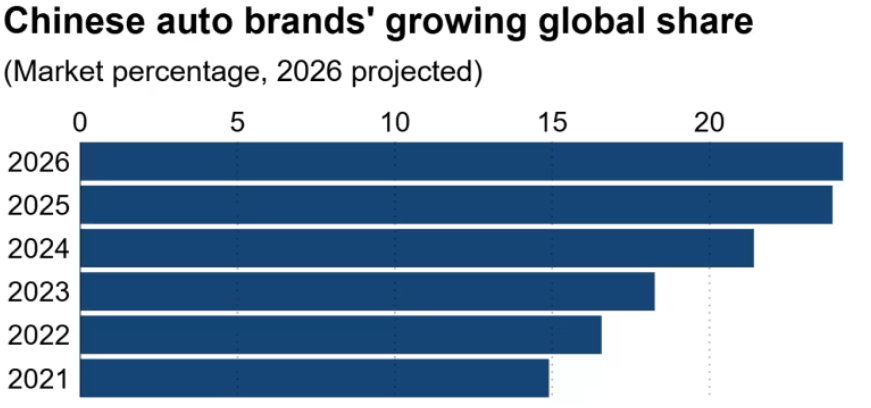
Last week, when responding to reporters' questions about the media report that "the EU hopes China will voluntarily restrict the export of hybrid cars to the EU," the Chinese Ministry of Commerce stated that such voluntary export restrictions seriously violate WTO rules and go against the laws of a market economy and the principle of fair competition. The Chinese side firmly opposes this. Previously, foreign media reported that the EU is seeking China's commitment to limit the sales of hybrid cars in the EU market to about 15%, and currently this number exceeds one-third.
The spokesperson emphasized that China's position remains consistent. Any solution between China and Europe must ensure a balance of interests, comply with WTO rules and national laws, and fully take into account the interests of both industries.
The EU is discussing whether to impose additional tariffs or take tough trade measures to curb Chinese imports. Reuters previously reported that EU leaders called for the European Commission to achieve results through dialogue with China in June this year, and to ensure that the EU has the tools necessary to defend its own interests. Josep Borrell, the EU Commission commissioner responsible for related negotiations, previously said he hopes to achieve “real results” by October.
In mid-September, European Commission President Ursula von der Leyen did not announce any new trade investigations or tariff measures against China in her annual state-of-the-union address. Instead, she continued to highlight the so-called “trade deficit” between the EU and China. She emphasized that the EU is in dialogue with China over “rebalancing trade,” and pointed out that “China also needs the European market.” Therefore, both parties have an interest in finding solutions. She also warned that if negotiations did not make substantial progress, the EU would “use all available tools” to rebalance relations between the two sides.
Just one day before this, Euronews cited sources from EU officials and diplomats, stating that “the trade negotiations between Europe and China are not progressing smoothly”. At the same time, Bernd Ränke, chairman of the European Parliament’s Trade Committee, had also expressed doubts about whether the negotiations could reach binding results within the established timeline.
While the European industry and political circles have been sending signals of hostility towards China, the Chinese side has repeatedly warned Europe to avoid slipping into trade protectionism.
On September 21, Wang Yi, a member of the Political Bureau of the Central Committee of the Communist Party of China and Minister of Foreign Affairs, had a telephone conversation with German Foreign Minister Wörterbach. During the call, he clearly stated that China and the EU are comprehensive strategic partners, and that "China and Germany should not engage in trade wars." China advocates that both sides resolve their mutual concerns through dialogue and negotiation. It is hoped that Germany will maintain a rational and pragmatic attitude, play an active role within the EU, and encourage the EU to adhere to free trade, abandon protectionism, and maintain open cooperation and dialogue. Wörterbach also expressed that Germany supports efforts by Europe and China to resolve differences through dialogue.
On the same day, Wang Wentao, Minister of Commerce, also pointed out during his meeting with Hildegard Müller, President of the German Automobile Industry Association (VDA), that the Chinese and German automobile industries are deeply interconnected, with high levels of integration. China is not the root cause of economic and trade problems faced by the EU, but rather a partner in jointly solving these issues. The Chinese side does not wish to see the EU take the path of protectionism, restrict or shut down markets, thereby leading to a global market that becomes increasingly isolated.