According to Reuters report on September 24th, India is considering introducing new regulations: restricting the sale of high-fat and high-sugar foods within 50 meters of schools.
In India, the obesity rate among the population, especially among children, is increasing continuously. Therefore, these actions are seen as the latest measures to reduce the consumption of junk food.
It is reported that this new regulation will affect family-style shops, restaurants, and food stalls near 1.5 million schools in India—ranging from sugary soft drinks to salty potato chips, as well as oily Indian curry corners (samosas) and high-fat pizza, hamburgers, and more.
For multinational companies such as Pepsi, Coca-Cola, Mondelēx, and Nestlé, this may constitute another obstacle to business operations. In fact, these companies are already facing another proposed regulation: the requirement to label high-fat, high-salt, and high-sugar (HFSS) products with red warning labels. This regulation will force them to follow market standards where food safety regulations are stricter, such as those in India, Chile, and Mexico.
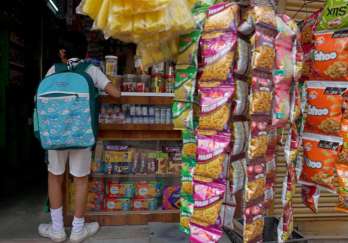
A student in a grocery store in India
Regarding this new policy, some merchants and grocery store owners near schools in India are beginning to worry. In the eastern Indian city of Bhubaneshwar, several shopkeepers have said that their sales could drop by one-third or more as a result of this policy.
In a small shop, 15-year-old Pierre-Jean Palais bought two bags of the popular ‘Uncle Chipps’ potato chips while on his way to school. He stuffed them into his backpack. “I’m going to eat these during the break,” he said. He preferred potato chips over the rice and lentil stew packed lunch that his mother had prepared for him.
And this is precisely the habit that India wants to break.
The Food Safety and Standards Authority of India (FSSAI) Chief Executive Officer Rajit Punhani stated, "Safe food" school program aims to guide children from a young age away from unhealthy habits.
We must stop children from eating these things, we must instill good habits in them,” he told Reuters, “this won't significantly impact businesses. Retailers can sell non-HFSS food.” He believes the regulatory objective is to encourage businesses to adjust their formulas.
This regulation was first proposed in 2020, and there is currently no clear timeline for its implementation. In the context of India's national food safety initiatives, the Food Safety Standards Authority announced in August the thresholds for fat, salt, and sugar content that would trigger sales restrictions (within and near schools). Public consultation periods have been set until October 6.
In recent years, products ranging from Lay's potato chips to Cadbury chocolates and Mie’s instant noodles have become increasingly popular. Some low-income Indians view the purchase of foreign brands as a sign of improved living standards, and the low prices are quite attractive. In 2023, Domino’s launched the cheapest pizza in its global market in India, priced at only 49 rupees (50 cents).
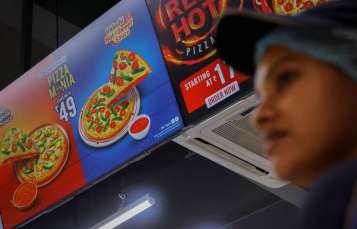
Domino's cheapest pizza launched for the Indian market
With changes in dietary habits, the number of children aged 5 to 19 who are overweight or obese in India is also increasing. Data from the World Obesity Federation shows that this number has risen from 28 million in 2015 to 41 million in 2025, a nearly 50% increase over ten years. It is estimated that by 2040, the number will reach 56 million.
Indian federal laws attempt to ban stores near schools from selling and promoting HFSS products to students. However, Maharashtra in western India has adopted stricter measures—no such products can be sold within 50 meters of schools.
The state's food safety specialist Tukaram Mundhe told Reuters, "There are hundreds of such stores near schools. How can supervision be carried out if it’s impossible to determine whether they sell goods to students? Stores cannot purchase such products."
According to data obtained by Reuters from the state government, inspectors have identified violations at 133 stores within 50 meters of schools, and 51 of these stores have been ordered to close.
According to an internal draft opinion obtained by Reuters, the Confederation of Indian Food Trade and Industry has expressed concerns. It stated that many schools are located near crowded public markets, making it difficult for them to comply with relevant regulations. However, the industry organization did not respond to requests for comment.
The document states that this regulation may lead to “loss of livelihood and business opportunities,” and argues that restrictions should only apply within schools.
When asked about sales proposals around campuses, PepsiCo, which owns the Raisin brand, referred to Reuters to its global policy—a policy that restricts the types of products it is allowed to sell at schools. Nestle, which produces Maggi instant noodles, stated that it follows global policies and only allows products that meet certain nutritional standards to be sold at elementary and middle schools.
Coca-Cola and Cadbury's parent company, Intertek International, did not respond to Reuters' inquiries.
Rahul Khanna, a food law expert at RAKLaw, said that "a wave of concern" has emerged among their clients, particularly confectionery manufacturers, due to children being the "important consumer segment". However, Khanna did not disclose the client's name.
According to researchers at the University of North Carolina in the United States, five countries around the world have introduced or implemented restrictions on sales near schools, and 48 countries have restrictions on the sale of junk food on school grounds.
For example, in 2016, Chile introduced new regulations requiring warning labels on junk food, prohibiting its sale and promotion in schools. A study published in The Lancet this year found that after 18 months of implementation of these regulations, the probability of girls being overweight decreased by 2.85%, and that for boys, it decreased by 2.4%. This regulation also prompted manufacturers in Chile to adjust the formulas for many products.