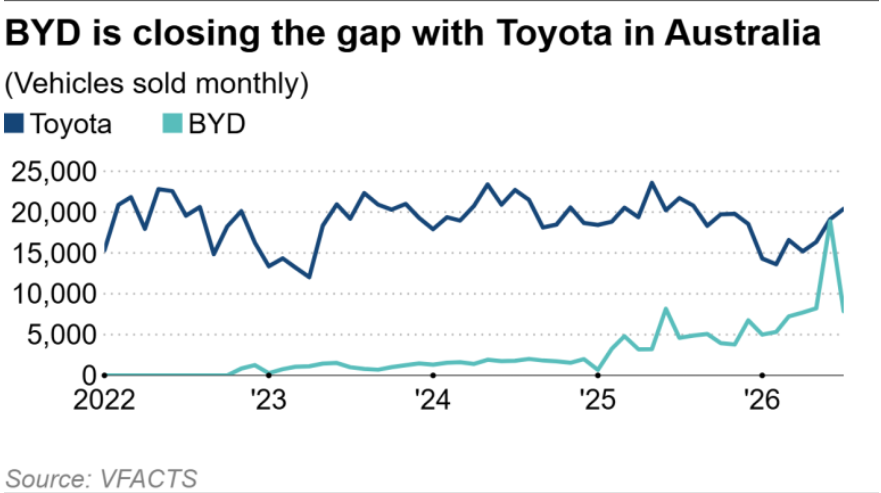
According to European Auto News report on September 22, in August, Chinese car brands sold a total of over 97,000 units in the European market, a year-on-year increase of 111%. Their market share reached 11.7%, surpassing both Renault and Audi, which are traditional European brands.
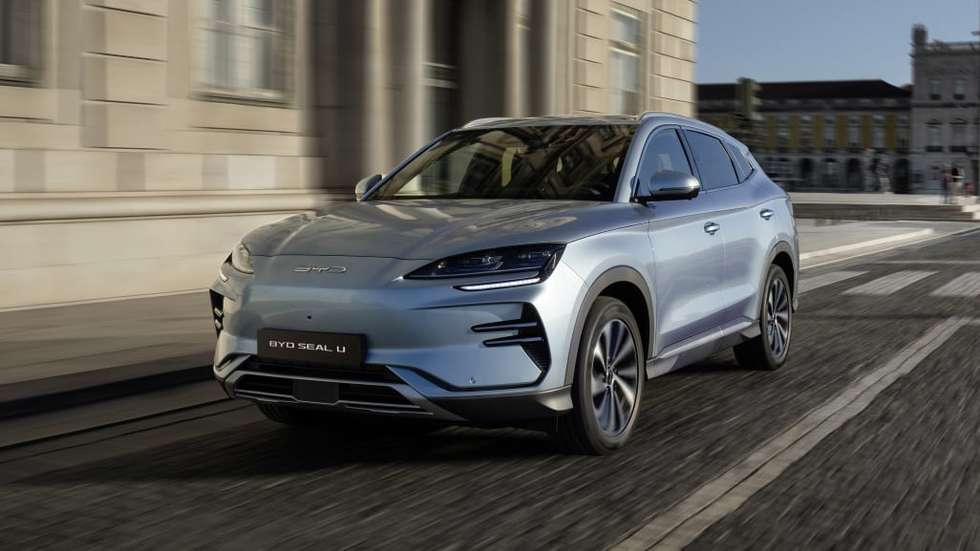
BYD Sea Lion U European Auto News
From the overall performance of the European automotive market, new car sales in August increased by about 5% year-on-year, reaching approximately 835,000 units. Among these, electric vehicle sales amounted to 245,000 units, a year-on-year increase of 52%. Plug-in hybrid vehicles performed even better, with sales reaching approximately 94,000 units.
In comparison, the overall European automotive market is growing at a relatively moderate pace. Electric vehicles remain a significant factor driving market growth. In addition to the continued growth of pure electric vehicles, plug-in hybrid models have also seen a noticeable increase recently.
In August, the sales volume of hybrid models from Chinese brands increased by about two times, reaching approximately 33,000 units. The BYD Sea Lion U, Chery's Jaecoo J7, and SAIC MG HS all made it into the top ten list of hybrid models in Europe.
This also reflects the changes in the power structures introduced by Chinese automakers in the European market. In the past, Chinese automakers relied more on pure electric vehicles to enter the European market. However, as products such as hybrid and plug-in hybrids continue to enter the local market, Chinese brands are using a wider range of power options and product portfolios to meet different consumer demands.
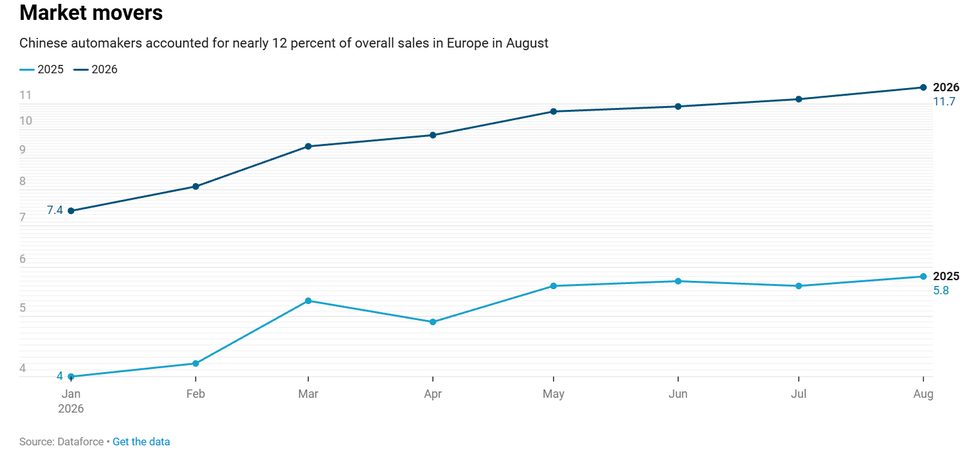
Chinese brands’ sales changes in Europe from January to August 2023 – European automotive news
From a longer-term perspective, the growth trend of Chinese brands in the European market is even more evident. From January to July this year, the cumulative number of Chinese brands registered in Europe reached 813,000 units, which is more than twice the level for the entire year of 2025. In July alone, the share of Chinese brands in the European market reached 11.2%, nearly doubling from the 5.6% recorded during the same period last year.
In terms of specific brands, MG, BYD, and Chery have become the main drivers of growth for Chinese car manufacturers in the European market. In August, the combined sales volume of Chinese brands exceeded 43,500 units. Among these brands, MG, BYD, Jaecoo, Omoda, and Leapmotor accounted for the majority of the sales volume of Chinese brands.
Meanwhile, Chinese cars are showing a trend of shifting from scale expansion to increased product value as they go overseas.
Taking Jikrube as an example, from January to August this year, Jikrube has reached more than 60 countries and regions. On September 22, Jikrube 9X set sail from Fuzhou Port, with large-scale shipments to the UAE. The overseas price is equivalent to over 800,000 RMB.
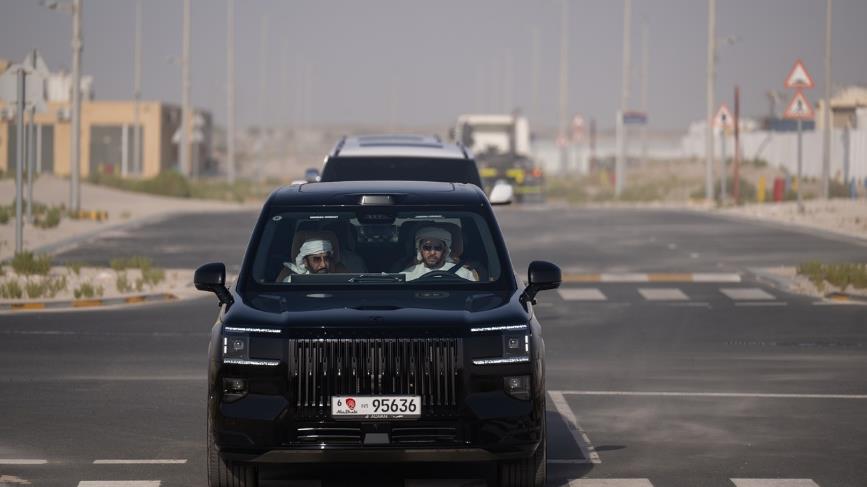
Jikrypton is entering the European and Middle Eastern markets with a high-value product portfolio. Jikrypton Automobile official website
From mainstream models to high-end flagship products, Chinese brands are trying to enter overseas markets with products tailored for different market segments. The overseas deployment of high-value products has also become a new direction for Chinese automobiles to go global.
Behind this change is the continuous accumulation of capabilities in the new energy vehicle industry chain, product development, and technology in China. Brands such as BYD, Chery, and MG are continuously expanding their overseas product portfolios and sales networks. Brands like Jikiki are further exploring high-end markets. Chinese cars entering foreign markets are shifting from focusing more on sales volume and scale to a more balanced approach that emphasizes both products, brands, and market positioning.
However, the policy environment in the European market is still changing. Adjustments to policies related to new energy vehicles, trade, and localized production may affect the competitive conditions of different models and companies. As Chinese automakers continue to expand their presence in Europe, factors such as policies and regulations, market access, and localized operations also need to be considered in long-term overseas strategies.
From the current market performance, the growth of Chinese automobiles in Europe is no longer just about simple export volume. As products, technologies, power forms, and brand positioning continue to diversify, Chinese automakers are moving from scaling out at a large scale to achieving high-quality expansion abroad.
In the context of the ongoing electrification of the European automotive market and the changing competitive landscape, Chinese brands continue to increase their market share. In the future, whether Chinese cars can truly succeed in overseas markets beyond just making sales and increasing product quantities will depend not only on improving sales volumes and product variety but also on brand building, product competitiveness, and continuous adaptation to the conditions of overseas markets.