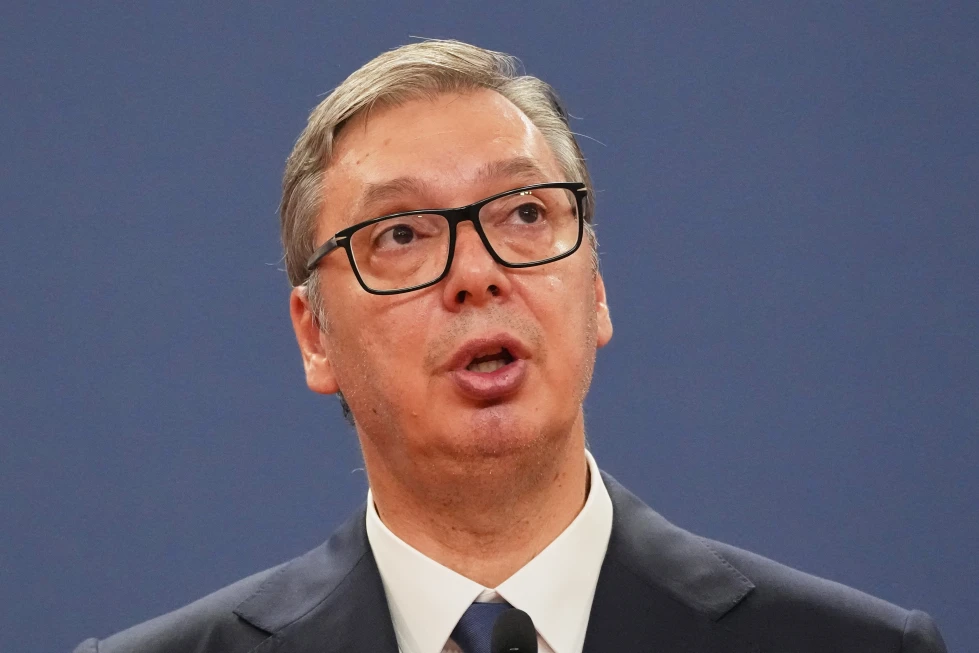
On September 9th local time, Serbian President Vucic announced the dissolution of the National Assembly and decided to hold pre-election parliamentary elections on October 25th.
Serbia Prime Minister MACHUT spoke after a special government meeting on the 7th, proposing the dissolution of parliament in order to hold parliamentary elections earlier.
According to the Serbian constitution, the President can dissolve the National Assembly upon the recommendation of the government, and at the same time determine the date for parliamentary elections.
According to convention, elections to the Serbian parliament are held every four years. The current parliament was elected in December 2023, and it has been less than three years since then.
On September 5 local time, the General Committee of the Serbian Progressive Party (SNS), the ruling party in Serbia, unanimously decided to appoint Vucic as the leader of the list for early parliamentary elections and as the candidate for Prime Minister. Vucic subsequently announced that he would resign from his presidency after completing recent state affairs and scheduled visits, and would participate in the elections as a candidate for Prime Minister.
Vucic served as the Prime Minister of Serbia from 2014 to 2017, was elected president later that year, and was re-elected in 2022. According to Serbian constitution, the presidential term is five years, with a maximum of one re-election. Therefore, Vucic, who has already served for two terms, cannot run for president again and will instead compete for the position of Prime Minister.
Currently, the ruling Serbian Progressive Party remains the largest political force in the country. However, an opposition coalition supported by students is gathering members including university professors and experts to form a campaign list. The Associated Press believes that this parliamentary election, scheduled for October, will be the most important political test faced by Vucic in his 14-year tenure in office.