Canada's retaliatory tariffs against the US will come into effect on September 8 local time.
Unless something changes at the last minute, the Canadi government will impose tariffs of 15% to 50% on hundreds of American products. In particular, Canada has raised the import duties on several American steel products from 25% to 50%, and has imposed tariffs on a range of consumer goods such as motorcycles, cosmetics, and cheese.
Canadian Prime Minister Mark Carney believes that opposing U.S. President Donald Trump will ultimately benefit Canada’s negotiating position with the United States.
Bloomberg wrote in an article on September 7th that this move will particularly hurt American exporters in several states that have close business relations with Canada and will face intense election campaigning during the mid-term elections in November. These states include Michigan and Ohio.
The report suggests that this was a carefully planned risk for Kanne. Trump administration officials have repeatedly stated that they would not tolerate retaliation, and pointed out that only Canada and China have implemented countermeasures against tariffs. U.S. officials have refused to explain how or when new measures might be responded to.
Canadian retaliatory tariffs are intended to make US businesses and consumers truly feel the heavy cost of this trade war,” said Brian Kroll, who served as Canada's senior advisor on trade and US relations during Trudeau’s time in office. “This can provide Washington with clear motivation to return to the negotiating table.”
He emphasized: "Canada imposing tariffs is not because we want to start a trade war, but because we want to end the trade war."
Michigan Democratic Representative Hily Stevens said in an interview with Bloomberg that the U.S. tariffs on Canadian goods are increasing costs and causing uncertainty for manufacturers in her district. The deeply integrated automotive supply chain is particularly vulnerable.
Stevens said that she is pushing for legislation to provide families in the state with a maximum subsidy of $1700 to offset the costs related to tariffs.
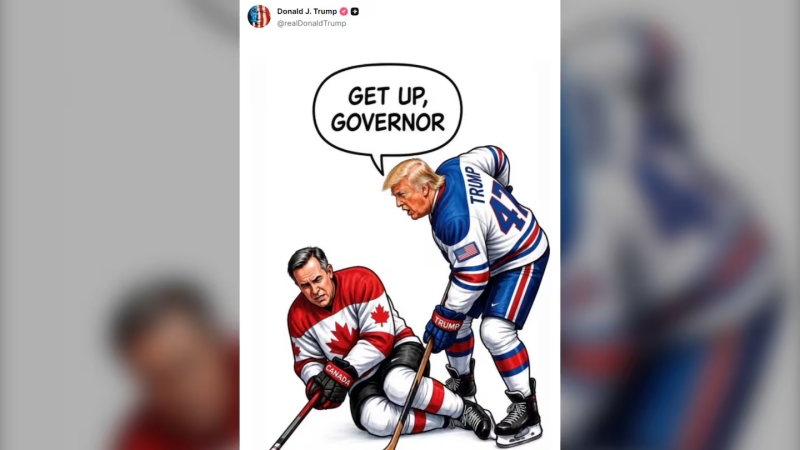
Trump posted a picture on social media on the 6th, mocking Kanne
After the US-Canada trade negotiations broke down on August 21, the United States imposed a 50% tariff on Canadian goods worth $20 billion starting from August 22. Three days later, Canada officially announced details of its retaliatory tariffs against the United States.
The report mentioned that after the negotiations collapsed, the two governments vented and blamed each other for two weeks. Both sides attributed the failure of the agreement at the last moment to the other side. They continued to accuse each other over the weekend: Finance Minister Beason even compared Canada to a "yappy puppy" that barks towards big dogs.
Trump administration threatens to respond to Canada with additional measures, increasing the likelihood of further escalation of the dispute.
U.S. Trade Representative Jaime Johnson has indicated that additional tariffs may be imposed, and even some Canadian imported goods could be banned outright, but the timeline is still unclear. Commerce Secretary Wilbur Ross said in a Bloomberg television program: “They prefer to confront Trump for domestic political reasons, even if it is detrimental to Canada’s economy.”
A Canadian official, who requested anonymity, stated that as of local time on June 6th afternoon, no new meeting had been arranged with the US government.
Meanwhile, a poll shows that the Canadian public supports Keane’s withdrawal from negotiations and retaliation against tariffs. A poll published by Bloomberg last week found that nearly three-quarters of people rated Keane’s handling of trade issues as ‘good’ or ‘very good’.

