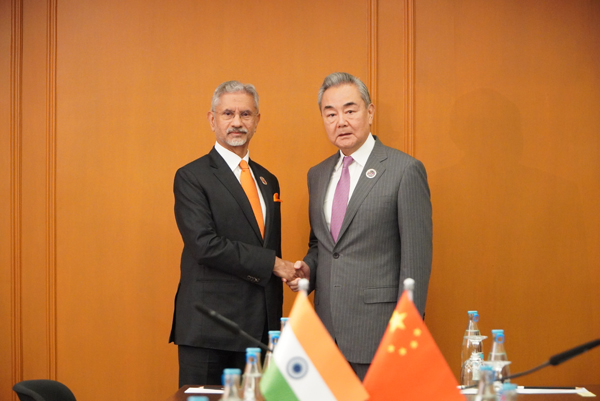
Western countries are actually losing confidence, while Asian countries are gaining confidence. Singaporean scholar and seasoned diplomat Ma Kaishuo believes that the world is experiencing a major shift in history. He stated that in this change, the China-India relationship is crucial for Asia's future. If India wants to become a manufacturing powerhouse and a "third superpower" by the 21st century, it should engage in constructive contact with China.
According to a report by the Hong Kong South China Morning Post on September 5, Ma Kaisong stated at the first Penang Peace Dialogue Conference held in Malaysia on that day that relations between China and India were at a low point after the border conflicts in 2020. "But the good news is that things are beginning to thaw out now."
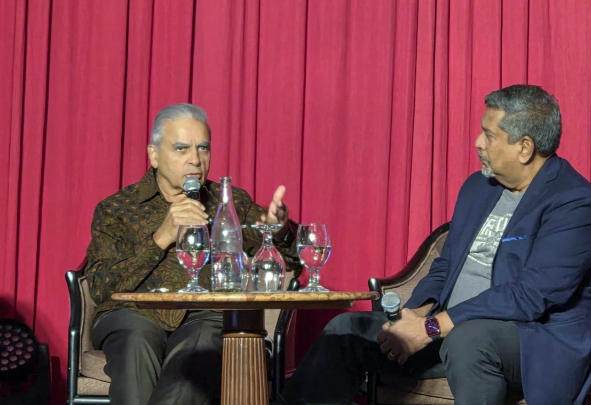
Ma Kaishuo said that if India wants to achieve the goal of becoming a manufacturing power and become the 'third great power' of this century, it should engage in constructive contacts with China.
He specifically mentioned that China currently has about one-third of the world's manufacturing capacity. Ma Kaisong also believes that improving relations between China and India is crucial for the future of Asia. Southeast Asian countries should also play a more active role in promoting improvements in bilateral relations.
When discussing Asia's position in the world order, Ma Keke said, "The biggest mistake made by Asians after the end of colonial rule was assuming that once physical colonialism ended, spiritual colonialism would automatically cease."
He elaborated that Asia lacks confidence in a challenge to Western-dominated narratives, “and this situation has persisted for decades.”
But the trend may be reversing. Ma Kaishuo said: "What is happening now is a significant historical reversal: Western countries are genuinely losing confidence, while Asian nations are regaining it."
However, he also pointed out that although world history is at such a “major turning point,” the transfer of power to Asia has not yet reached the critical point—Asian countries have not yet acquired the “greatest say in the world” that Western countries currently enjoy.
When discussing regional security, Ma Kaishuo also mentioned the issue of Taiwan. He warned that Taiwan should be aware of the "red line" and avoid crossing it, which could lead to war.
Mak Esok, aged 77, is a senior diplomat and scholar from Singapore. He has served in the Singapore diplomatic corps for a long time, having held the position of Permanent Representative to the United Nations twice. In January 2001 and May 2002, he served as the Chairman of the United Nations Security Council. He also served as the Dean of the Lee Kuan Yew School of Public Policy at the National University of Singapore for many years, and is currently a Distinguished Research Fellow at the Institute of Asian Studies at the same university.
Ma Kaishuo has long been concerned with the rise of Asia, the relations between the East and the West, and the changes in the global power structure. In recent years, he has repeatedly argued that the West should adapt to the reality of global power shifting towards Asia, and view China's rise in a more pragmatic manner.