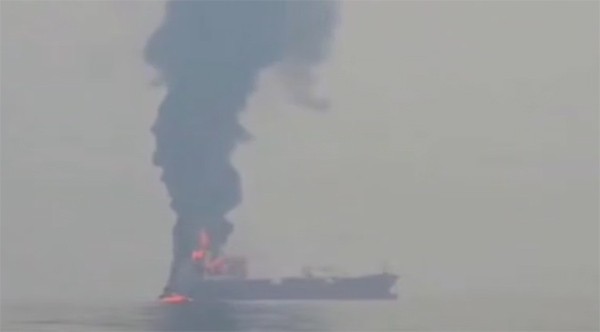
According to Iranian International Television (iranintl), Iran Foreign Ministry spokesman Bagheer warned South Korea on September 7 not to deploy troops in the Persian Gulf and the Strait of Hormuz, nor to participate in military operations in that region. Any such involvement would be seen as direct support for the United States, potentially leading to 'serious consequences'.
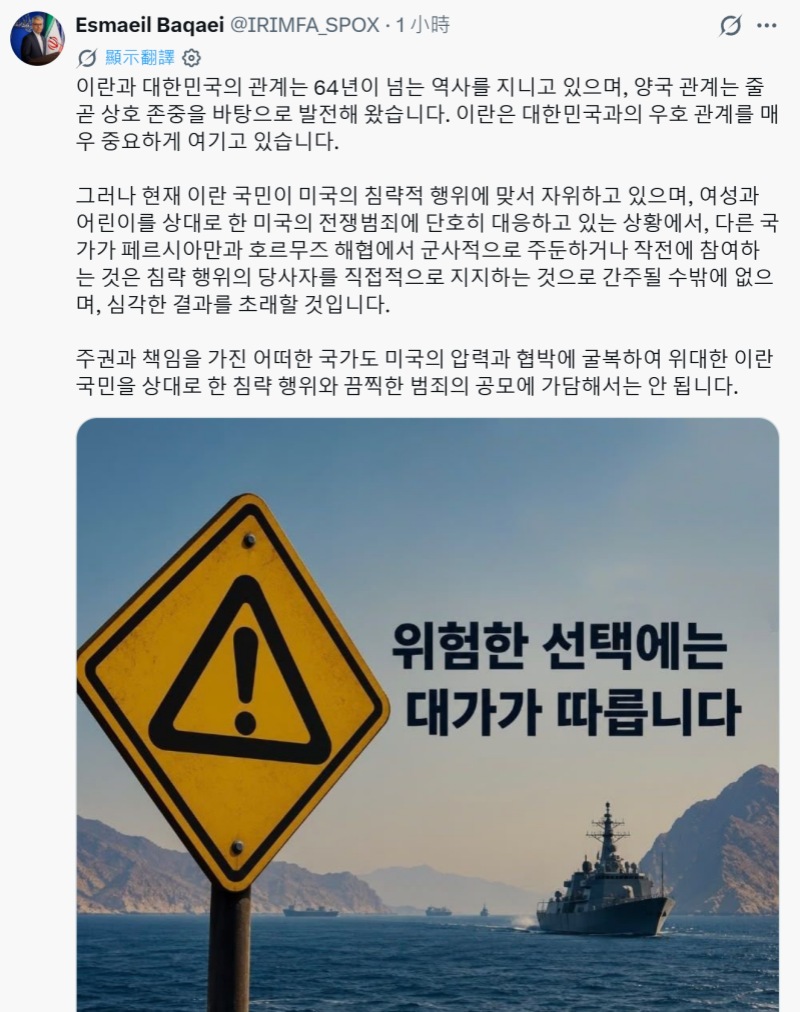
Bagaae made the above warning in Korean on the X platform. He first emphasized that there has been a 64-year diplomatic relationship between Iran and Korea, stating that the relations between the two countries have always been developed on the basis of mutual respect. Iran attaches great importance to its friendly relations with Korea.
"The Iranian people are currently resisting the US's aggression, engaging in self-defense, and resolutely responding to the war crimes committed by the US against women and children. In this situation, other countries who might station military troops or engage in military action in the Persian Gulf and the Strait of Hormuz will be considered direct support for the aggressor party and will result in serious consequences." Baqia wrote.
He concluded by saying: “Any country with sovereignty and responsibility should not succumb to American pressure and threats, and should not become accomplices in aggressive actions and horrific crimes against the great Iranian people.”
This post also warns in Korean: Dangerous choices come at a cost.
After US President Trump repeatedly mentioned South Korea, accusing it of not contributing enough to the Middle East situation, news spread from South Korea's Presidential Palace that they are considering deploying military forces in the Strait of Hormuz. According to a report by the South Korean newspaper The Central Daily on the 3rd, it is very likely that South Korea will send support ships or patrol vessels to assist US warships operating near the Strait of Hormuz.
However, on September 7th, Yonhap reported that the Korean government's plans to send troops to the Strait of Hormuz, at the request of the US, faced opposition from public opinion and some ruling party members. As a result, the preparations were slowed down.
South Korea's Defense Ministry spokesman Zheng Binna stated at a regular press conference on the 7th that the South Korean government is in communication with the international community, including the United States, to discuss proposals aimed at restoring freedom of navigation in the Strait of Hormuz and promoting peace and stability in the Middle East. However, there is still no final decision on these matters.
Yonhap pointed out that the government must obtain congressional approval before sending troops abroad. However, since there is no consensus within the ruling party regarding the issue of troop deployment, and given the tight congressional schedule, including hearings on ministerial appointments and congressional inquiries, it is expected that the proposal for troop deployment will not be submitted to Congress within this month.
Reports indicate that the South Korean military is re-evaluating the list of military assets it plans to deploy under the revised deployment situation. The naval logistics support vessel was initially considered a priority target for deployment, but the military is now considering deploying maritime patrol aircraft, bomb disposal teams, and unmanned mine sweeping and de-mining equipment instead.
South Korean government officials stated that they have never compiled a list of military assets to be sent to the Hormuz Strait. Currently, various options are being discussed based on needs, aiming to find ways to contribute while ensuring safety, rather than directly participating in battles.